

Renovate or Sell Your Benoni Home?
Renovation ROI, transfer and moving costs, and the suburb factors that swing the maths either way
Quick verdict
Renovate your Benoni home or sell and move? Weigh renovation ROI against transfer, bond and moving costs – with suburb-level honesty.
13 min read
On this page
Question: Could a few targeted updates increase your property’s value more than the costs of moving to a new area?
Deciding whether to renovate vs sell Benoni requires clear facts and a calm plan. You want to know if the work will raise the value of your home, or if selling and moving makes better financial sense.
Local property advisers note that lifestyle and future plans shape the best choice, and generally suggest sensible repairs rather than major projects aimed only at profit. These are important factors for any homeowner weighing options.
Our platform, buildingcontractorsinbenoni.co.za, connects you with independent professionals so you can request up to 3 quotes, or up to 5 where available. Compare costs, expected ROI from renovations, and likely appeal to buyers before you commit.
Next step: Use clear figures on transfer fees, moving costs and agent fees to see whether renovate home work or a sale suits your house and long-term goals.
Assessing the Current State of Your Property

Start by taking a clear, practical look at how your home works day to day. That honest check helps you decide whether simple upgrades will meet your lifestyle or if other building decisions deserve consideration.
Evaluating Space and Lifestyle
Ask if the current living space suits your family’s routine and long-term plans. Property advisers note that if the issue is mainly space or layout, a targeted change from home renovation contractors may be enough.
Identifying Essential Repairs
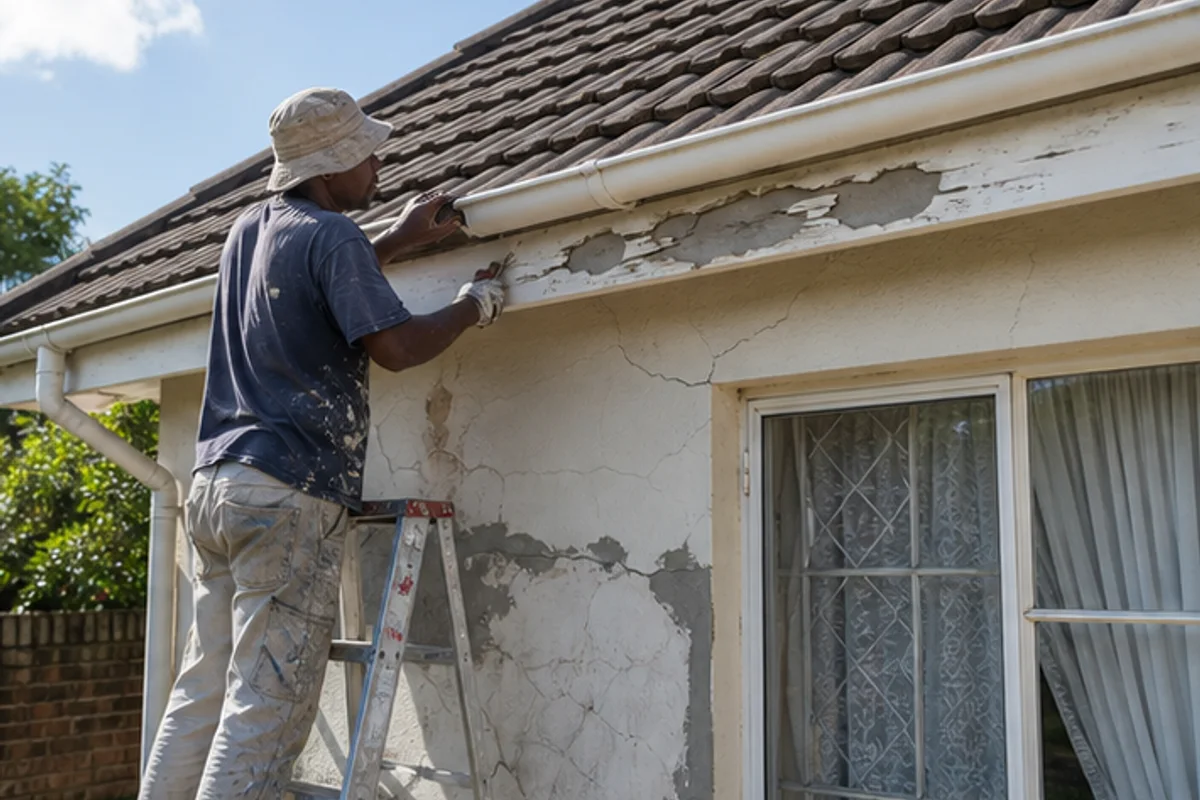
Tackle basic fixes first — our home renovation costs guide helps you budget them. Buyers notice broken fittings, tired finishes and dated paint more than grand ideas.
“Fix the small faults and give rooms a neutral coat of paint; many homes win buyers on condition and feeling.”
— A local property adviser
Quick checklist to guide your review:
- Does the kitchen work for daily living?
- Are there persistent issues or structural concerns?
- Would fresh, neutral paint and small repairs raise the place’s appeal?
- Can one extra room or improved flow meet your needs, or should you extend or build new?
| Area | Common issues | Action |
|---|---|---|
| Kitchen | Worn surfaces, poor layout | Update finishes; improve workflow |
| Living / Room flow | Cramped space, awkward layout | Consider reconfiguration or add storage |
| General condition | Broken fittings, old paint | Repair fittings; apply neutral paint |
| Major issues | Structural or persistent problems | Obtain professional advice; review selling home options |
The Financial Reality of the Renovate vs Sell Benoni Decision

Weigh costs against likely value gain. Add construction quotes, agent fees and expected uplift to see if upgrades will cover their cost.
Set a strict budget. Property experts warn that a small, firm budget helps prevent overcapitalising on a property.
Remember transaction fees. Buying a R2.5 million property often adds R100 000–R200 000 in fees. That cost affects whether a renovation or a move is sensible for your money and lifestyle.
Talk to an estate agent about local market price bands and to contractors for realistic renovation quotes. A kitchen upgrade typically gives strong returns, but every room must be evaluated for impact on sale price.
- Compare total cost of construction with expected value increase.
- Factor in time, disruption and contingency funds for unexpected costs.
- Price your property correctly if you choose the sale option to attract buyers.
| Cost area | Typical range | Why it matters | Action |
|---|---|---|---|
| Minor upgrades | R10 000–R80 000 | Improves appeal quickly | Get 2–3 quotes; budget tightly |
| Kitchen upgrade | R60 000–R350 000 | High ROI when well executed | Prioritise layout and durable finishes |
| Transaction fees (purchase) | R100 000–R200 000 | Alters net proceeds and affordability | Include in decision model |
| Major structural work | R200 000+ | Risk of poor return if overdone | Seek professional valuation first |
Suburb Ceiling Logic and Property Value
Check where your home sits in the local price ladder before you commit to major work.
Understanding Local Price Bands
Local market ceilings limit how much extra value improvements can add to a home.
Claude McKirby advises that you compare your property with nearby homes. If your home sits at the top of local price bands, further spending may not raise its market value.
Why this matters:
- Investing above the suburb ceiling risks overcapitalisation and poor returns.
- Many buyers in an area have a maximum price they will pay, regardless of extra space or high-end finishes.
- Research similar properties to ensure planned upgrades match buyer expectations and local price points.
| Factor | What to check | Action |
|---|---|---|
| Local comparables | Recent sale prices of similar homes | Use agent reports or online listings |
| Suburb ceiling | Typical top price for properties | Avoid upgrades that push you past the ceiling |
| Buyer demand | Preferences and price sensitivity | Align improvements with what buyers want |
Knowing the suburb ceiling helps your decision and protects home value. If you discover your home is already at the ceiling, selling may be the smarter route rather than spending on upgrades that won’t increase home value.
When Structural Condition Makes Renovation Unviable
Major structural faults can turn a promising project into a costly, long-term problem. If your home shows foundation movement, old plumbing or serious roof decay, the scale of work often exceeds typical budgets and timelines.
Consult a professional. Claude McKirby warns that site constraints can stop you expanding or reconfiguring space, despite your best plans.
Amanda from MLD recommends removing “reasons to say no” — fix functional issues rather than chasing a high-end makeover. Small repairs, fresh paint or a modest kitchen update often satisfy buyers more than large luxury projects.
- Major structural issues usually push projects into high-cost territory.
- Site limits can make extensions impossible, regardless of money or effort.
- Listing a property as-is can be a sensible option when repairs are extensive.
- Focus upgrades on function and condition to save time and stress.
“Fix the functional faults first; buyers notice usefulness before finishes.”
— Amanda, MLD
| Issue | Practical impact | Typical action | When to choose sale option |
|---|---|---|---|
| Foundation movement | High-cost, long schedule | Structural engineer assessment; major repair | If repair cost exceeds likely uplift |
| Old plumbing/electrics | Safety and compliance risk | System replacement; staged works | When disruption and cost outweigh benefit |
| Site constraints | No feasible extension | Adapt internal layout or improve storage | When extra space cannot be added |
| Cosmetic wear | Low-cost appeal issues | Paint, minor kitchen update, tidy repairs | Usually improves sale prospects |
Comparing the Costs of Moving versus Improving
Compare the full cost of moving house with the likely expense of improving your current home. Start by listing transfer and agent fees, then add moving and interim living costs. This gives a clear baseline for any decision about your property and lifestyle.
Transfer and Agent Fees
Transfer and Agent Fees
Estate agent commission and transfer duties can take a large slice from sale proceeds. Include conveyancing, bond cancellation or registration, and typical agent fees when you tally the cost of moving.
The Hidden Costs of Construction
Construction brings many small costs that add up: labour, materials, inspections, and council approvals. These often push a project beyond initial quotes.
- Labour and materials: price volatility affects total cost.
- Professional fees: engineers, certifiers and permit costs.
- Time and disruption: living arrangements or rental costs while work is done.
Managing Contingency Funds
Always reserve a contingency fund. A sensible range is 10–15% of your project budget to cover unforeseen issues and scope changes.
| Cost area | What to include | Why it matters |
|---|---|---|
| Moving | Agent fees, transfer, movers, short-term accommodation | Can exceed expected savings from changing area |
| Improvements | Labour, materials, fees, contingency | Affects home value and appeal to buyers |
| Hidden | Time, disruption, compliance costs | Impacts budget and lifestyle during works |
Practical tip: calculate total cost for each option and compare projected uplift in home value, not just the sticker price. Our platform helps you request local quotes so you can judge which option best fits your budget and long-term goals.
Our Platform and the Quote Request Process
Begin with clear scope so contractors can give realistic prices and timelines. At buildingcontractorsinbenoni.co.za you describe your home, the work you want and your budget. This helps local contractors prepare accurate replies.
How it works:
- Request up to 3 building quotes, or up to 5 where available, from independent contractors.
- The contractors handle site visits, final price quotes, work schedules and warranties for their projects.
- We do not perform any construction; the platform connects you to professionals so you can compare options.
Use the quote process to compare cost, price and timelines. Confirm materials, labour and approvals in writing with the contractor before any work starts.
| Step | What to check | Why it matters |
|---|---|---|
| Brief | Scope, drawings, budget | Ensures comparable quotes |
| Quotes | Price, lead time, exclusions | Shows real costs and trade-offs |
| Decision | Warranties, references | Protects your money and property value |
Visit buildingcontractorsinbenoni.co.za today to start your quote request and take a clear step toward improving your home and understanding the local market.
Making the Final Choice for Your Future

Make a clear a strong, clear plan that balances your living needs, price and the time you can commit. This decision should protect the home’s comfort and its long-term value.
Consider practical outcomes. Think how renovations and small upgrades will appeal to buyers in the local market. Include likely costs for a kitchen update or other high-impact work when you compare options.
If a sale suits your cash and lifestyle, check transfer fees and moving money carefully. If you choose to improve, aim for changes that raise the property’s appeal without overcapitalising.
Use our platform to request local quotes and compare realistic prices, timelines and guarantees. That clarity helps homeowners make the right choice for their place and future.
FAQ
What should I check first when deciding whether to renovate or sell my Benoni home?
Start with a clear inspection of the property’s condition, layout and services. Look for essential repairs such as roof leaks, damp, faulty wiring or plumbing. Assess whether the current space meets your lifestyle needs — bedrooms, bathrooms, storage and flow. Note any council approvals needed for structural work. Gather local market prices for similar homes in your suburb to see realistic resale values before budgeting for upgrades.
How do I evaluate space and lifestyle needs before committing to building work?
List daily pain points: not enough living space, outdated kitchen, poor flow or lack of outdoor areas. Consider whether a reconfiguration, extension or finishing a loft will solve those issues cost-effectively. Measure available footprint and check municipal rules for coverage and setbacks. Speak to a draughtsman or contractor for quick feasibility and rough costs to compare against the option of moving to a house that already fits your needs.
What essential repairs should be prioritised if I choose to improve the property?
Prioritise safety and compliance: electrics, plumbing, structural stabilisation and roof repairs. Next, address issues that affect saleability and daily living: damp treatment, new windows, and a functioning kitchen and bathroom. Cosmetic items like paint and floor finishes come last unless low-cost changes will significantly lift appeal for buyers or renters.
How do I estimate the return on investment (ROI) for common home upgrades?
Use local comparables to see what similar upgraded homes sell for in your area. Kitchens and bathrooms generally offer the best ROI, followed by repainting, windows and minor landscaping. Get at least three written quotes from independent contractors for each major project to compare costs, materials and timelines. Factor in contractor fees, VAT where applicable, and a contingency of 10–15% for unexpected items.
What are the main financial differences between moving and improving?
Moving brings transfer duty, estate agent commission, conveyancing fees and relocation costs. Improving incurs contractor labour, materials, municipal approvals, and contingency funds. Compare total moving costs with the total renovation budget plus lost time and disruption. Also consider stamp duty and whether the sale price of your current home will comfortably cover a purchase in your target suburb.
What transfer and agent fees should I budget for when selling and buying elsewhere?
Budget for estate agent commission (usually a percentage of sale price), transfer duty or transfer costs, conveyancer fees and rates clearance certificates. On the purchase side expect bond costs, attorney fees, and transfer fees. Ask your estate agent and conveyancer for a detailed cost breakdown early on so you can compare net proceeds versus renovation budgets.
What hidden construction costs do homeowners often overlook?
Common hidden costs include structural engineer reports, temporary supports, removing asbestos, upgraded electrical panels, municipal compliance certificates, drainage works and unexpected pest or rot treatment. Also include scaffolding, site waste removal and security for materials. Always verify exclusions in quotes and get these items costed separately where possible.
How much contingency should I set aside for building projects?
A contingency of 10–15% is reasonable for well-scoped renovations; 15–20% for older homes or where structural changes are involved. Keep a separate fund for variations and unforeseen repairs found once work starts. Confirm in writing how contractors handle variations and cost approvals.
How do local price bands affect whether I should upgrade your property?
Each Benoni suburb has a ceiling price for typical homes. If your property’s post-renovation value would still sit below the local ceiling, large-scale upgrades may not yield a proportional return. Study recent sales in your street and speak to local estate agents to understand realistic top prices and what features buyers in your suburb prize.
When is the structural condition too poor to justify improvements?
If foundations are compromised, there’s extensive rot or widespread sub-standard building work, costs can escalate quickly and approvals may be difficult. Get a structural engineer’s report early. If repair estimates approach or exceed the expected uplift in market value, selling and buying a sounder property often makes more sense.
How can your platform help with the decision and quote process?
Use the platform to request up to three written quotes from independent contractors for the work you’re considering. Compare contractors on scope, materials, timelines and guarantees. Contractors handle site visits, final quotes and the work itself. Confirm insurance, CIDB grading where relevant, and payment schedules in writing before work starts.
What should I confirm in writing before hiring a contractor?
Insist on a detailed scope of work, fixed or stage payment schedule, materials specified by brand where important, start and completion dates, warranty terms, and a clear variation clause. Check proof of public liability insurance, workmanship guarantees and any required municipal approvals. Keep all correspondence and quotes for comparison and future reference.
How long will renovations typically take compared with the time it takes to sell and move?
Small cosmetic projects can take a few weeks. Medium refurbishments, like kitchen and bathroom work, often run 6–12 weeks. Major structural alterations or extensions take several months and need approvals. Selling and moving can be quicker in a strong market but allow 8–12 weeks for marketing, offers and transfer. Factor in time for contractor scheduling and potential delays.
If I’m a landlord or investor, how should I approach the upgrade versus sell choice?
For investors, focus on yield and capital growth. Prioritise works that increase rentability and reduce vacancy: functional kitchens, reliable electrics, and secure windows and doors. Calculate expected rental increase versus upgrade costs and compare to selling now and reinvesting elsewhere. Consider tax implications, depreciation and capital gains timing with your accountant.
Which small, low-cost improvements give the best effect when preparing to sell?
Fresh neutral paint, thorough decluttering, minor repairs, new light fittings, tidy gardens and pressure-washed driveways improve first impressions. Replacing worn cupboard doors or benchtops in the kitchen can lift appeal without a full refit. Keep selections simple and in off-white or beige tones that suit local buyer preferences.
Ready to compare?