

Precast vs Brick Boundary Walls in Benoni
Security, lifespan, repair patterns and total cost weighed for East Rand homes – with an honest verdict per situation
Quick verdict
Precast or brick for your Benoni boundary wall? Security, hail and impact resilience, lifespan and cost logic compared honestly.
10 min read
On this page
Which boundary option gives you the best security and long‑term value in Benoni? This question matters if you want a reliable solution that suits local clay soils, wind loads and your household needs.
On buildingcontractorsinbenoni.co.za our platform helps you weigh precast vs brick wall options on speed, cost and finish without guesswork. Independent contractors connected through our quote request process assess site access, labour rates, material quality and approvals so you get clear proposals.
Choose between fast concrete panels and a traditional masonry finish by weighing durability, maintenance and aesthetic appeal. Consider installation time, ongoing upkeep and total cost over years to decide which materials and design add real value to your home in Gauteng.
Start with a focused brief and request quotes to confirm costs, timelines and warranties before any construction begins.
Understanding the Precast vs Brick Wall Debate in Benoni

Deciding on panelised concrete or a traditional masonry finish in Benoni means balancing aesthetics, labour and lifecycle cost.
Panel systems from precast wall installers are factory-made, typically 1440mm wide and offered in heights from 1500mm to 2400mm in 300mm steps. This modular sizing speeds installation and gives consistent quality that is hard to match on site.
Traditional brick construction from boundary wall builders gives a classic look many homeowners prefer. It needs skilled masons for good coursing and long-term performance. Expect longer build times and labour costs to be higher on most projects.
Maintenance differs: the cast concrete option tends to be low on routine upkeep, while mortar joints in masonry may need repointing over time to keep structural integrity.
- Security: solid concrete panels provide quick, robust coverage.
- Appearance: brick offers texture that often boosts curb appeal.
- Cost factors: materials, labour, site access and approvals influence total costs — estimate yours with the boundary wall calculator.
| Feature | Panelled concrete | Traditional masonry | Typical impact |
|---|---|---|---|
| Manufacture | Factory-controlled | On-site labour | Quality consistency vs craft finish |
| Installation speed | Fast (modular panels) | Slower (courses of bricks) | Shorter site time vs longer schedule |
| Maintenance | Low routine upkeep | Periodic repointing | Lower lifecycle tasks vs ongoing joint work |
| Cost drivers | Panels, transport, crane | Bricks, skilled masons, scaffolding | Material and labour mix affects budget |
Structural Integrity and Material Performance

Good structural performance begins with the right material and a proper foundation — on reactive ground, weigh raft vs strip foundations too. In Benoni, soils and seasonal movement make this choice important for long-term reliability.
Durability and Maintenance
High-quality precast concrete meets ASTM strength and absorption limits, and reinforced products commonly reach 20–30 MPa after curing. That strength helps resist cracking and weathering.
Concrete options need little upkeep—usually an occasional wash—while a brick wall depends on mortar quality and workmanship. Expect repointing of brickwork roughly every 15–25 years in local conditions.
Both types are non-combustible and safe in high-heat or veld-fire areas, but proper footing — and the boundary wall rules on height — is essential to prevent settlement and later repairs.
Aesthetic Versatility
Modern precast concrete walls can mimic stone, timber or traditional brickwork — see precast wall prices — giving homeowners choice without long on-site labour. Panels speed installation and reduce time on site.
Traditional brick offers thermal mass that helps moderate courtyard temperatures and gives a familiar look many homeowners prefer.
- Discuss finishes: confirm factory standards and on-site workmanship, and check boundary wall prices, before you accept a quote.
- Consider long-term costs: lower maintenance can offset higher initial cost for some materials.
Benoni Environmental Stress Tests for Boundary Walls
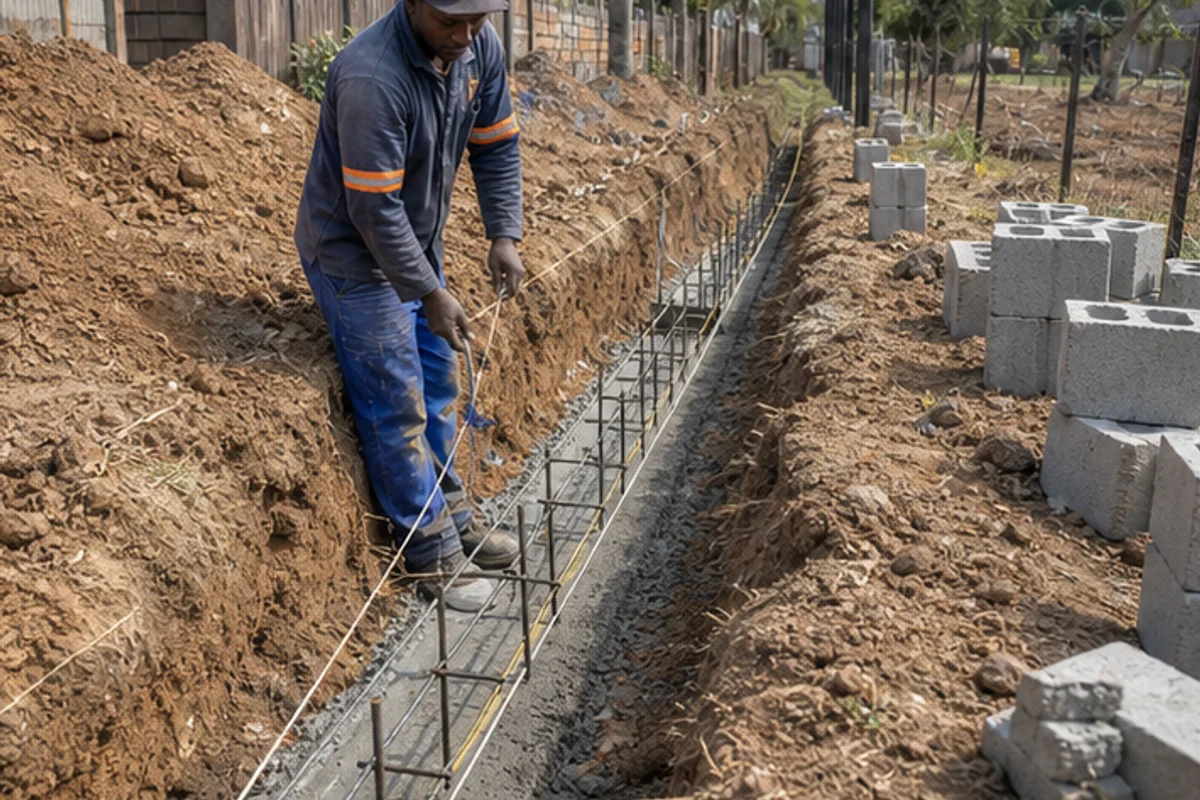
Local clay soils and gusty East Rand winds place real stresses on any boundary structure. Start with a site assessment that checks soil type, drainage and wind exposure before you choose materials.
Managing Clay Soil and Wind Loads
Foundations matter: clay movement requires reinforced strip footings or deep piers to limit settlement and cracking.
Precast concrete panels are engineered to resist high wind loads and deliver a largely monolithic barrier that stands up in severe weather.
Brick walls can crack when the ground shifts; skilled contractors often recommend reinforced footings and flexible damp‑proofing to reduce damage.
- Drainage behind the structure prevents hydrostatic pressure and reduces long‑term maintenance.
- Look for panels or masonry made with recycled content to lower environmental impact.
- Professional site evaluation guides the right choice of materials, installation and costs for your project.
| Risk | Panelled concrete | Masonry |
|---|---|---|
| Soil movement | Handles flex with engineered joints | Needs reinforced footings |
| Wind loads | High resistance | Depends on construction quality |
| Moisture | Low mortar exposure | Prone to joint degradation |
Tip: Request contractors who understand Benoni conditions and can confirm installation details, warranties and realistic timeframes in writing.
Operational Realities and Project Timelines
Speed of delivery and predictable labour hours shape most decisions for boundary projects in Benoni. A clear schedule reduces on‑site disruption and gives immediate security where needed.
Installation Speed and Labour
Precast concrete systems can be installed very quickly. Precast installation teams often cover 100–120 metres per day, so a 50–70 metre run may finish in one day.
Traditional brick construction needs skilled masons and typically spans 2–4 weeks. Foundations, laying, plastering and painting add time and dependencies on weather.
Cost Comparison Indices
Precast options start from about R620 per metre. Brick methods require more labour, mortar and finishes, which lifts the total cost. Confirm whether quotes include pillars, transport and site access.
Long-term Value
Maintenance affects lifetime cost. Concrete systems demand less routine care, while plastered brick needs periodic painting and repointing.
Choose based on urgency, maintenance budget and the look you want for your home.
- Get multiple quotes to compare installation speed, material cost and warranties.
- Confirm lead times for panels, crew availability and site access in writing.
| Factor | Concrete panels | Traditional brick |
|---|---|---|
| Typical installation time | 50–70 m in 1 day (100–120 m/day teams) | 2–4 weeks (foundations to finish) |
| Starting cost per metre | From R620/m (panels & pillars) | Higher due to labour, mortar, plaster and paint |
| Maintenance over 10 years | Low (cleaning, minor repairs) | Periodic painting and joint upkeep |
Hybrid Approaches for Modern Property Boundaries
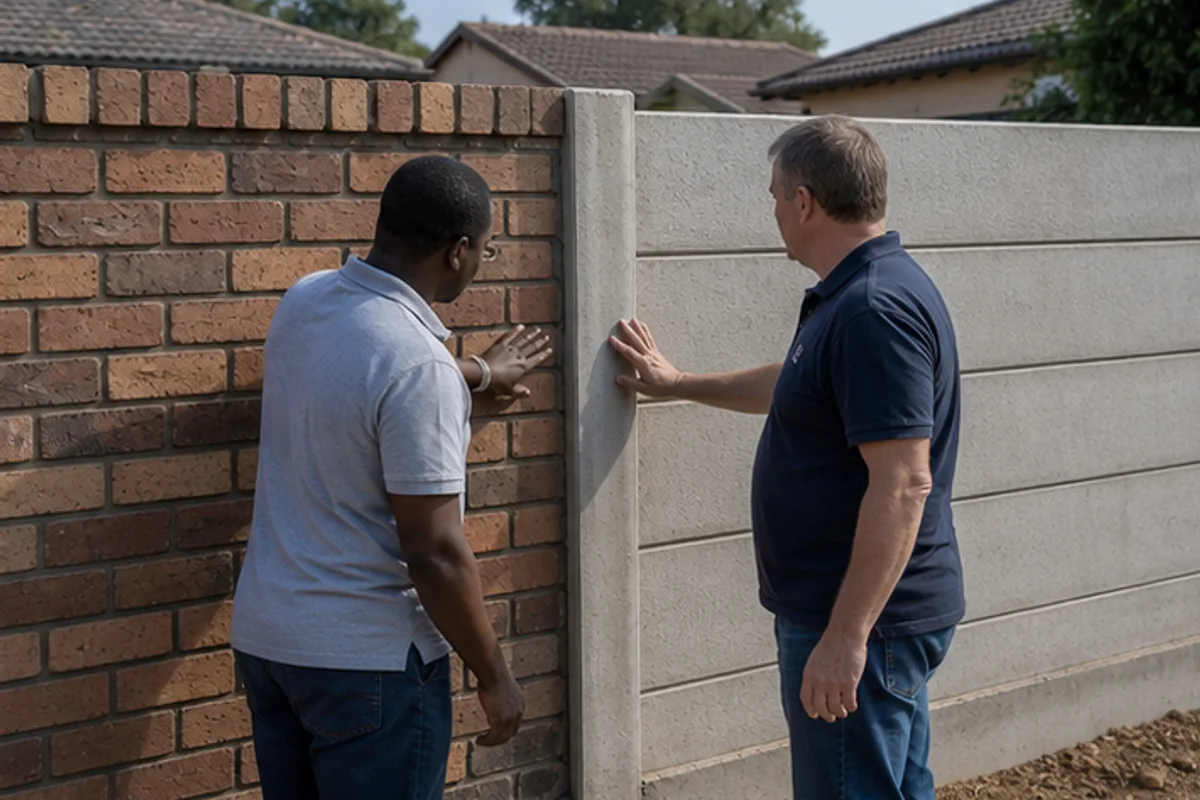
Hybrid designs in Benoni offer a practical balance between look and cost. Many homeowners choose a decorative brick front and more economical panels down the sides and rear. This keeps curb appeal where it matters while trimming overall costs.
Combining materials needs good planning. Ensure the transition between brick sections and concrete panels is structurally sound and neat. Ask contractors about foundation detail, jointing and fixing methods before you sign a quote.
Benefits include:
- Cost control: focus higher-cost masonry at the frontage and use concrete for long runs.
- Consistent look: finished panels can mimic bricks to create cohesion across the property.
- Site adaptability: mixed systems suit slopes, corners and access-restricted plots.
Integrating brick pillars with panels gives a sturdy, attractive result. Check HOA guidelines in modern estates; many allow hybrid boundaries if the design meets local aesthetic rules.
Tip: Use our platform to request contractor quotes for hybrid projects and confirm installation scope, maintenance expectations and cost breakdowns in writing.
Securing Your Property with Professional Quotes
Requesting detailed, local quotes helps you choose the right boundary solution for your home in Benoni.
Use our platform at buildingcontractorsinbenoni.co.za to request up to five quotes from independent contractors. Our quote request process ensures estimates cover scope, plans, site access, materials, labour, finishes and local approvals.
Check experience and references. Dayd Masonry has over 25 years of masonry experience and can confirm workmanship, timelines and maintenance needs during a site visit.
Get everything in writing — final cost, project timeline and warranty. Compare concrete walls, precast concrete or brick options by cost, durability and installation time before you decide.
Start your project today and secure accurate proposals that protect your budget and give peace of mind.
FAQ
Which option suits Benoni properties better: precast concrete panels or traditional clay brick boundary walls?
Choice depends on priorities. Precast concrete panels give faster installation, consistent quality and low maintenance, which suits investors needing quick, durable boundaries. Clay brick and mortar offer a classic look, easier local repairs and more aesthetic flexibility for homes in established suburbs like Rynfield or Lakeside. Check site access, council rules and neighbour agreements before deciding.
How long do concrete panel boundaries typically last compared with brick and mortar?
Properly installed steel-reinforced concrete panels can last 40–60 years with minimal upkeep. Well-built clay brick walls with quality mortar and good foundations also last similar spans but often need periodic repointing and occasional brick replacement. Lifespan reduces if foundations are poor or the soil is reactive.
What common repair patterns should Benoni owners expect for each material?
Concrete panels mainly need attention at joints and capping; silicone seals and replacement of damaged panels are typical. Brick walls require repointing, replacing cracked bricks and fixing damp or saltpetre where water runs against the wall. Both suffer from movement if foundations on expansive clay are not designed correctly.
Do either option give better security for a residential property?
Both can be secure when built to standard. Concrete panels offer smooth, hard faces harder to climb and can incorporate security tops easily. Brick walls can be built higher or reinforced with piers and capping; add security features such as trellis, electric fencing or anti-climb paint. Choose a contractor who confirms heights, wiring and local by-laws.
How do Benoni’s clay soils and seasonal movement affect boundary choices?
Reactive clay causes heave and settlement. Both systems need deep, well-designed strip or pad foundations with movement joints. Precast panels require well-anchored columns and flexible jointing; brickwork needs reinforced piers and control joints. A geotechnical inspection helps avoid costly future repairs.
Which option installs faster and what are typical labour implications?
Precast panels are quicker: an experienced crew can erect a long run in days, assuming clear access and foundations ready. Brickwork is more labour-intensive and takes weeks longer for the same length. Labour skill matters: find local Benoni stonemasons or contractors with proven site photos and references.
How do costs compare initially and over the long term?
Initial cost for precast panels is often lower when accounting for labour time, but transport and crane hire can add up. Brickwork material costs vary with clay bricks and skilled masons. Long term, concrete panels usually need less maintenance, which can make them more economical over 20–30 years. Get realistic quotes that list material, labour, foundations, capping and disposal.
Can I combine both materials for a tailored look and improved performance?
Yes. Hybrid approaches are common: concrete panels between masonry piers, or a brick veneer face with concrete backing. This balances aesthetics, strength and cost. Ensure design details for movement joints and waterproofing are specified in writing by the contractor.
What planning approvals and paperwork are needed in Benoni?
Minor boundary repairs may not need approval, but new or higher walls often require municipal consent, especially in certain suburbs or where sightlines and servitudes are affected. Confirm with the City of Ekurhuleni and get any neighbour agreements in writing. Your contractor should advise on permit requirements.
What should I confirm in writing when requesting quotes from local contractors?
Ask for a written scope listing materials, foundation details, finishes (capping, paint, plaster), timeline, warranty terms and waste removal. Request site photos of similar work and at least two to three quotes from independent contractors. Confirm who arranges council approval and site inspections.
Are there environmental or material-performance tests recommended for Benoni installations?
Yes. Soil tests clarify foundation design on reactive clay. Concrete mix strength and reinforcement details should match local standards. For brickwork, check mortar class and damp-proofing. These measures reduce future cracking and reduce lifecycle costs.
How do finishes and aesthetics differ and what are maintenance needs?
Precast gives a modern, uniform finish and takes paint or textured coatings well; cleaning is simple. Brick offers traditional appeal, varied bonds and colours but requires repointing and occasional sealing. Both need capping to prevent water ingress and reduce maintenance.
Who do I contact in Benoni for reliable installation and quotes?
Contact locally registered contractors, builders or specialist fencing companies with local references and municipal experience. Request up to three written quotes, check NCA or NHBRC affiliations where relevant, and confirm liability and workmanship guarantees before work starts.
Ready to compare?