
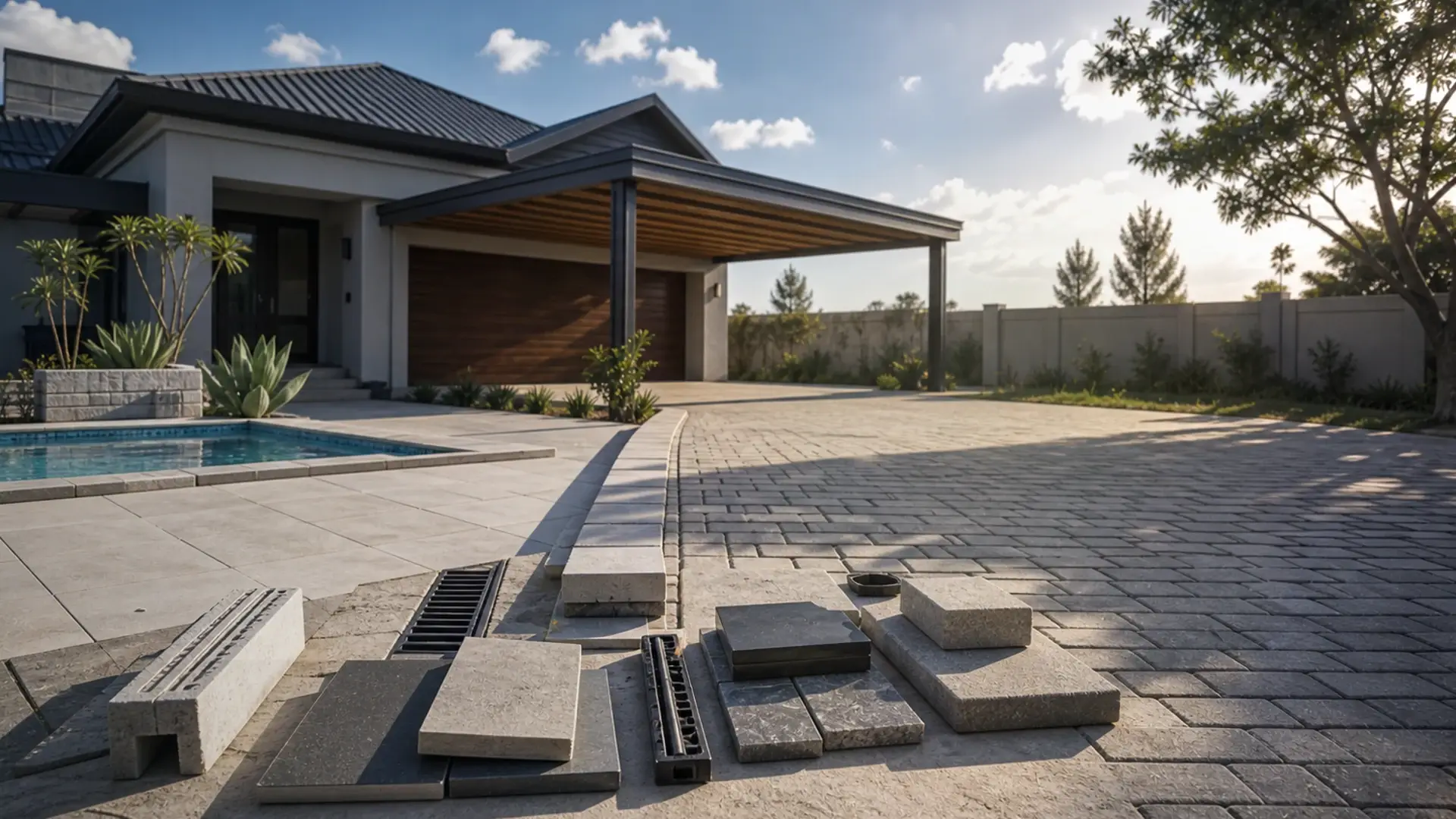
Paving Prices in Benoni
Per-m² costs by paver type and base spec – driveways, patios and the clay-ground prep that decides longevity
Cost summary
Paving prices in Benoni – per-m² bands by paver type and base spec, with the clay-ground preparation that decides how long it lasts.
Indicative planning guidance for Benoni — not a quote. Final cost depends on scope, finish level and site conditions.
Cost at a glance
| Finish / spec level | Indicative rate | Typical total |
|---|---|---|
| Cement (bevel) | R500/m² | R26 400–R33 600 |
| Clay | R660/m² | R34 848–R44 352 |
| Flagstone / cobble | R800/m² | R42 240–R53 760 |
Indicative totals for a 60 m² project · indicative 2026 guidance, not a quotation. Use the calculator below for your exact size, or request tailored cost guidance.
Instant estimate
Paving cost calculator
Driveway / patio paving by area, paver and base prep.
11 min read
On this page
Curious which surface will give your home the best look without blowing your budget?
Homeowners in Rynfield, Northmead and Lakefield often ask the same practical question: how do paving prices in Benoni change with materials for driveways or patios? Our platform, buildingcontractorsinbenoni.co.za links you to local experts so you can compare materials, service options and realistic quotes.
We help you get a clear estimate for the areas you plan to surface. The final price depends on material choice, base specification, labour and approvals.
Use our directory to request up to three quote options where available and to check vetted contractors who work across the East Rand. This makes it easier to plan your budget and manage expectations.
Read on to learn which materials suit your property, what to confirm in writing, and how to gather reliable quotes for your next outdoor upgrade.
Understanding Paving Prices Benoni and Market Trends
More property owners are weighing long-term value rather than upfront installation figures. Improving your kerb appeal adds measurable value to your home and helps when you sell.
Market trends favour durable, low-maintenance materials that cut lifetime cost. When you compare prices across our building cost guides, focus on total cost of ownership — supply, installation, maintenance and repairs.
Choose a recognised service and get clear quotes. Our platform connects you with experienced paving contractors who know local soil and climate conditions across nearby areas.
- Investing in quality work increases resale value and reduces ongoing upkeep.
- Durable materials give better long-term performance and look.
- Consider whole-of-life cost, not only the initial price.
- Discuss material options early so the result fits your home style.
- Good contractors advise on drainage, falls and finish — get these wrong and you learn why paving sinks.
Key Factors Influencing Your Paving Budget
Understand a few simple inputs and you get better, more reliable quotes.
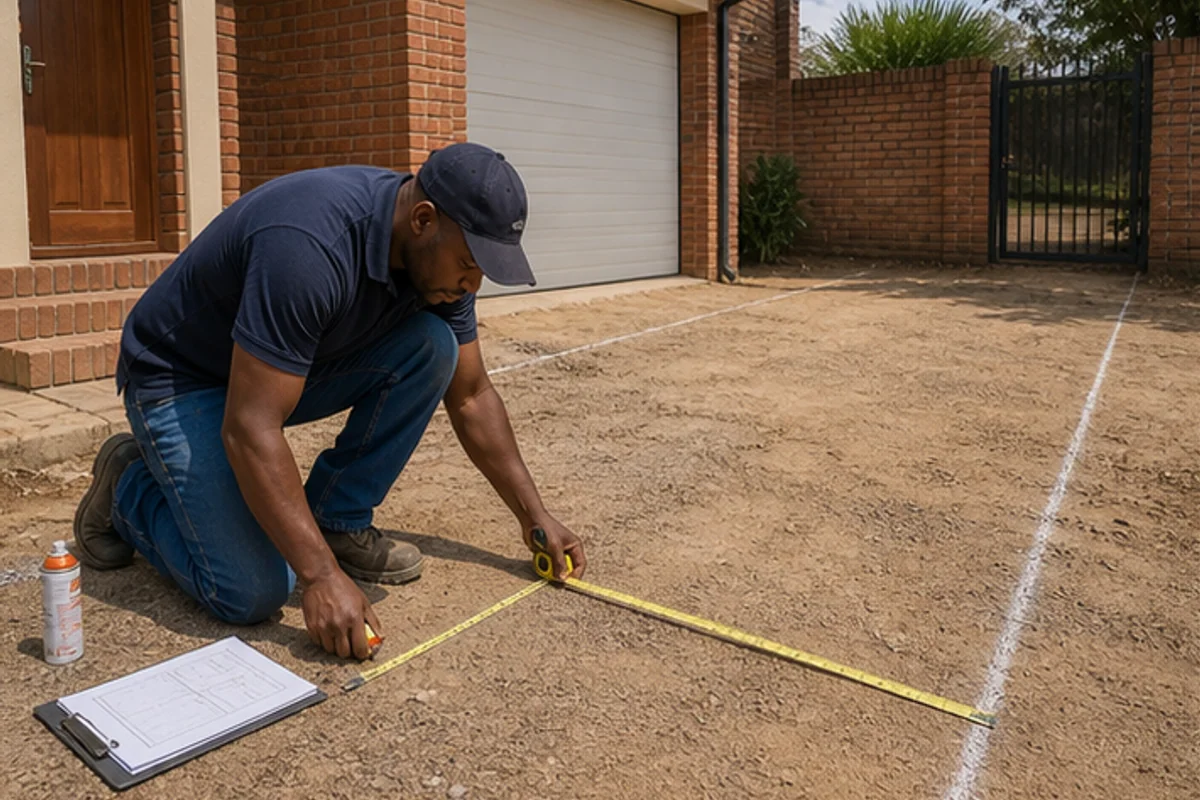
Measure the areas you plan to surface by multiplying length by width in metres. Do this for every distinct section—driveway, patio or path—and note irregular shapes separately so contractors can estimate accurately.
Measuring your area
Take at least two measurements and round up to allow for cutting and wastage. Record totals in square metres and share these with each service provider when you request an estimate.
Labour and installation variables
Labour typically sits around R100–R200 per m² depending on complexity and the team’s skill — these figures are guidance, not a quotation, per our terms of use. A simple, flat area costs less than work with steep falls, steps or tight access.
- The type of materials you choose affects preparation time and final cost.
- Poor site access can raise the price due to extra equipment or manual handling.
- Ask for a detailed breakdown — know the difference between an estimate and a quote — so the price covers all materials and labour.
- Experienced contractors will check existing levels and drainage before finalising a quote.
- Clear vehicle access at your home can reduce installation time and associated labour charges.
Comparative Costs by Material Type
Different blocks and stone options deliver distinct looks and maintenance needs for your property.

Concrete blocks are the common, cost-effective option. They typically range from R120 to R200 per square metre depending on the manufacturer and finish.
Clay bricks give a classic appearance and long service life. They sit between budget blocks and premium stone for overall value.
Natural stone offers a high-end finish. Expect costs over R500 per square metre, but stone brings unique texture and long-term appeal.
- Installation varies: some materials need specialist techniques that affect total cost and schedule.
- Compare long-term maintenance and sealing requirements before you decide.
- Ask contractors for samples so you can see colour and texture on site.
| Material | Typical cost (per m²) | Durability | Notes |
|---|---|---|---|
| Concrete blocks | R120 – R200 | Good | Cost-effective, many colours and sizes |
| Clay bricks | R180 – R300 | Very good | Traditional look, long lifespan |
| Natural stone | R500+ | Excellent | Premium finish, higher maintenance and installation care |
Technical Base Specifications for Long-Term Durability
Long-term performance starts below the surface — on the sub-base and how it is prepared.

Compaction and sub-base
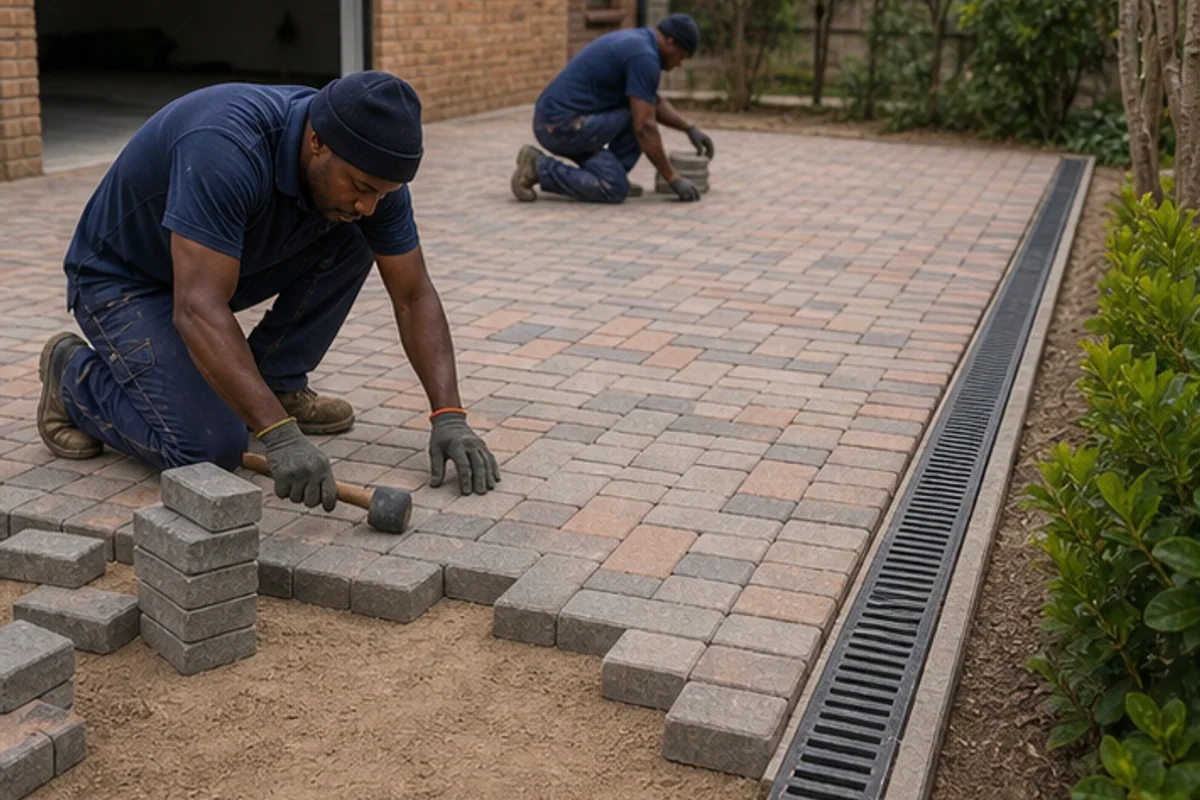
Achieving durability requires a solid sub-base. Contractors must excavate to the correct depth, then compact layers to prevent settling. Good compaction reduces future movement and keeps paving blocks stable.
Edge restraints
Edge restraints stop lateral spread and keep units locked in place. Without them, areas can weaken and edges may fail, creating costly repairs later.
Drainage and falls
Design correct falls so stormwater moves away from your home. Proper drainage avoids pooling, undermining the base and harming nearby foundations.
- Poison the sub-base to limit weed growth that lifts blocks and spoils the finish.
- Quality installation and correct base work protect your investment and reduce long-term cost.
- Ask contractors about their base depth, compaction method and drainage details before accepting a quote.
On our platform you can compare service notes and realistic prices for installation. Prioritise these technical steps to ensure the work remains stable and attractive for many years.
Essential Considerations for Property Scope and Site Preparation
A clear site brief stops surprises — list removals, level changes and stormwater needs first.
Before work starts, confirm scope extras such as the removal of existing paving and rubble disposal. Include these items in your written quote so the final price reflects the real effort on site.
Adjusting ground levels is often necessary. A smooth transition between new surfacing and garden beds or steps prevents trip hazards and keeps finishes tidy.
- Stormwater management protects your property value by preventing erosion and water damage.
- High-quality base materials create a stable foundation for your chosen blocks or slabs and boost long-term value.
- Site access, rubble removal and level adjustments all influence the total cost — ask for these line items in the estimate.
“A well-prepared site is the single biggest factor in ensuring a level, long-lasting result.”
Use our platform to find contractors experienced in complex site preparation. Discuss the full scope and service expectations up front to avoid hidden costs and ensure a seamless installation.
Connecting with Trusted Local Contractors
Connecting with experienced, local contractors saves time and reduces unexpected costs.
Start by checking each contractor’s experience, portfolio and client references. Ask for photos of recent work and contact details for two referees.
Confirm insurance and certification before any site visit. Proper cover protects you if damage or injury occurs during installation.
- Request at least two or three written quotes to compare service, materials and total cost.
- Ask contractors to list materials, labour, access needs and any approvals in the quote.
- Check timelines, payment schedule and warranty terms in writing.
Our platform connects you to independent contractors who work across local suburbs. You get access to vetted profiles, sample work and verified references.
“Compare quotes and check past work; a clear contract prevents most site disputes.”
| What to check | Why it matters | Action |
|---|---|---|
| Portfolio & references | Shows quality of work | Request photos and two referees |
| Insurance & certification | Risk and compliance | Ask for policy details and copies |
| Written quote | Prevents hidden costs | Get materials, labour and price in writing |
Making Informed Decisions Through Our Quote Request Process
Requesting a few detailed estimates helps you avoid surprises and control project spend.
Use our quote request process on buildingcontractorsinbenoni.co.za to get up to three building quotes, or up to five where available, from independent local contractors.
Our platform makes it simple to compare installation options, materials and cost. Review each estimate for scope, access needs and block type so you can compare like for like.
We do not perform the work. The platform connects you to contractors who handle site visits, final price and warranties. Read each quote carefully and confirm timelines before you accept an offer.
FAQ
What affects paving prices in Benoni per m² for driveways and patios?
Several factors determine the cost per m²: the type of paver you select, the required base specification (sub‑base depth, compaction and geotextile), site access, excavation and removal of existing material, drainage provision, edge restraints, and local labour rates. Complex patterns, steep falls or retaining walls add time and materials, raising the unit cost.
How do material choices change the per‑m² cost?
Different materials have different supply and installation costs. Concrete interlocking blocks are widely used and competitive. Clay bricks tend to cost more for both material and labour. Natural stone and high‑density porcelain tiles are at the upper end of the market. The specification of the base and sealing or jointing products also influences the final price.
How should I measure my area to get an accurate estimate?
Measure the length and width of the area in metres and multiply to get m². For irregular shapes, break the area into rectangles or triangles, calculate each and add up. Also note levels, slopes and obstacles such as trees and drains — contractors need these details for reliable quotes.
What base specification is needed for a durable driveway?
A durable driveway usually needs a well compacted sub‑base of crushed stone or aggregate, typically 150–300mm depending on soil and load. A compacted bedding layer of coarse sand or stone dust and proper compaction are essential. Geotextile membranes can help on weaker soils. Confirm the proposed depths in writing.
Why are edge restraints important and what should I expect?
Edge restraints keep blocks locked in and prevent spreading under load. They can be concrete kerbs, cast in‑situ edges, or concrete filled angle iron. Without proper restraints, joints open and the surface deforms. Ensure your quote specifies the type and finish of edge restraint to avoid later repair costs.
How do drainage and falls affect installation and cost?
Correct falls and drainage prevent water pooling and damage. Providing adequate falls may require excavation, new levels or channel drains, which add cost. Inadequate drainage leads to premature failure, so accept quotes that include drainage solutions appropriate for your site.
Can poor site access influence the final quote?
Yes. Limited access can increase labour time, require manual handling rather than machinery, and raise waste removal costs. Inform contractors of gate widths, drive gradients and parking to ensure realistic quotes.
How much does labour typically contribute to the overall cost?
Labour can account for 30–60% of the total, depending on complexity. Skilled installation — correct bedding, jointing and compaction — reduces long‑term maintenance. Ask for a labour breakdown in the quote so you can compare contractors fairly.
Should I get written specifications with my quotes?
Always. A clear, written specification should list materials, base depths, type of edge restraint, drainage details, compaction standards, finishes and warranty terms. This prevents misunderstandings and gives you a basis for comparing multiple quotes.
How many contractor quotes can I request through the platform?
You may request up to three independent quotes, or up to five where available. Independent contractors handle site visits, final pricing, scheduling and warranties. Use the quote process to collect comparable, written proposals before deciding.
What local suburbs around Benoni should I mention when requesting quotes?
Mention your specific suburb and nearby landmarks to help contractors assess travel and access. Suburbs like Rynfield, Rynsoord, Sunnyridge and Farrarmere can affect response times and minor travel costs. Accurate location details speed up site visits and improve quote accuracy.
Do contractors include material warranties and workmanship guarantees?
Reputable contractors will provide workmanship guarantees and indicate manufacturer warranties for materials. Confirm the duration and scope in writing, including who is responsible for follow‑ups and any exclusions for settlement or misuse.
What should I confirm about maintenance and cleaning after installation?
Ask contractors for recommended cleaning, joint maintenance and any sealing schedules. Some materials benefit from sealing to reduce staining; others require periodic joint sand top‑ups. Clarify whether the contractor offers maintenance services and at what cost.
How can I compare quotes effectively?
Compare line‑by‑line: material brand and grade, base depth and composition, compaction method, edge restraint type, drainage work, finishes, labour hours, waste removal and warranty. Cheaper quotes may omit important items — use the specification to spot gaps.
Are approvals or municipal permits required for paving work?
Some alterations to driveways, kerb crossovers or stormwater connections require council approval or compliance with local bylaws. Check with your contractor and the local municipality; include any permit costs in the overall budget.
How do I reduce costs without compromising durability?
Reduce design complexity, choose cost‑effective block types, limit decorative borders, and avoid excessive excavation where possible. Prioritise a correct sub‑base and edge restraint — skimping here raises maintenance and repair costs later.
What documentation should I receive before work starts?
Obtain a written contract or work order detailing scope, materials, base spec, start and completion dates, payment schedule, warranty and contact details. Ensure any variations are recorded in writing to prevent disputes.
Related building cost guides
Ready to compare?