

Building Warranties and Defects Liability
Workmanship cover, defect periods, exclusions, snag handling, and recourse questions
In short
Workmanship warranties, defect liability periods and snag recourse on SA building work – what to confirm in writing before accepting a quote.
11 min read
On this page
Are you sure your next renovation will truly be protected?
Understanding building warranties South Africa matters if you own property in Benoni and plan a construction project. The NHBRC is reviewing the Home Building Manual to strengthen consumer protection, and that change affects how you check contractor terms.
At buildingcontractorsinbenoni.co.za our platform links you to independent contractors who know local standards. You request quotes, compare up to 3 options (or up to 5 where available), and choose the contractor who offers clear, written warranty terms.
A solid warranty is more than a promise; it gives security during defects liability periods and helps protect your investment. We do not perform any construction work; our service simply helps you find vetted professionals and keeps every phase documented for clarity.
This introduction explains what to confirm in writing, how quotes differ by access, materials and labour, and why a proper warranty matters for long-term peace of mind.
Understanding Building Warranties South Africa and Your Consumer Rights
In Benoni, knowing your rights under consumer law makes a construction project safer for property owners.

Explicit versus implicit protections
Explicit versus Implicit Warranties
Explicit warranties appear in the contract. They state the contractor’s obligations on materials, workmanship and the period of cover.
Implicit guarantees arise from the Consumer Protection Act. These legal terms ensure a house meets basic habitability and safety requirements even if they are not written down.
Habitability and Workmanship Standards
When you request quotes through our platform, ask each contractor to list their warranty terms and the process for claims on defective work.
Confirm who is responsible for approvals, materials and remedial work. A clear contract should show the duties of both parties and the purpose of the project.
“The Consumer Protection Act gives owners the right to quality work and a proper remedy when standards are not met.”
- Verify material quality and workmanship in writing before any work starts.
- Ask contractors how they manage claims and what periods apply.
- Keep all quotes and signed terms on file for security and future reference.
| Item | Explicit (Contract) | Implicit (Law) |
|---|---|---|
| Coverage | Listed durations for repairs and defects | Minimum habitability and safety standards |
| Who enforces | Owner and contractor per contract | Consumer Protection Act and courts |
| What to check | Materials, workmanship, claim steps | Fit-for-purpose and basic living conditions |
The Legal Framework for Construction Quality and Compliance
Compliance with NHBRC Technical Requirements, sets the baseline for any home project in Benoni.
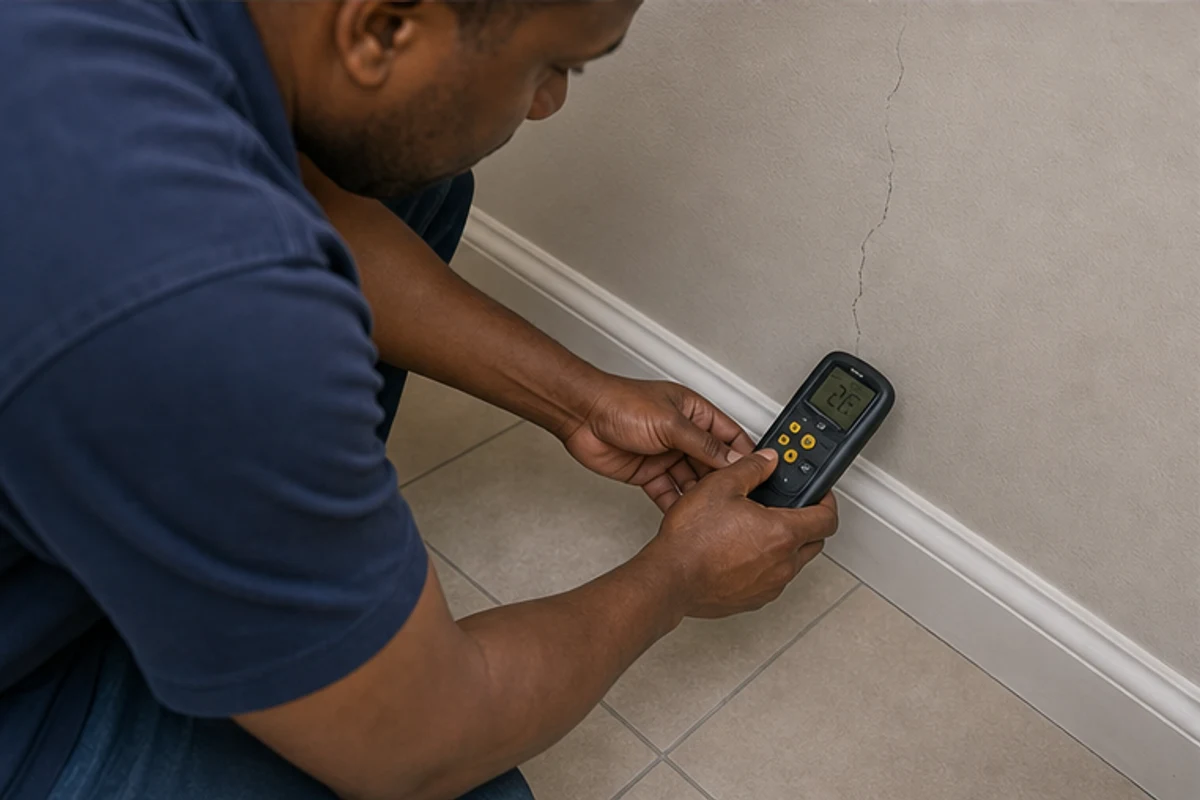
The law requires contractors to meet national safety and habitability standards before work begins and after practical completion.
Our platform points you to contractors who understand these regulations and who can supply the necessary certificates to prove compliance.
- Compliance with building regulations is mandatory; check certificates and proof of registration.
- The construction industry depends on clear standards to protect housing consumers and ensure quality.
- Agree contract terms that set out dispute resolution, responsibility for damages and remedial obligations.
“Verify certificates and written terms before you sign; that is your first line of protection.”
Confirm a contractor’s track record and ask for copies of documents showing compliance — our comparison of NHBRC-registered vs unregistered builders explains why this matters. Doing so protects your right to a safe house and helps the project fulfil its purpose.
Navigating the Defects Liability Timeline
Understanding the key dates in a defects period helps you hold the contractor to quality standards.
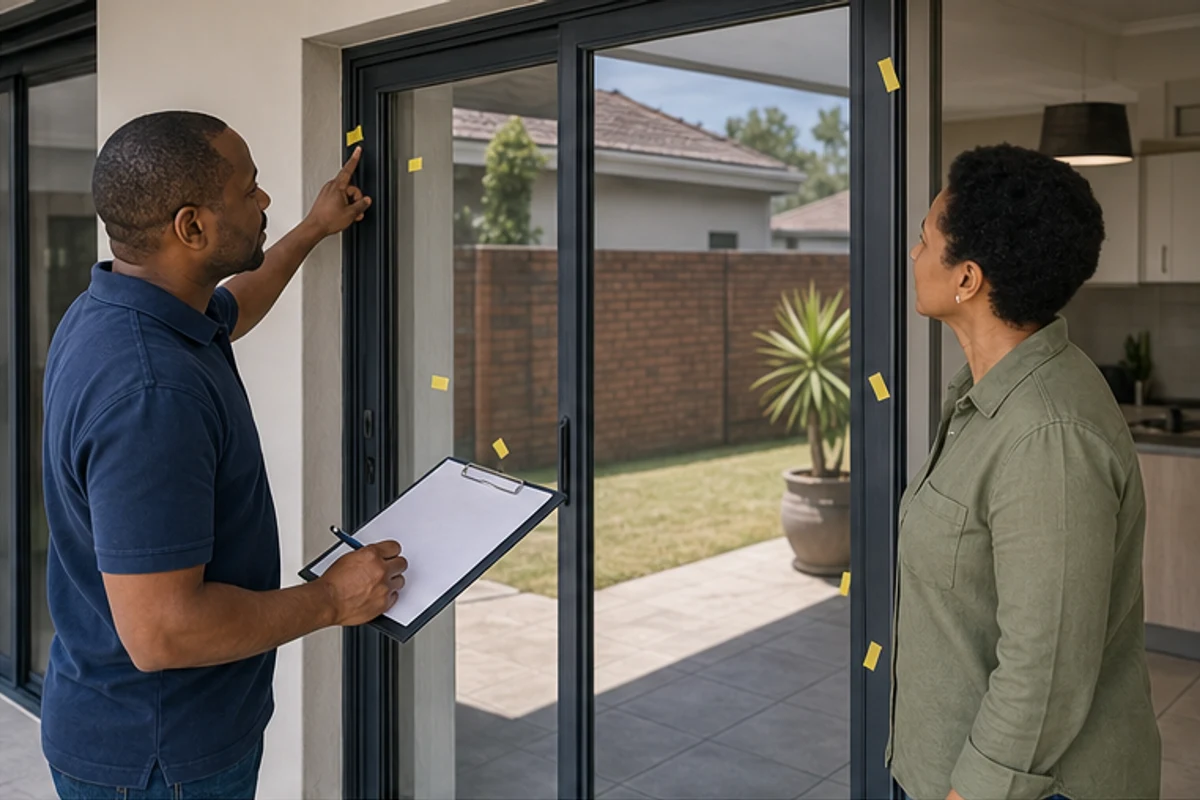
Practical Completion and Snagging
Practical completion marks when the site is ready for use, but it does not end the contractor’s obligations.
At handover, create a snag-list with your contractor. Record each issue, required fix and a sign-off date.
Example snag-list item: “Item 1: Cracked plaster in lounge - Sign-off required by 15 November.”
Final Inspection and Retention Release
The final inspection must clear the snag-list before any retention is released.
A common industry practice is a one-year callback period for defects. During this period the contractor must return to fix issues noted under the contract or warranty.
Latent Defects versus Normal Wear
Normal wear is expected; latent defects are hidden faults that appear later — our guide to voetstoots and building defects covers who is liable.
Compliance with building regulations and proper materials reduce the risk of latent defects.
Keep inspection certificates and all communications with the builder. These records support any claims for damages or remedial work.
“Document every issue during inspections and keep dated proofs; this protects your right to proper remedial work.”
- Document snags clearly and date each sign-off.
- Retain certificates to prove compliance and quality standards.
- Use the defects period to request repairs in writing and track responses.
| Stage | Action | Who | Typical Timing |
|---|---|---|---|
| Practical completion | Handover and snag-list | Owner & contractor | At handover |
| Defects period | Contractor fixes snags | Contractor | Commonly 12 months |
| Final inspection | Sign-off and release of retention | Owner & contractor | After snags resolved |
| Latent defects | Claim if hidden issues appear | Owner with evidence | May arise after completion |
Comparing Warranty Layers and Coverage
A clear comparison of cover types helps owners spot gaps before works start.

Why layers matter: For a typical construction project in Benoni, cover comes from three sources: the contractor’s workmanship warranty, manufacturer guarantees for materials, and statutory schemes for structural defects.
| Cover type | Typical period | What it protects |
|---|---|---|
| Contractor workmanship | 1 year | Defects from the contractor’s work and compliance with contract terms |
| Manufacturer guarantee | Up to 10 years | Specific materials (eg roofing), subject to product terms and registration |
| Statutory structural cover | Up to 5 years | Major structural failure and compliance with building regulations and standards |
| Owner responsibilities | Ongoing | Maintenance to keep cover valid and follow supplier instructions |
- Confirm in documents which party is liable for repairs and which cover applies to each defect.
- Ensure contract terms distinguish company obligations from third‑party guarantees.
- Use the platform — more about how it works — to request contractors who list certificate, claims process and compliance evidence.
“Layered cover gives wider protection, but only if you read the terms and keep up maintenance.”
Securing Reliable Professional Support for Your Project
Before any site work starts, confirm the contractor’s scope, timelines and claims process in writing.
Use buildingcontractorsinbenoni.co.za to request quotes and compare options. You can ask for up to three quotes, or up to five where available. Our platform links you to independent contractors who handle site work and materials, not a service that employs builders.
Choose a contractor who provides a written contract that states the purpose of the work, timelines, payment terms and resolution steps for any issues. Ask for references, proof of insurance and certificates that show compliance with local regulations and law.
“A clear contract and a contractor’s references are your first line of protection.”
- Request detailed quotes that list materials and responsibilities.
- Confirm who handles defects, damages and claims during the defects period.
- Keep all documents, correspondence and sign-offs to protect your rights.
| Step | What to ask | Why it matters |
|---|---|---|
| Quote request | Scope, materials, timeline | Shows contractor’s understanding of the project |
| Contract review | Terms, obligations, claims process | Clarifies who fixes issues and when |
| Compliance check | Certificates, registrations | Proves adherence to regulations and industry standards |
Conclusion
Protecting your investment starts with clear contract terms, documented inspections and sensible expectations.,
Confirm in writing who is responsible for each task, the defects period and what counts as maintenance. Clear records make claims straightforward.
Use our platform to request quotes and to connect with independent contractors in Benoni who list their terms, compliance certificates and references.
Understand the difference between contractor, manufacturer and structural cover so you know what to expect and when to act.
Document every stage—from the initial site visit to the final snag-list sign‑off—and keep copies of all certificates and communications.
When you are ready, request quotes through the site to find the right professionals for your next renovation in Benoni.
FAQ
What is a defects liability period and how long does it typically last?
The defects liability period is the time after practical completion during which the contractor must repair defects at their cost. In Benoni projects it commonly runs for 3 to 12 months for minor works, but structural or specialised guarantees can extend to 5 years or more depending on the contract and insurance cover. Always confirm the exact period in writing before work starts.
What’s the difference between explicit and implicit warranties?
Explicit warranties are written guarantees in your contract or supplied by a manufacturer. Implicit warranties are legal promises implied by law — for example, that work will be carried out with reasonable skill and due care. Both can apply; explicit terms override implied ones where clearly stated, so check contract wording closely.
Do I have consumer rights if my contractor is not registered with a professional body?
Yes. Housing Consumer Protection laws and ordinary contractual and delictual remedies still apply. You can claim for breach of contract, negligent workmanship or faulty materials. However, membership of a recognised body like the NHBRC or SACAP can simplify enforcement and give additional recourse, so ask for registration and proof.
What counts as a latent defect and how is it different from normal wear?
A latent defect is a hidden fault that wasn’t discoverable at practical completion and only appears later — for example, defective waterproofing causing concealed rot. Normal wear and tear covers expected deterioration from use. Latent defects often attract longer liability periods and may be covered by insurance or specific guarantees.
When should practical completion and snagging be carried out?
Practical completion is the stage when the work is sufficiently complete for occupation. You should do an initial snagging inspection as soon as practical completion is declared to list outstanding items. Record snags in writing, request timescales for remedy, and retain a final retention sum until items are fixed.
What is retention and when is it released?
Retention is a portion of the contract sum held back by the owner to ensure defects get fixed. Release typically occurs after final inspection or once the defects liability period ends, subject to clearance of outstanding snags. Agree retention amount and release conditions in the contract and get a release certificate once satisfied.
How do different warranty layers work (contractor, manufacturer, and insurer)?
Coverage layers stack: contractor guarantees workmanship; manufacturers guarantee materials; insurers offer third‑party policies or latent defect cover. Contractor obligations take priority for workmanship issues. For materials faults contact the manufacturer; insurers step in where policy terms apply. Keep all certificates, invoices and warranties together to make claims easier.
What should I check before accepting a final certificate of completion?
Confirm all contracted work is completed to the agreed standard, snag list items are closed or scheduled, statutory approvals and compliance certificates are on file, and warranties and guarantees are handed over. Verify contractor and subcontractor details, supplier warranties and any retention release terms before signing off.
Can I claim for damage caused by substandard materials supplied by the contractor?
Yes. You can claim against the contractor for supplying and installing substandard materials. You may also claim against the material supplier under their warranty. Document the defect, get an independent inspection if needed, and put your claim in writing with proposed remedies and reasonable timelines.
Do home improvement insurers cover latent defects or construction defects?
Standard household insurance rarely covers latent construction defects. There are specific latent defect and structural warranty policies that do. Check policy exclusions, claim limits and waiting periods. For major projects insist on appropriate project or completion insurance and request proof from the contractor.
How do I handle a dispute if the contractor refuses to fix defects?
Start with a formal written notice detailing defects and requested remedies. Use mediation or arbitration clauses in your contract where available. If those fail, pursue claims through small claims court or civil action. Report serious misconduct to professional bodies like the NHBRC or the Master Builders Association and keep all communications and evidence.
Which documents should I collect to support a warranty or defect claim?
Keep the signed contract, scope of work, written quotes, change orders, practical completion certificate, snag lists, compliance certificates, supplier warranties, proof of payment and photos of defects. These documents speed up claims with contractors, insurers or certifying bodies.
How do local approvals and compliance affect warranty claims?
Statutory approvals and compliance certificates (planning, electrical, plumbing, occupation certificates) show work met minimum standards. Lack of approvals can jeopardise warranty validity and complicate claims. Ensure permits and final compliance certificates are obtained and filed during the project.
Can I ask for up to three quotes through your platform for my Benoni renovation?
Yes. You may request up to three independent contractor quotes, or up to five where available. Contractors manage site visits, final quotes, timelines and warranties. Confirm all terms in writing and check credentials before appointing anyone.
Ready to compare?