
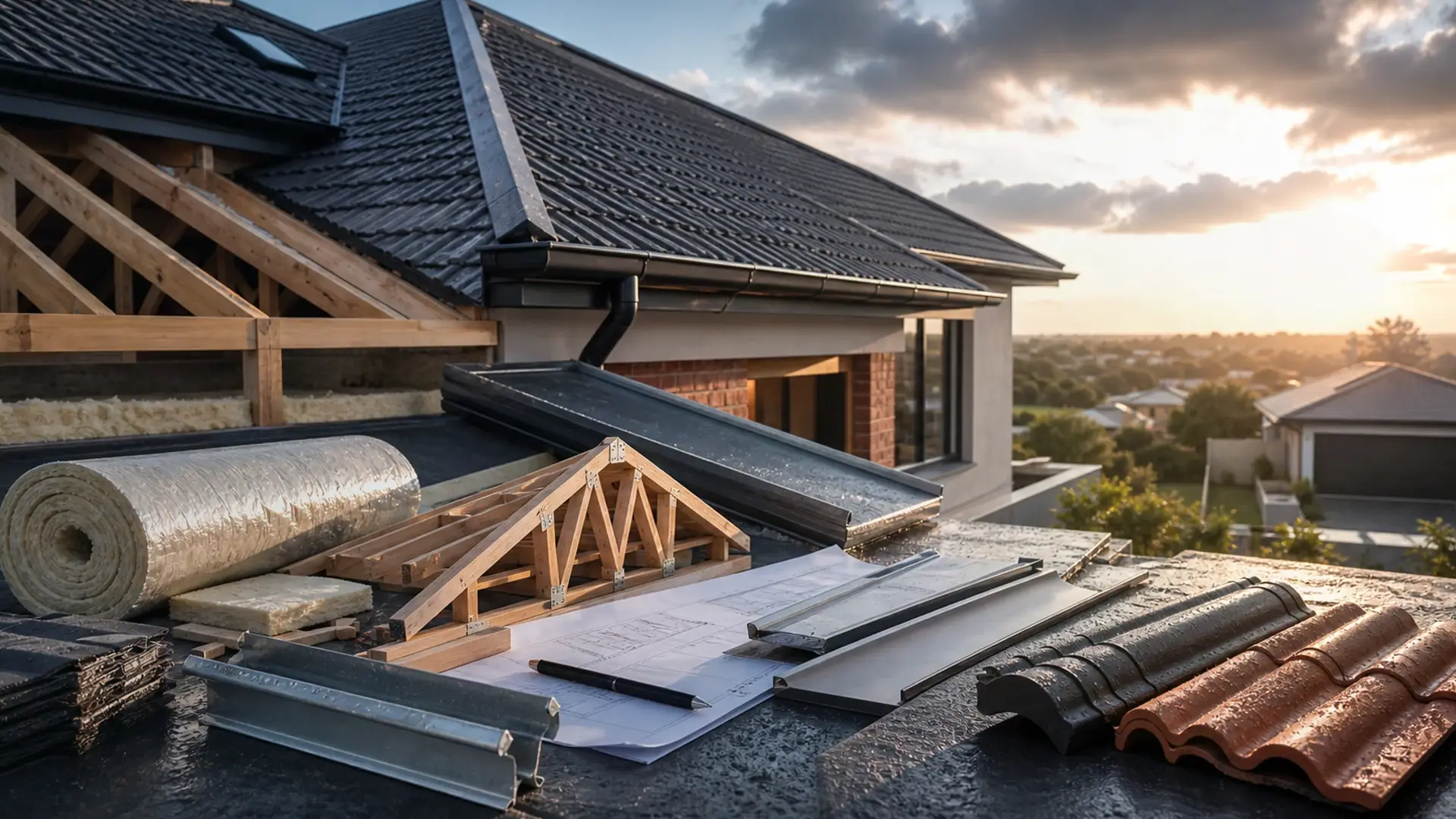
Tile vs Metal Roofing in Gauteng
Hail performance, heat, noise, lifespan and repair costs weighed for the East Rand storm belt
Quick verdict
Tile or metal roofing in Gauteng's hail belt? Impact performance, heat, noise, lifespan and repair patterns weighed for East Rand homes.
13 min read
On this page
Curious which roof will hold up best in Benoni’s hail and heat — and save you money over decades?
The tile vs metal roofing decision gives you a clear choice for your home: long-lived concrete roof tiles with classic profiles, or the sleeker, flame-resistant metal option that often carries a Class A fire rating.
Understanding how each material handles hail, heat, noise and repair costs helps you make a sound investment. Concrete and clay roof tiles have proven durability for 60–75 years, while many modern metal roofs last about 30–45 years.
Design, colour range and energy efficiency also matter. Tiles offer more variety and thermal mass that can cut cooling bills, whereas metal can reflect heat and lower summer temperatures when specified correctly.
Read on to see practical comparisons for Benoni properties — from lifespan and maintenance to installation and ongoing costs — so you can request accurate quotes and choose the best option for your neighbourhood and budget.
Understanding the Tile vs Metal Roofing Debate
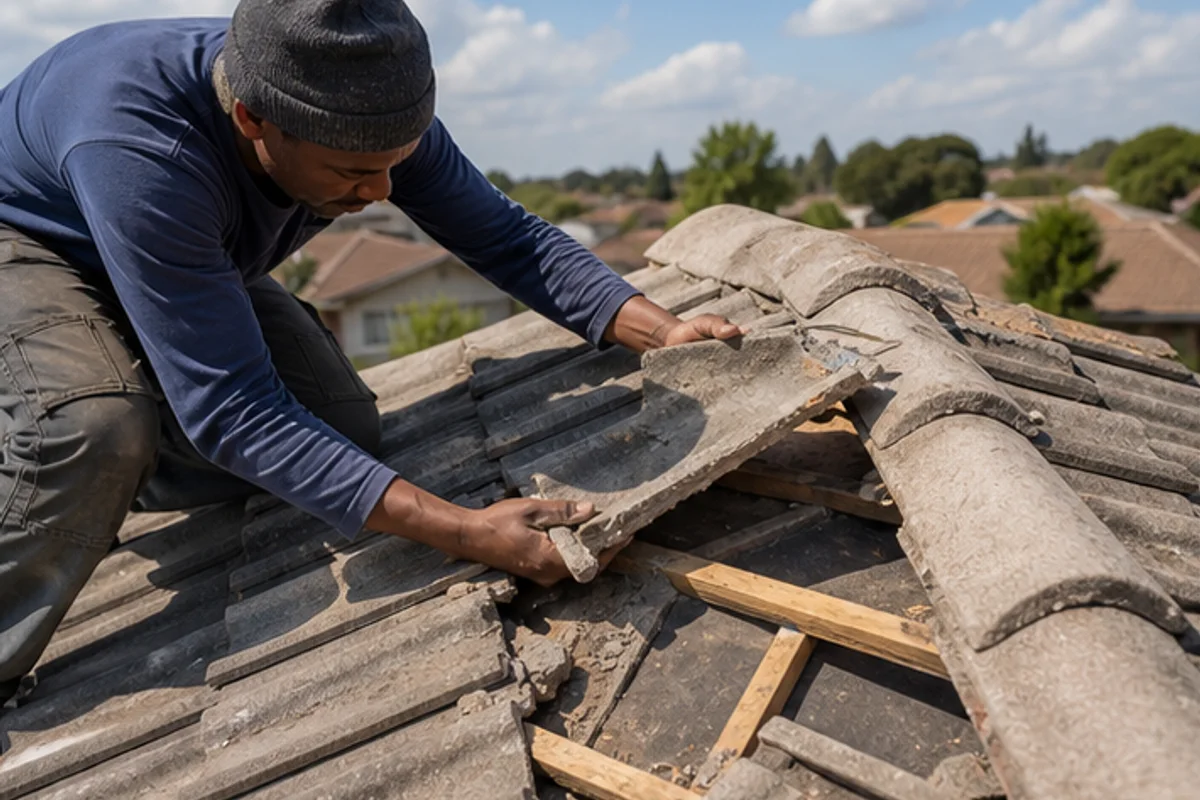
Deciding between a tile roof and a metal roof often comes down to how much you pay now versus what you pay over time — our roof repair costs guide sets the ranges. Initial installation cost for steel sheets can be moderate; prices vary by coating and insulation, roughly R150–R600 per m².
Concrete roof tiles are made from cement, sand and water, moulded and cured to copy clay or slate. Clay has a long history and a classic look many Benoni homeowners prefer.
Modern metal roofing has moved on. Profiles can mimic shakes, shingles and slate so you do not have to compromise on style. That flexibility makes metal roofing a viable option for many suburban homes.
- Consider maintenance: concrete and clay tiles need periodic checks; metal sheets require different upkeep — see more building decisions compared.
- Think energy: thermal mass in tiles can help cooling, while some finishes on steel improve reflectance and efficiency.
- Design and choice: both materials offer a wide range of colours and profiles to suit your property.
Environmental Resilience in the East Rand Hail Belt
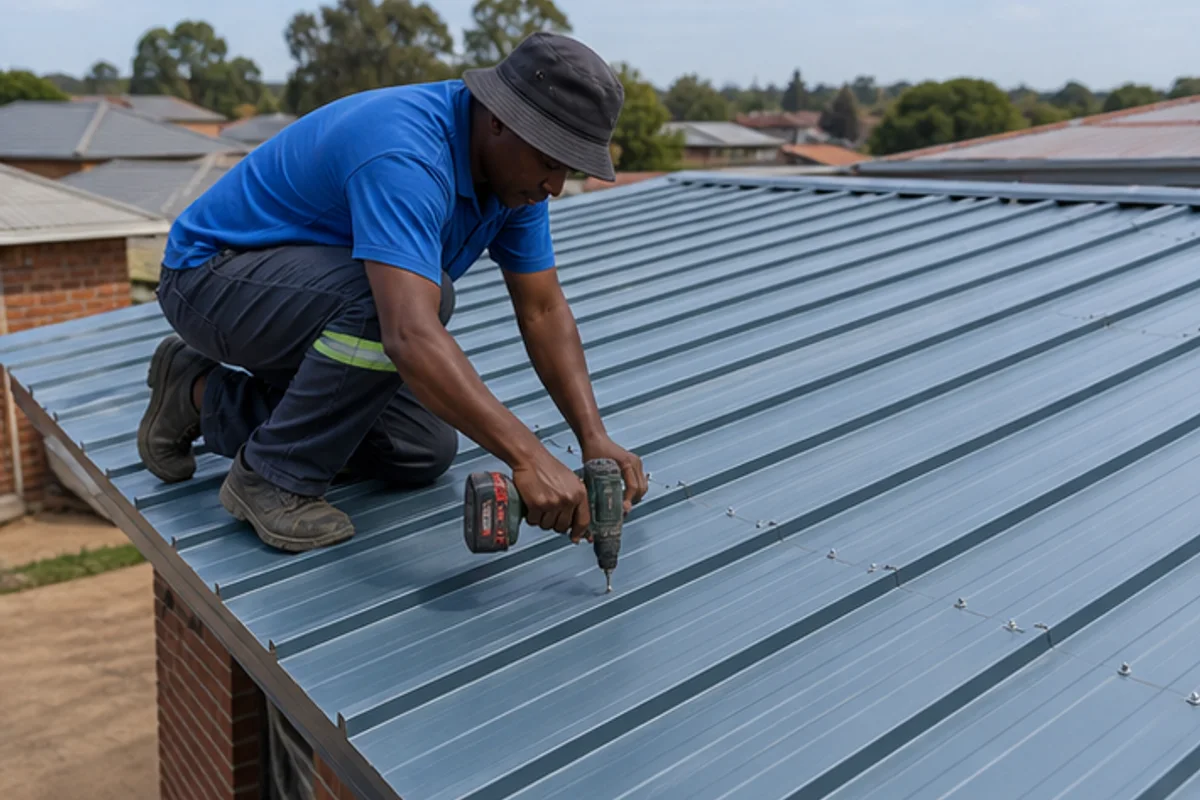
Hail, wind and intense summer heat shape how roofs perform across the East Rand.
Hail impact on roof systems
Underwriters Laboratory testing shows that many certified metal roof assemblies resist significant hail and impact. Clay and concrete roof tiles commonly survive golf ball-sized hail — see our guide to hail damage roof repairs — but experts advise an asphalt underlayment for extra protection.
Protecting your home from storm damage
High-wind certified systems can withstand gusts up to 140 mph, a useful spec for Benoni properties. Aluminium options resist corrosion in heavy rain and coastal conditions.
“Choose materials and underlayments rated for impact and wind; this reduces damage and repair costs after a storm.”
- East Rand hail-belt demands durable materials and prompt urgent roof leak repairs after events.
- Steel provides structural strength when installed correctly on residential property.
- Ask your roofing contractors about specific resistance levels for rain, winds and impact.
| Feature | Clay / Concrete | Aluminium / Steel | Recommendation |
|---|---|---|---|
| Hail resistance | Holds golf ball hits; may chip | UL-tested impact resistance | Use underlayment and inspect after storms |
| Wind resistance | Good when fixed well | Up to 140 mph for certified systems | Choose certified fixings and design |
| Corrosion & moisture | Porous; needs proper bedding | Aluminium naturally anti-corrosive | Use coated steel or aluminium in wet areas |
| Frost resistance | Grade 1 resists severe frost; grade 3 is minimal | Not applicable | Select grade to match local weather |
Structural Realities and Mixed Roofing Systems
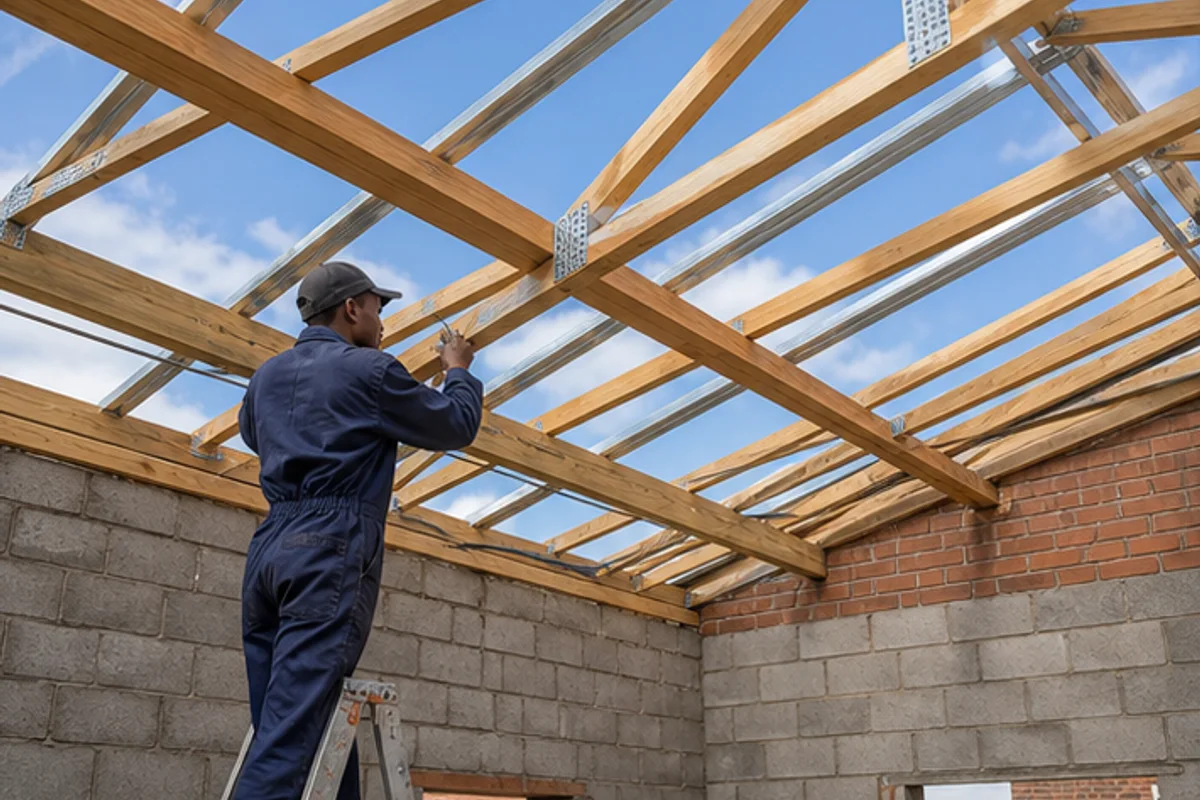
When older clay roofs meet new sheet additions, the junctions demand careful planning and inspection.
Assess the structure first. Installing concrete roof tiles is labour‑intensive and heavy. An engineer should confirm the frame can cope before installation begins.
Managing tile and IBR additions
Many Benoni properties have a main tile roof with IBR or box‑profile sections added later. These additions are often chosen because a metal roof sheet is lighter and easier to fix over existing rafters.
Key points to check:
- Load capacity: heavy roof tiles may need extra supports to avoid sagging over time.
- Flashing: join points must be sealed correctly to prevent leaks where two materials meet.
- Drainage: ensure water sheds from the higher covering into the lower sheet without pooling.
“Proper flashing and competent installation reduce long‑term maintenance and weather damage.”
Consider energy and cost implications when mixing materials. Ask your contractor to confirm how the different systems will interact and to supply drawings or an engineer’s sign‑off before work starts.
Comparative Performance Criteria for Gauteng Homes
For Benoni homes, performance comes down to how each material handles hail, heat and the load on your rafters.
Hail resilience and weight
Hail: modern metal roof panels usually resist impact better than clay options, which can crack under large stones. Inspect after storms and use an impact-rated underlay where possible.
Weight: concrete roof tiles are much heavier than steel systems. That extra mass needs a stronger frame and may require an engineer’s sign‑off on older roofs.
Insulation and noise factors
Thermal performance: clay tiles provide strong thermal mass and help keep interiors cooler in hot weather.
Sheets reflect heat well, lowering cooling costs when specified with reflective coatings and added insulation. Noise from heavy rain is a common concern, but modern insulation and sarking reduce sound effectively.
Lifespan expectations
Concrete roof tiles often last 60–75 years with regular maintenance. Steel systems usually offer 30–45 years depending on finish and care.
“Choose the system that matches your structural capacity and long‑term plans for the property.”
- Concrete tiles: top lifespan and thermal mass, heavier and higher installation cost.
- Steel panels: lighter installation, better reflectance and lower cooling costs; add insulation for noise and comfort.
| Criteria | Clay / Concrete | Steel / Aluminium |
|---|---|---|
| Hail resilience | Good; can crack under very large hail | High impact resistance when certified |
| Insulation & noise | Excellent thermal mass; quieter by nature | Reflective; needs insulation to reduce rain noise |
| Weight | Heavy – may need structural strengthening | Lightweight – suits older frames |
| Lifespan (years) | 60–75 with maintenance | 30–45 depending on finish |
Long-term Maintenance and Repair Considerations
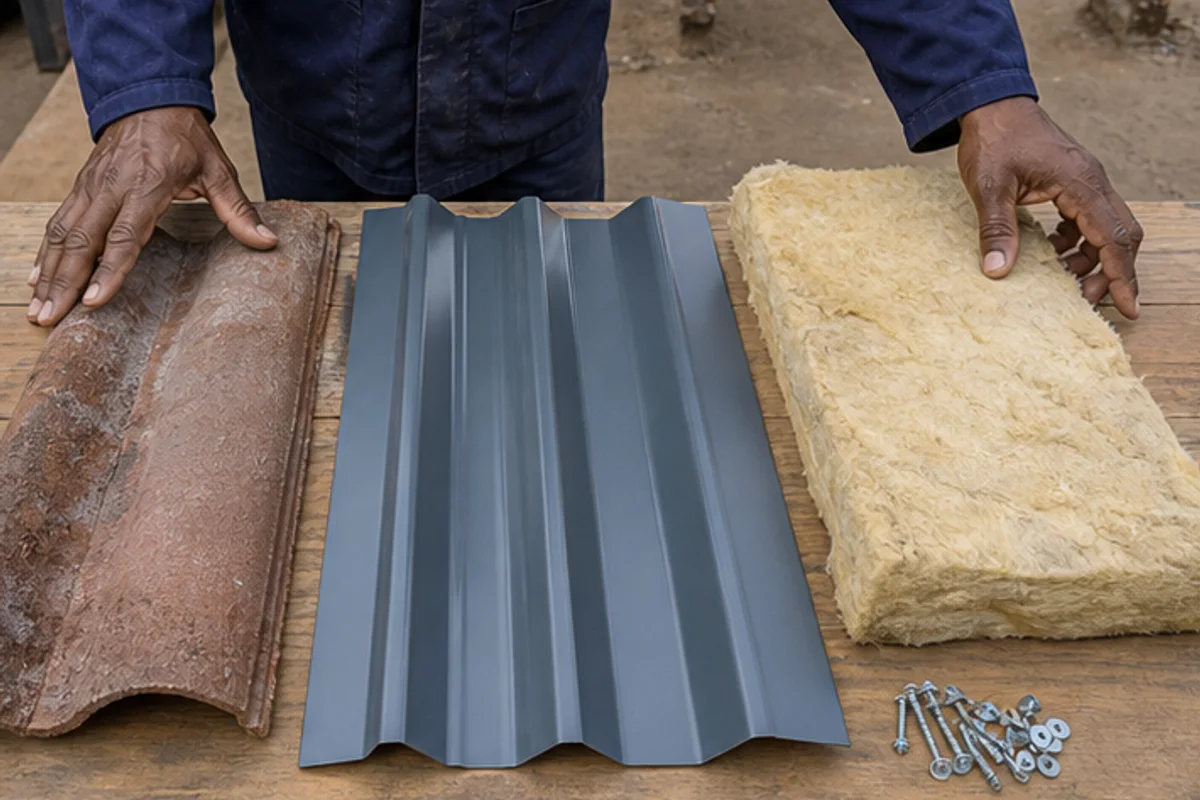
Simple checks and timely repairs make a big difference to how long a roof lasts in Benoni. Schedule an annual inspection after the storm season and after any significant hail or wind event.
Cleaning is basic: remove debris, clear gutters and wash soiled areas with mild soap and water. Regular cleaning slows algae and moss growth on clay and concrete surfaces.
Inspections and small repairs matter. Replace cracked roof tiles quickly to stop leaks. For sheet systems, dents or deep scratches can lead to corrosion and often require whole‑panel replacement.
- Keep a small supply of matching roof tiles for quick swaps.
- Check flashing at valleys, chimneys and joins; reseal where sealant has failed.
- Address paint damage on coated systems to prevent rust.
“A good maintenance routine lowers long‑term cost and reduces the chance of emergency repairs.”
Plan for cost and time: budget for minor repairs each year and ask contractors for written quotes and materials lists. Our platform can connect you with local contractors who advise on the best maintenance schedule for your property.
Energy Efficiency and Thermal Performance
Your roof is the single largest surface that controls solar gain and daytime heat transfer. Choose a finish and profile that match Benoni’s hot summers and the way you use the house.
Reflectance and cooling costs
High-reflectivity pigments on a metal roof can direct much of the sun’s radiation away. This can lower cooling bills by up to 40% in peak months when combined with insulation.
Concrete tiles work differently. Their mass soaks up heat by day and releases it after sunset, which smooths indoor temperature swings without relying on mechanical cooling.
“Look for products with a high Solar Reflective Index (SRI) and strong thermal emittance to get measurable savings.”
- Check SRI ratings: higher numbers mean better reflection and lower energy use.
- Consider maintenance: regular cleaning preserves reflectivity and extends savings.
- Match design to use: light colours and reflective coatings suit sun‑exposed roofs; heavy tiles suit homes that benefit from thermal mass.
Ask contractors in Benoni for SRI and emittance data on materials, and for advice on insulation and ventilation to maximise efficiency and long‑term savings.
Navigating Your Quote Request Process at buildingcontractorsinbenoni.co.za
Start your quote request in Benoni to compare practical installation choices and local costs quickly.
Visit buildingcontractorsinbenoni.co.za to begin. Our platform matches you with independent contractors who specialise in roofing services for Benoni homes and property owners.
How it works:
- Submit site details, plans and photos so contractors can assess access, materials and labour needs.
- Request up to 3 building quotes, or up to 5 quote options where available, to compare costs and service levels.
- Independent contractors will follow up to arrange inspections and produce final, written quotes.
Please note our quote request process gives project guidance only. We do not perform construction or renovation work.
“Confirm labour, finishes and project timelines in writing with your chosen contractor before any work starts.”
Use multiple quotes to check value, warranties and timelines. Our platform, buildingcontractorsinbenoni.co.za, helps Benoni property owners find reliable professionals and sensible options for installation and repair.
| Step | What you provide | What contractors supply | Tip |
|---|---|---|---|
| Initial request | Address, photos, brief scope | Site visit offer, preliminary queries | Be clear about access and deadlines |
| Quotation | Plans, material preferences | Written quote with costs and exclusions | Check labour and finishes in writing |
| Comparison | All received quotes | Price, lead time, warranty details | Compare scope, not only price |
| Appointment | Chosen contractor contact | Start date, contract and schedule | Keep records of agreements |
Final Guidance for Your Roofing Investment
A sensible roof choice balances long-term cost, heat control and local weather resilience.
Investing in new roofs affects safety, property value and energy efficiency for many years. Consider concrete roof tiles for thermal mass or choose metal roofing where weight and quick installation matter.
Proper installation and regular maintenance are essential to secure savings and avoid costly repairs.
Use the quote request process at buildingcontractorsinbenoni.co.za to collect multiple options, check contractor references and confirm materials, access and written schedules before work starts.
Make your choice with local advice, clear quotes and a focus on long‑term performance. Good planning protects your home and your budget in Benoni.
FAQ
What are the main differences between tile vs metal roofing for homes in Benoni?
Tile vs metal roofing differ in weight, impact resistance, and thermal behaviour. Clay or concrete tiles are heavy and sit well under strong winds, but they can crack under large hail and need a reinforced roof structure. Steel and zincalume sheets are lighter, shed hail and rain quickly, and are faster to install. Consider local hail exposure, roof pitch, and your house’s rafters when choosing.
How does hail in the East Rand affect roofing choice and performance?
Hail size and frequency in the East Rand hail belt influence damage risk. Larger hailstones can fracture clay tiles and dent or puncture thin steel sheets. Heavier, thicker profiled steel or stone-coated steel offers better impact resistance. For tiles, choose high-quality concrete or interlocking clay and confirm the installer fits underlay and battens correctly to reduce secondary leaks.
Can I mix tile and IBR or other metal systems on the same roof?
You can combine tile and IBR systems, but you must manage weight transitions, flashing details, and water flow. Metal sheets require a steeper fall for good run-off and different fixing methods. Ensure a structural assessment, compatible gutters, and properly detailed junctions to avoid leaks and uneven loading on rafters.
What about maintenance and repair costs over 20 years?
Tile roofs generally need less frequent full replacement but higher-cost repairs when tiles break or bedding fails. Metal roofs have lower replacement costs and quicker repairs for isolated sheets but may need recoating for corrosion in coastal or polluted areas. Factor labour, access scaffolding in Benoni suburbs, and material availability when estimating lifetime costs.
How do insulation and noise compare between tiles and metal sheets?
Tiles provide better mass-based thermal inertia, slowing heat transfer and reducing cooling loads in summer. Metal reflects heat well if finished in high-reflectance colours but transmits sound more readily during heavy rain or hail. Adding bulk insulation, an air gap, or acoustic underlay under metal will reduce noise and improve thermal performance.
Which option gives a longer lifespan for Gauteng weather conditions?
Properly installed concrete tiles and well-maintained profiled steel (with good galvanising or paint systems) can both last 30 years or more. Clay tiles can exceed 50 years with correct maintenance. Lifespan depends on quality, installation, ventilation, and local hail and sun exposure.
Will metal roofs reduce my cooling bills compared with tiles?
Metal roofs with light-coloured, high-reflectance finishes and appropriate insulation can cut cooling costs. Tiles’ thermal mass helps moderate indoor temperatures, but without reflective coatings tiles can absorb heat. Choose finishes and insulation based on your existing roof space and budget to optimise savings.
How do I get competitive, reliable quotes from local contractors in Benoni?
When requesting quotes, provide roof plans, photos, suburb and access details, and your preferred materials. Ask for up to three independent quotes, check contractor credentials, warranty terms, labour rates, and scope of work in writing. Confirm who handles council approvals and whether scaffolding or specialised lifts are needed.
What structural checks should I request before switching from tiles to metal sheets?
Ask contractors to inspect rafter spacing, purlin conditions, and roof bracing. Metal is lighter but fixes differently; battens or purlins may need repositioning. Confirm whether ridge lines, gutters and downpipes require modification and get a written note of any strengthening work and related costs.
Do insurance premiums differ between tile and metal roofs after hail damage?
Insurance can vary. Insurers may charge higher premiums or excesses where properties are in high hail-risk zones. They often consider roof material, age, and prior claims. Keep maintenance records and choose impact-resistant finishes to improve repair outcomes and support claims.
What are practical aesthetic and design considerations for Benoni homes?
Tiles suit heritage and Mediterranean styles and add texture and depth. Modern profiled or standing-seam steel suits contemporary homes and allows slimmer eaves. Stone-coated steel gives a tile-like appearance with lighter weight. Match roof colour and profile to local suburb streetscapes and any homeowners’ association rules.
Which materials resist staining, moss and algae in our climate?
Concrete and clay tiles can attract moss in shaded, humid areas and may need periodic cleaning or treatments. Painted steel with quality finishes resists staining and is easier to clean. Use compatible cleaning agents and avoid abrasive methods; get a contractor to quote cleaning, moss treatment, and preventive maintenance.
Are there local regulations or approvals to consider for roof replacement in Benoni?
Yes. Check with your local municipality for building plans, roof alterations and energy or heritage requirements. Contractors should advise on approvals and provide compliant drawings. Confirm any required neighbour notifications or height restrictions before work begins.
What should be in writing before work starts to avoid disputes?
Obtain a detailed written quote showing materials, brands, warranties, labour, projected timeline, payment milestones, and who handles approvals. Include details on scaffolding, waste removal, and post-installation inspections. Keep all correspondence and ask for manufacturer warranty documents for finishes and fixings.
Ready to compare?