
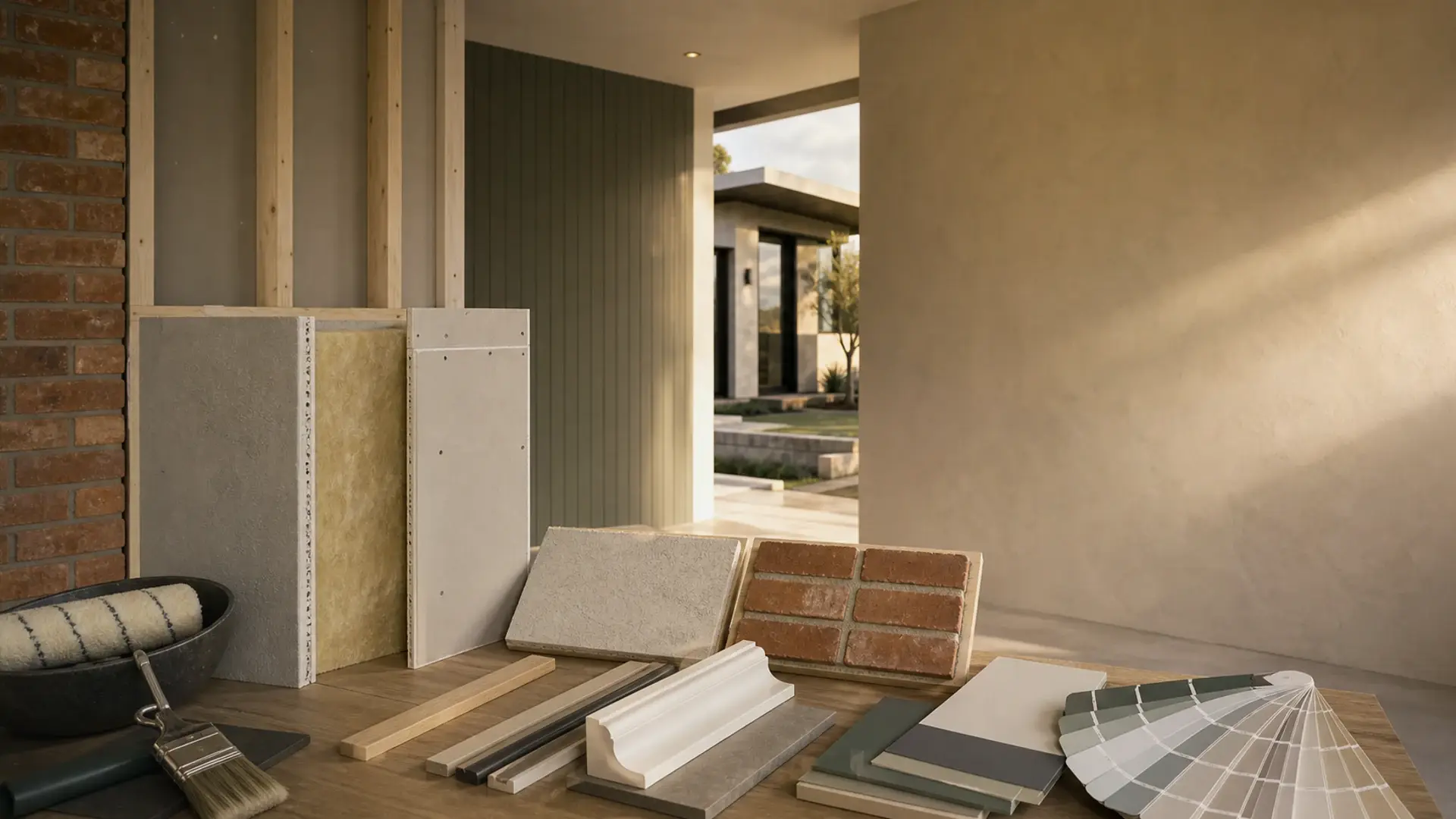
Plastering and Skimming Prices in Benoni
Per-m² bands for plaster, skim and repairs – inside, outside and the crack-prep that keeps finishes flat
Cost summary
Plastering prices in Benoni – per-m² bands for plaster, skim coats and repairs, with crack preparation and curing explained simply.
Indicative planning guidance for Benoni — not a quote. Final cost depends on scope, finish level and site conditions.
Cost at a glance
| Finish / spec level | Indicative rate | Typical total |
|---|---|---|
| Skim coat | R95/m² | R6 688–R8 512 |
| Standard plaster | R150/m² | R10 560–R13 440 |
| External / repair | R210/m² | R14 784–R18 816 |
Indicative totals for a 80 m² project · indicative 2026 guidance, not a quotation. Use the calculator below for your exact size, or request tailored cost guidance.
Instant estimate
Plastering cost calculator
Internal/external plastering by wall area and condition.
13 min read
On this page
Curious how much you should budget per square metre for a wall in Benoni? Many homeowners assume a single fixed rate, but local rates vary by finish, labour and materials. A clear view of the market helps you avoid surprise costs.
Typical Benoni figures sit around R85–R118 per square metre, while Gauteng ranges from R80 to R150 per square metre. Use these bands to estimate a 100m² project and check the likely plastering prices in Benoni for your walls before you commit.
Our platform gives you transparent local data and lets you compare up to three plastering and skimming quotes through our quote request process. Get competitive quotes see material and labour breakdowns, and confirm the finish that suits your property or renovation.
Visit buildingcontractorsinbenoni.co.za to start. With clear rates and practical guidance, you can plan your project confidently and avoid common budgeting pitfalls.
Key points: Use local per square metre bands to budget; compare up to 3 quotes via our platform.
Understanding Plastering Prices Benoni and Market Benchmarks
Understanding per square metre benchmarks — across our building cost guides — helps you separate material impact from labour when planning a wall project in Benoni.
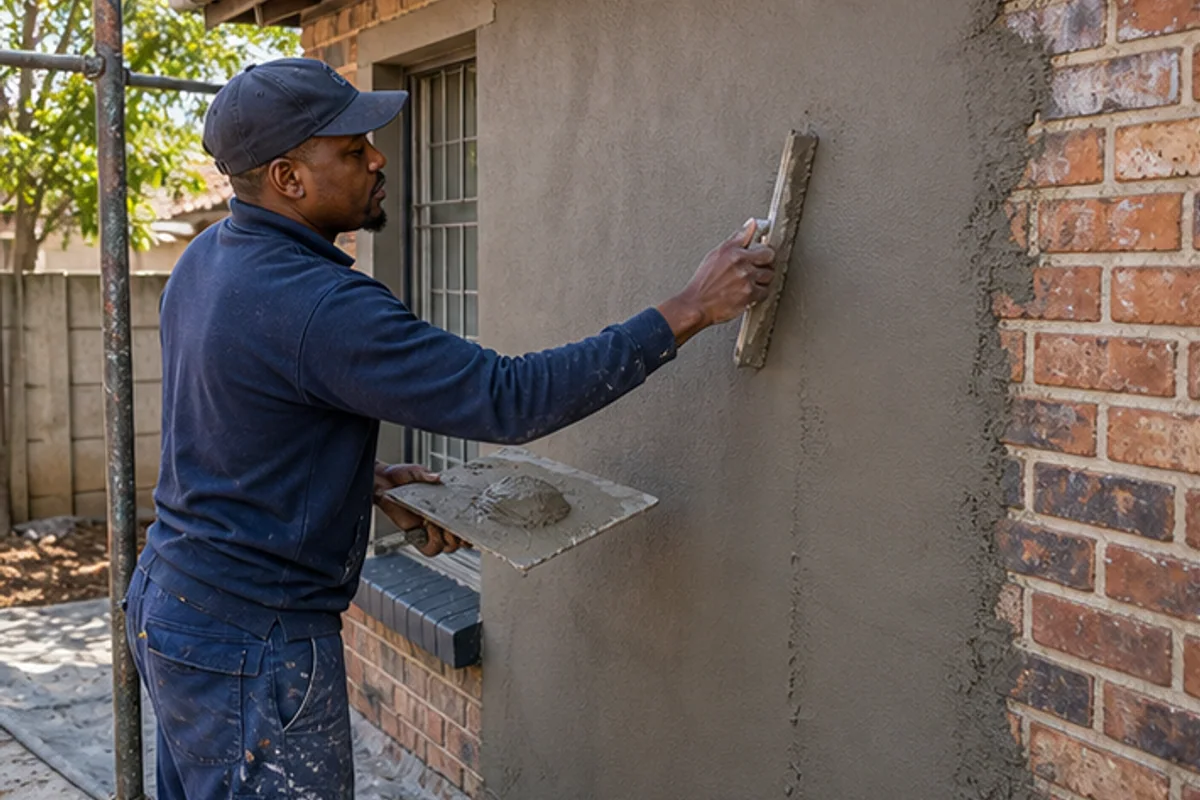
Per-m² Band Table for Plastering Services
| Service type | Typical per square metre | Common materials | Typical time to complete |
|---|---|---|---|
| Standard cement render | R85–R110 | Cement, sand, bonding agent | 2–4 days per 50m² |
| Gypsum skim (smooth finish) | R100–R150 | Gypsum, primer, skim coats | 3–5 days per 50m² |
| Textured or decorative finish | R120–R180 | Specialty additives, texture compounds | 4–7 days per 50m² |
| Repair and patchwork | R95–R140 | Repair mortars, mesh, primers | Varies by damage |
Material and Labour Cost Split
Labour usually accounts for 25–30% of total construction cost in this market. That share affects the cost per square metre you will see on quotes.
Material costs differ sharply. A cement plaster mix is cheaper than premium gypsum finishes — our guide to skimming vs plastering explains the choice. That difference shows up in both the per square price and the time needed for curing.
“High-quality materials and skilled labour are the primary drivers of total cost and long-term value.”
- Ask for itemised estimates that separate material and labour.
- Compare finish types and confirm curing times on the quote.
- Check that the contractor lists materials and brands for clarity.
- Use per square metre bands to set a realistic budget — they’re guidance, not a quotation, per our terms of use.
- Request competitive pricing with itemised lists.
- Factor in time for proper curing when scheduling other work.
Factors Influencing Your Plastering Quote
What a contractor quotes depends on access, scope and the type of finish you choose.
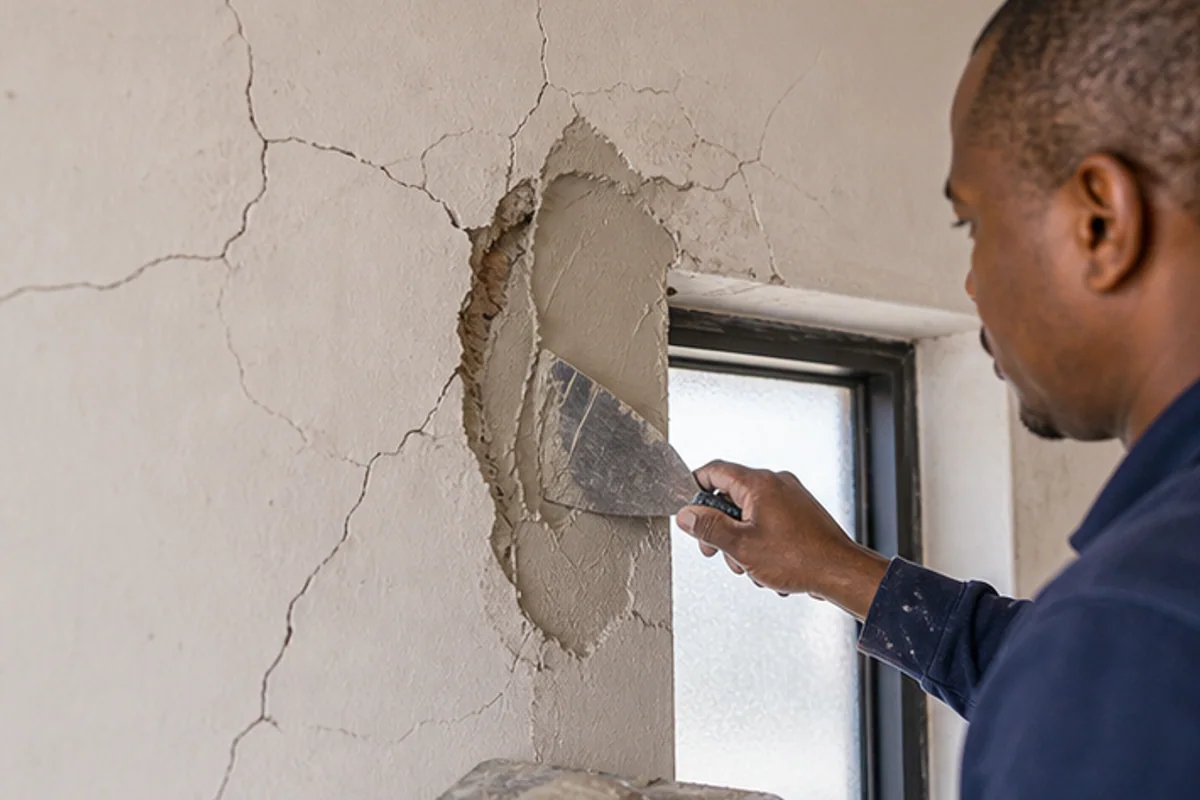
Site access matters. Tight alleyways, scaffolding needs or long haul distances add labour and time. That lifts the cost per square metre.
The project complexity also changes estimates. Structural repairs, curved walls or high ceilings need skilled work and may attract higher rates.
- Confirm material costs and labour details in writing — list brands and quantities.
- Size of the area and the chosen plaster or skim finish affects the price and the cure time.
- Surface preparation is key: cleaning, bonding and repairs must be included in the quote.
- Approvals and contractor assessment can add time and cost for large renovations.
Ask contractors to itemise construction tasks, materials and pricing so you can compare quotes fairly.
“Clear scope, good access and confirmed materials are the quickest route to an accurate quote.”
Trust the scope—plan, communicate and record expectations to keep the work on schedule and within budget.
Navigating Benoni Property Challenges
Local ground conditions in Benoni mean many renovations start with more than a simple surface fix.
Clay movement and structural cracks
Clay Movement and Structural Cracks
Clay-rich soils shift with seasonal wet and dry cycles. That movement commonly shows as hairline splits, stepped cracks at corners and wider breaks in load-bearing walls.
These issues need specialist repair methods to restore structural integrity before any new finish is applied. Failing to fix the root cause raises the risk of repeat repairs and higher overall cost per square metre.
Damp-Wall Warnings
Salt-contaminated plaster can draw moisture into older walls. That creates damp patches, flaking finishes and salt staining that weaken the surface and the substrate.
Professional damp-proofing and correct material selection are essential to stop further migration. Without these measures, a new coat or skim can fail quickly.
“Addressing movement and damp at source protects the long-term value of your property and reduces recurring work.”
- Get a full assessment to quantify project complexity and the likely cost per square metre for repairs.
- Insist your contractor confirms treatments for movement control and damp-proofing in writing.
- Use our platform to request quotes from contractors who know local rates and common issues.
| Issue | Common sign | Typical remedial step | Impact on cost per m² |
|---|---|---|---|
| Clay movement | Stepped/diagonal cracks | Structural repair, stitching, movement joints | Higher — adds specialised labour and materials |
| Salt contamination | Efflorescence, flaking plaster | Remove contaminated material, damp-proof layer | Moderate — adds treatment and drying time |
| Damp ingress | Persistent damp patches | Waterproofing, replaster with suitable material | Higher — extends curing and labour |
Essential Surface Preparation for Quality Finishes
Good surface preparation is the often-overlooked cost line that decides long-term finish quality.
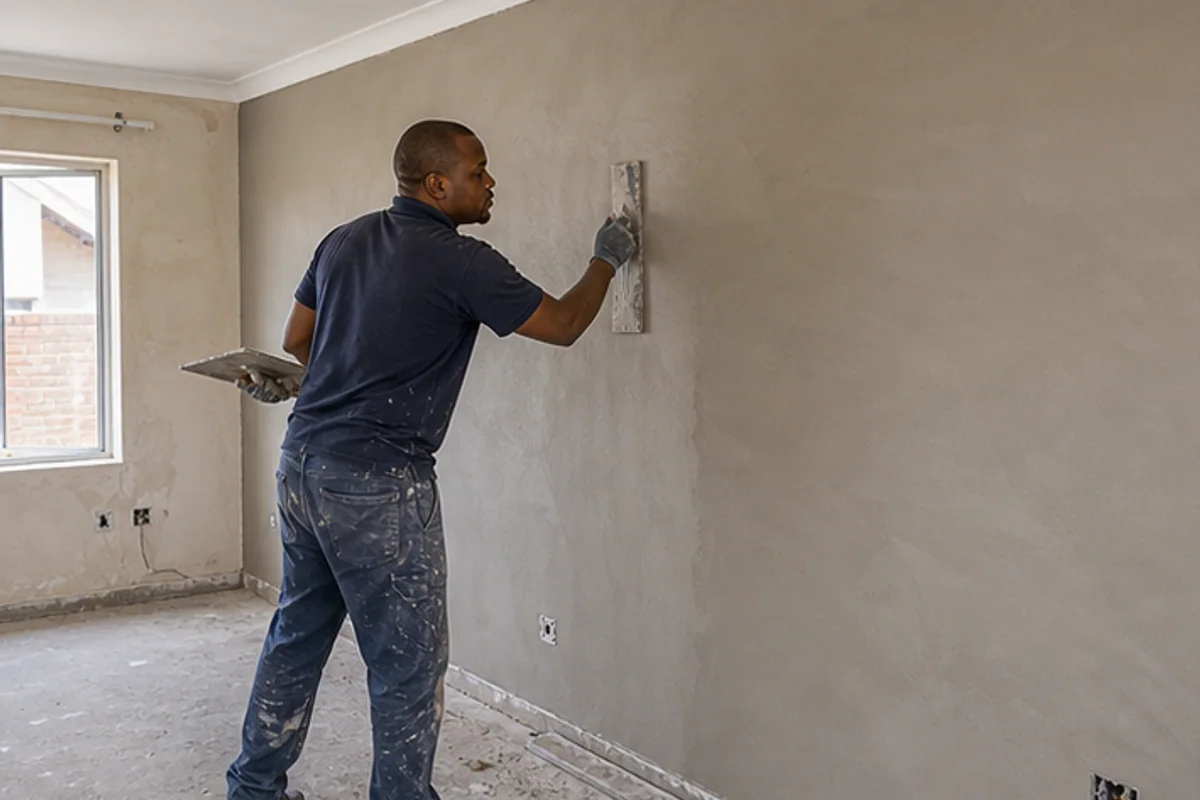
Before a new coat, hidden restoration steps ensure adhesion, durability and value.
Hidden Price Lines for Surface Restoration
Raking out cracks, hacking off loose plaster and treating painted surfaces are common hidden price lines on a quote. These tasks increase labour time and affect the cost per square metre for your renovation.
Ask your contractor for itemised lines that show each remedial step and material. That way you compare realistic rates and avoid surprise charges for surface work on older walls.
- Raking cracks: removes weak material and prepares the substrate for repair.
- Hacking off old plaster: needed where adhesion fails or contamination exists.
- Treating painted surfaces: ensures new cement plaster or gypsum finish bonds correctly.
Proper preparation raises the initial price but protects long-term quality and value. Discuss these lines in writing and confirm time, labour and material costs before work starts.
| Prep task | Why it matters | Typical effect on cost per square metre |
|---|---|---|
| Raking cracks | Removes loose material and reveals extent of repair | Moderate — adds labour and filler materials |
| Hacking old plaster | Needed where adhesion or contamination prevents a good finish | Higher — more labour and waste removal |
| Treating painted surfaces | Ensures bonding for new cement plaster or skim coats | Moderate — primer and extra labour |
| Surface levelling | Creates even base for quality finishes | Variable — depends on size and complexity |
“Confirm restoration tasks on the quote so surface issues do not inflate the final cost unexpectedly.”
Comparing Costs for Skimming and Replastering
Compare the immediate price per square metre for a skim coat against the wider scope and longevity of a full replaster.
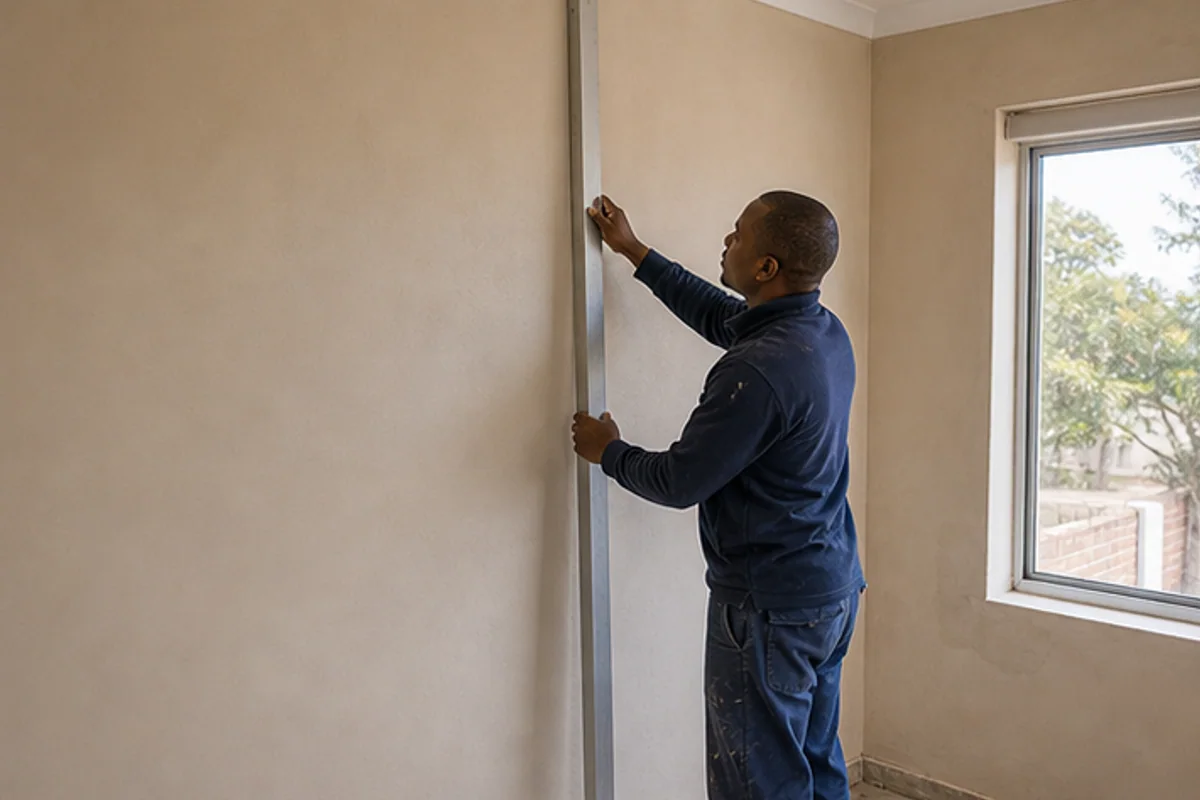
Skimming typically sits between R80 and R110 per square metre. It is the lower-cost option for fair-condition walls and gives a smooth finish quickly.
Replastering raises the cost per square metre but restores damaged substrates and tackles structural faults. Labour and materials differ between the two types of work, so the overall cost and time vary.
- Ask for itemised quotes that separate labour, material and any remedial works.
- Consider long-term value: a full replaster can reduce repeat repairs, while a skim offers a fast aesthetic upgrade.
- Request contractor assessment to confirm the right finish for your walls and the complexity involved.
“Get detailed quotes and compare per square metre rates before you decide.”
Use our platform to request up to three quotes, compare plastering cost options, and pick the finish that suits your renovation budget and quality expectations.
How Our Quote Request Process Works
Finding the right contractor starts with a clear brief. A short, precise description of the wall area, access and the type of work helps contractors assess labour, materials and likely rates.
Connecting with trusted buildingcontractorsinbenoni.co.za
Use our quote request process to get up to three independent building quotes from local professionals listed at buildingcontractorsinbenoni.co.za. You can compare competitive pricing, material choices and estimated time before you book a site visit.
We do not guarantee the number of quotes returned. Each request is handled by independent contractors who provide professional assessments of your property and project complexity.
- Provide clear measurements and photos of the area to improve estimate accuracy.
- Note existing issues — damp, cracks or previous repairs — so materials and labour are correctly priced.
- Ask contractors to itemise material and labour lines, and to confirm expected cure time where relevant.
“Clear information equals better estimates and fewer surprises.”
Visit buildingcontractorsinbenoni.co.za via our platform to submit your request and start comparing quotes. This simple step saves time and helps you choose a contractor who matches your quality and cost expectations.
Final Guidance for Your Upcoming Renovation
Start with a written brief that defines the work, access and finish so contractors can quote accurately. Confirm approvals, site access and any specialist repairs that affect the cost per metre.
For your project in Benoni, check material choices and labour lines. Ask for itemised quotes so you can compare pricing, services and projected plastering costs.
Quality finishes depend on clear scope, a careful contractor assessment and honest communication about expected results. Request at least one detailed quote and keep records of what is included.
Use local quotes to judge value and timing. That way you protect your property, manage construction risks, and get a finish that is worth the cost.
FAQ
What are typical per-m² bands for plaster, skim and repairs in Benoni?
Typical per-m² bands vary by job complexity and finish. For a simple skim finish expect lower rates aimed at smooth walls; medium work involving patch repairs and new skim coats sits in a mid band; full replastering with renders, levelling and multiple coats falls into the higher band. Exact figures depend on materials, wall condition, access and finish quality so always request detailed written quotes.
How do I compare material and labour cost splits on a quote?
Check the quote line items. Materials include cement, sand, bonding agents, mesh and primers. Labour covers site prep, application, drying time and finishing. A clear split typically shows 40–60% labour and 40–60% materials depending on scope. Ask contractors to list brand names and quantities to verify pricing.
What local benchmarks should I use when reviewing market rates in Benoni?
Use recent quotes from at least three independent contractors, check regional trade groups, and compare material lists. Consider nearby suburbs like Brakpan, Boksburg and Kempton Park for market norms. Benchmarks should reflect current cement and sand prices, plus seasonal demand for renovations.
Which factors most influence my final quote?
Key drivers are wall condition (cracks, existing render), scope (full replaster vs skim), surface area, required finish (paint-ready or textured), access and site logistics, drying time, subcontractor availability and local material costs. Permits or structural repairs add to cost.
How do clay soils and foundation movement affect costs?
Homes on clay-rich ground often show movement, which causes hairline to wide cracks. If movement is active, contractors may recommend stabilisation, flexible crack repairs or specialised joints. These remedies increase the quote and can change the recommended finish to a flexible coating or reinforcement mesh.
What damp-related warnings should I watch for before work starts?
Look for rising damp, salt stains, peeling paint and mould. If present, the contractor should identify the moisture source, suggest remedial work such as damp-proof courses, ventilation improvements or waterproof renders. Remediation should be priced separately and confirmed in writing.
What surface preparation is essential for a durable finish?
Essential steps are removing loose render, cutting out damaged sections, applying bonding coats, fixing reinforcement mesh over larger cracks, and priming before final skim. Proper prep prevents bubbling, delamination and rapid cracking after completion.
What are “hidden price lines” for surface restoration?
Hidden price lines are commonly overlooked items such as replacement corner beads, extra mesh for large cracks, moisture testing, scaffold hire, waste removal and extended drying time. Ask for a comprehensive scope to reveal these costs before work starts.
When is full replastering preferable to skimming?
Choose full replastering if the existing render is delaminated, has widespread cracking, or shows deep damp or structural damage. Skimming suits sound substrates with minor imperfections. A site visit will determine whether patch repair and skim or a full replaster is the best value.
How does finish quality affect the overall cost?
Higher-quality finishes—smooth, paint-ready, or textured specialist coatings—require more skilled labour, extra coats and finer materials, raising costs. Standard finishes use fewer labour hours and less premium material, lowering the price. Confirm the desired finish with the contractor before signing.
How does the quote request process work with BuildingContractorsInBenoni.co.za?
Submit your project details and we connect you with up to three independent contractors where available. Contractors arrange site visits, provide written quotes, and handle timelines and warranties. You choose the contractor; the platform does not carry out the work.
What should I confirm in writing before work starts?
Confirm scope of work, materials and brands, surface preparation steps, start and completion dates, payment schedule, warranty terms, contingency for unforeseen repairs and responsibility for scaffold and waste removal. Ensure all exclusions are listed to avoid surprises.
Can I get multiple quotes for a small repair job?
Yes. For small repairs you can still request multiple quotes, but some contractors may charge a call-out fee. Compare scope, materials and warranties rather than price alone to find best value for smaller projects.
How long will typical drying and painting lead times add to the project?
Drying times depend on coat thickness, substrate and weather. Single skim coats may need 2–5 days to dry before painting; full replastering and renders can require one to several weeks for proper curing. Factor drying time into total project duration and quotes.
Which local suppliers and brands should I expect quoted materials from?
Common builders’ merchants stock the cement, lime and related materials you’ll need. Brands and mixes should be listed on the quote. If a contractor wants to use cheaper substitutes, ask for samples and written agreement on performance and warranty.
What payment terms are standard for these projects?
Typical terms include a deposit on acceptance, staged payments tied to milestones (prep complete, plaster applied, finish coats), and final payment on satisfactory completion. Avoid paying the full amount upfront and get warranties in writing.
How do I handle access and logistics for multi-storey homes or tight sites?
Discuss scaffold or elevated work platforms, parking or delivery access, and whether contractors will need to protect floors and furniture. These logistics often appear as separate line items on quotes and affect labour time and costs.
Are warranties and post-work inspections commonly included?
Many reputable contractors offer limited workmanship warranties and will do a handover inspection. Confirm warranty length on finishes and structural repairs, and get any maintenance requirements in writing to keep the warranty valid.
How should I evaluate competing quotes for best value?
Compare detailed scopes, not only total price. Look for specified materials, brand names, surface preparation steps, drying times, exclusion lists, warranties and payment schedules. A mid-range quote with clear detail often offers better long-term value than the cheapest option.
Related building cost guides
Ready to compare?