
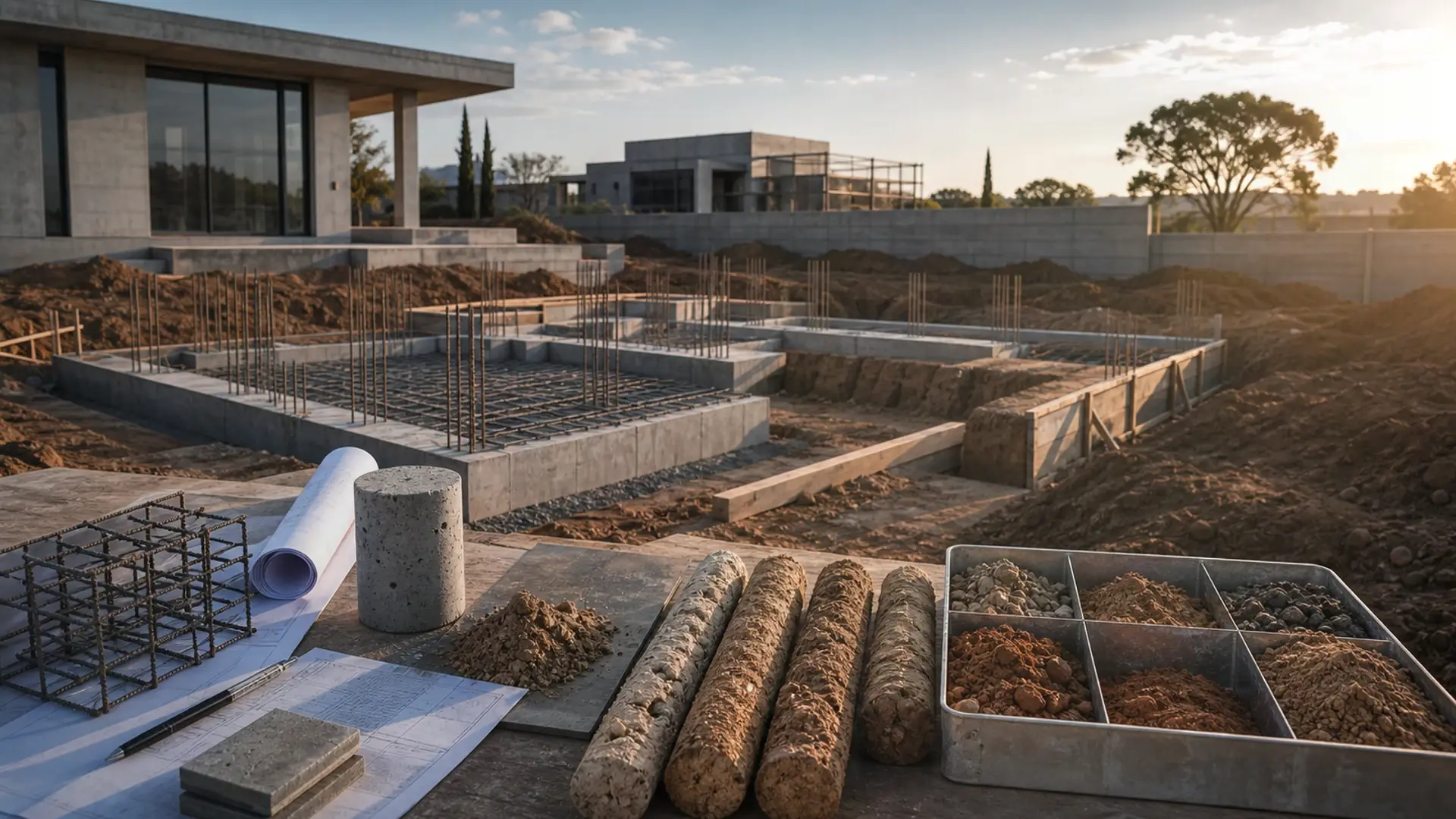
East Rand Clay Soil and Your Foundations
How black-turf clay moves with the seasons, what it does to walls and floors, and how builds design for it
In short
How East Rand black-turf clay moves with the seasons, what it does to Benoni foundations, and how new builds design for it.
14 min read
On this page
Do you know how much seasonal swelling and shrinkage can shift a house? Expansive black-turf clay soils change with moisture and cause notable movement that affects property stability. This article explains what that means for your foundation and your budget.
Understanding how East Rand clay soil foundations behave is essential for every homeowner in Benoni. Small cracks can become large problems if moisture cycles repeat. Early assessment helps you plan sensible repairs and costs.
Our platform, buildingcontractorsinbenoni.co.za links you to local experts who assess your ground and recommend action. Use our quote request process to receive up to three building quotes, or up to five where available, to compare options and timelines.
If you are worried about movement under your home, ask for a site visit and a soil-test and repair quote. Getting a written report from an independent contractor is the practical first step to protect your investment.
Understanding East Rand clay soil foundations
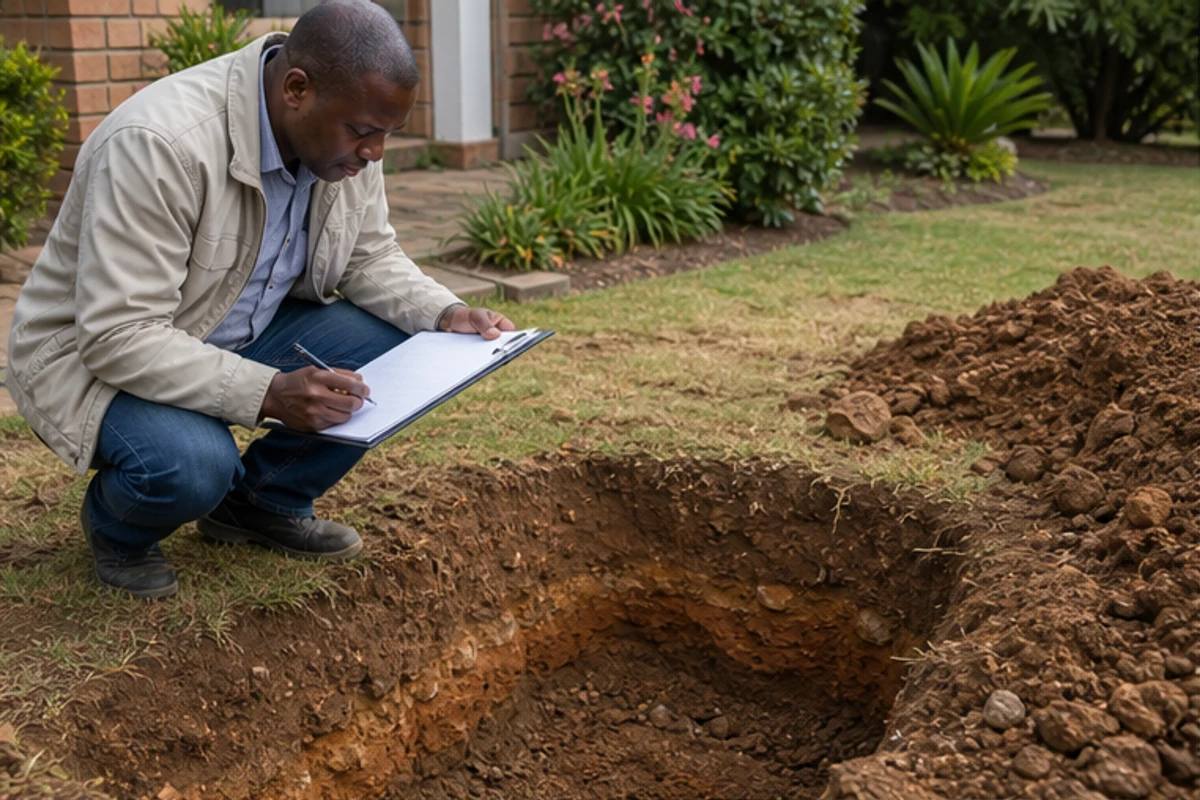
Many Benoni homes sit on fine-grained ground that changes with moisture, as our Benoni soil and ground conditions guide explains. Fine materials where over half the particles measure under 0.075 mm behave differently to sandy deposits. That definition matters when assessing load paths beneath a house.
Why this matters: expansive behaviour in local ground can make simple repairs fail if the bearing capacity is not known. A structural engineer and geotechnical check show how firm the base is and what design will last.
- Many residential areas in Benoni are built on expansive soils and need a bearing capacity assessment.
- Soil conditions vary from street to street; your specific foundation must suit the local ground.
- Low-consistency clay can cause structural issues that compromise safety over time.
- Soil testing and foundation advice determines capacity before any new building work begins.
Takeaway: identify the local soil properties early. Use independent reports and quote comparisons to make informed choices. Our platform connects you with specialists who understand these area variations.
The mechanics of black-turf clay
Clay behaves like a sponge. Moisture fluctuations cause it to swell when wet and contract when dry. That movement occurs near the surface and directly affects any shallow support under your home.
Swell-shrink cycles
The swell-shrink cycles are driven by seasonal water changes. When rainfall or irrigation soaks the ground, the material absorbs water and increases in volume. During dry spells, it loses water and contracts.
Result: repeated cycles create variable pressure on the base of a structure and can shift a building over time.
Shallow footing vulnerability
Shallow footings rely on top layers that show the largest fluctuations, which is why owners weigh raft vs strip foundations. If the building weight does not reach stable strata, uneven settlement can follow.
- Swell and contraction alter bearing conditions beneath the concrete slab.
- Shallow footings can heave, crack or tilt as moisture changes.
- Proper assessment confirms whether foundation repair or underpinning is needed to transfer weight to firm ground.
| Issue | Cause | Immediate effect |
|---|---|---|
| Upward pressure | Soil swelling after rain | Heave under slabs; lifted edges |
| Contraction | Dry spells and water loss | Settlement and cracking |
| Uneven loading | Weight not on stable layer | Doors bind; walls crack |
Identifying seasonal movement patterns
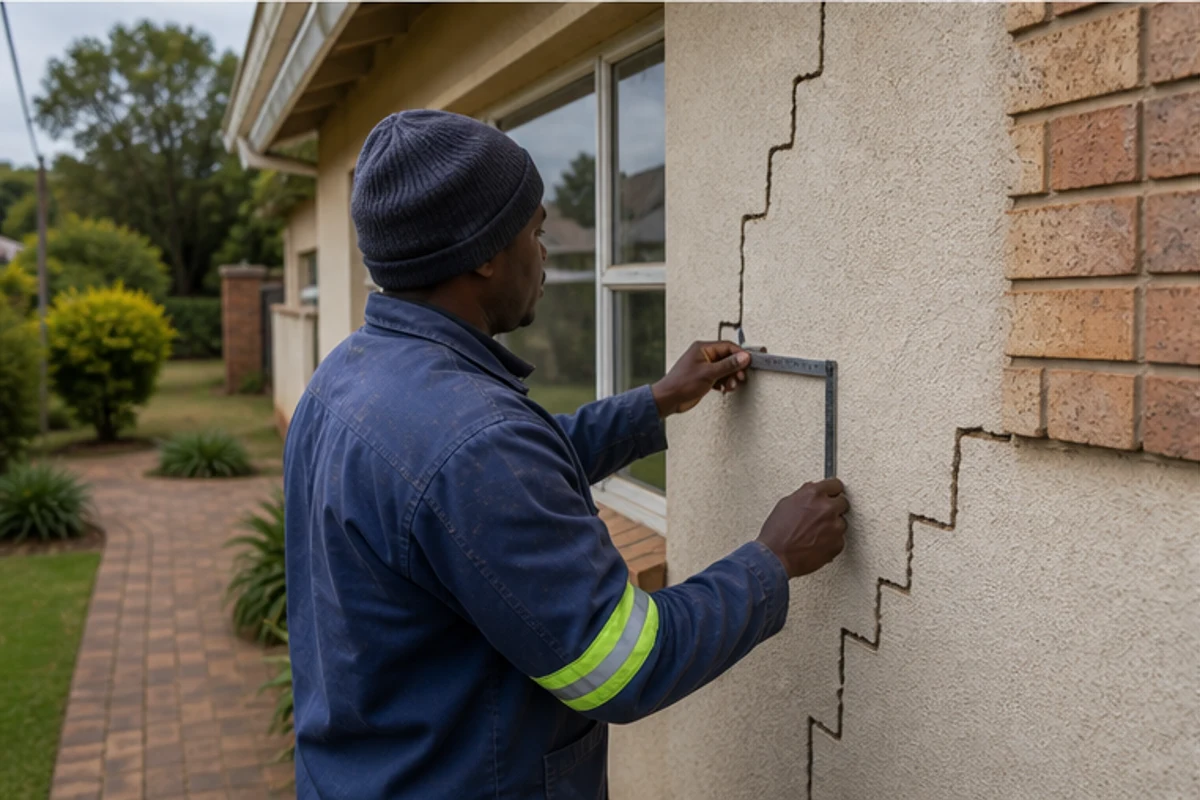
In Benoni, seasonal ground shifts often show up long before serious damage develops. Watch for small, repeatable signs around the house. Early spotting saves time and expense later.
Linking visible defects to the cause
Linking crack types to soil movement
Hairline cracks in plaster or ceiling plasterboard often point to minor settlement or regular soil movement. These are common in older homes and usually happen over weeks or months.
Wider or stepped cracks suggest larger change and may need urgent attention. A professional can tell if the issue is seasonal or structural.
- Seasonal soil movement often shows as hairline cracks in walls or ceilings.
- Contraction during dry spells can make doors and windows stick over time.
- Excess water near the base accelerates expansion and raises the risk of lasting damage.
- Monitor moisture levels around the property to spot trends before serious issues form.
- If new cracks appear, use our platform to request assessments from local specialists.
| Sign | Likely cause | What to do |
|---|---|---|
| Hairline cracks | Minor seasonal soil movement | Monitor; photograph for trend |
| Stepped wall cracks | Uneven settlement or expansion | Request site visit and assessment |
| Sticky doors/windows | Contraction of clay and frame shift | Check moisture control and trims |
Structural risks to your property
Small, repeated displacements under your home can escalate into major structural issues over time.
Significant movement can cause tilting, sinking and visible structural damage that shortens a building’s service life.
If a foundation is not designed for local expansive clay and variable soil conditions, differential movement follows. That leads to cracking in walls and floors and can affect serviceability of doors and windows.
- Structural damage often starts when the base cannot cope with uneven movement from expansive soils.
- Left unaddressed, issues progress to large cracks and costly repairs.
- Stability depends on a foundation that resists the forces from shifting ground beneath the house.
“Address movement early. A prompt site assessment limits repair complexity and long-term cost.”
| Risk | Common sign | Recommended action |
|---|---|---|
| Heave or uplift | Lifted floor edges; cracked paving | Request site visit and moisture control review |
| Settlement | Door/frame misalignment; sloping floors | Obtain geotechnical assessment and repair quote |
| Progressive cracking | Stepped or wide wall cracks | Engage a qualified contractor for stabilisation options |
Practical step: use our platform to find qualified contractors, request multiple quotes, and compare proposed solutions for stabilising foundation work and protecting long‑term stability.
Assessing site conditions and soil capacity
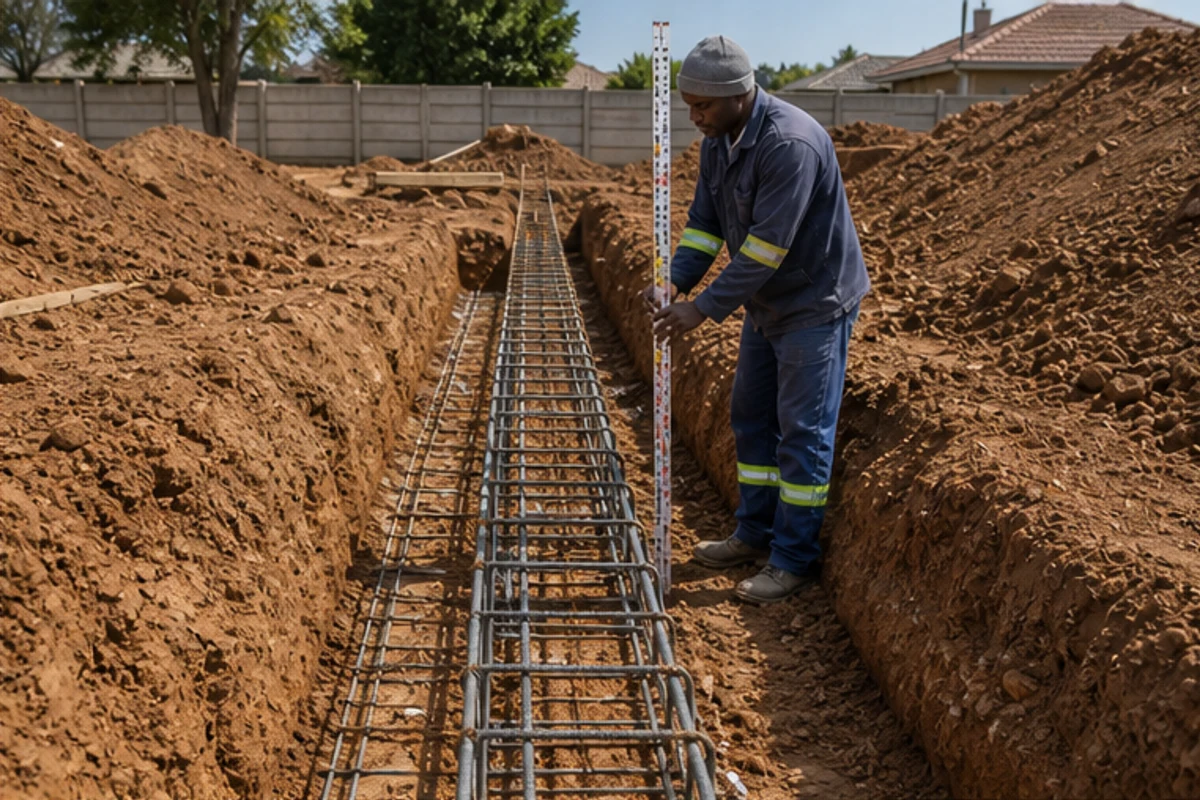
Start with a site assessment by a geotechnical expert in Benoni. They test bearing capacity so your foundation design transfers building pressure safely to the ground below.
A simple thumb test can tell a story: undisturbed material that yields easily suggests soft, plastic properties that need special design attention.
During the visit, an expert will check moisture levels and take samples for lab testing. Those readings predict seasonal movement and help size footings or alternative solutions.
- Have an expert evaluate the site conditions before any work begins.
- Proper assessment ensures the foundation handles loading and variable moisture.
- If capacity is low, engineers may recommend specialised techniques for long‑term stability.
- Request a professional geotechnical report to document properties and risks.
- Use our platform to connect with local professionals who can perform these assessments.
“Obtain a site report before you commit to design or quotes — it protects your investment and guides accurate pricing.”
Modern engineering solutions for stability
Modern engineering gives practical options to keep buildings stable on reactive ground in Benoni. Choose a method that matches site capacity and the expected movement.
Raft foundations
Raft systems use a reinforced concrete slab to spread the building weight evenly across the site. A well‑designed slab reduces pressure on any single patch of ground and improves overall stability.
Deep founding techniques
Piles bypass variable upper layers and transfer weight to firmer strata below. Piled options are common where bearing capacity near the surface is low and the project requires long‑term reliability.
Drainage and joints
Control of water near the base is essential. Proper drainage, flexible movement joints and quality reinforcement in concrete work together to limit saturation and the resultant movement.
- Reinforcement with steel bars increases concrete durability and resists cracking.
- Drainage and surface control stop excess water that changes moisture levels.
- Choose contractors experienced in these techniques to match engineering to the site.
| Solution | Purpose | Benefit |
|---|---|---|
| Raft (reinforced slab) | Distribute weight | Even load; reduced local settlement |
| Piles | Bypass weak upper layers | Anchor to firm strata; long‑term stability |
| Drainage & joints | Manage water and movement | Reduced saturation; controlled cracking |
Practical step: request a site assessment and compare quotes from contractors on our platform to find an approach that suits your budget and ensures lasting stability.
Managing moisture levels around your home

Controlling water around your property is the simplest way to limit ground movement and protect a home.
Gutters and downpipes must carry roof water well clear of the base. Direct run-off away from the walls and check downpipe outlets regularly to avoid pooling near the foundation.
Keep surface falls graded so water runs to drains, not the perimeter. Regular maintenance of channels and paving prevents local saturation and reduces seasonal fluctuations in moisture content.
- Install or repair gutters to divert water away from the building line.
- Ensure downpipes discharge to stable drainage or soakaways, not against the wall.
- Maintain a 300mm sand or gravel cushion under new concrete slabs to improve stability on reactive clay and variable soils.
Fluctuations in subsurface water cause settlement and uplift over time. By controlling water and keeping moisture levels steady you cut the risk of long‑term structural issues.
| Action | Benefit | Notes |
|---|---|---|
| Gutters & downpipes | Lower moisture at base | Check monthly in rainy season |
| Surface grading | Prevents pooling | Regrade after paving or landscaping |
| Sand cushion under slab | Improved slab support | 300mm recommended for new concrete |
Practical step: use our platform to contact local experts who advise on drainage and help prevent movement‑related issues before they grow.
The importance of professional geotechnical assessment
Professional testing removes guesswork. A geotechnical expert can determine the bearing capacity beneath your site and give measured guidance for safe design and engineering.
The specialist will analyse clay content and moisture levels, then recommend foundation dimensions that suit local conditions. That data helps engineers choose techniques that reduce the risk of structural damage over time.
- Accurate capacity: only a professional assessment confirms how much load the ground can carry.
- Targeted advice: an expert checks content and water levels to specify correct design and reinforcement.
- Risk reduction: building without assessment risks progressive structural damage and higher repair costs.
- Compliance data: geotechnical reports provide the records engineers and local authorities need for safe work on reactive soils.
- Local help: our platform connects you to qualified geotechnical experts in Benoni for site visits and reports.
“Invest in a professional assessment early; it protects your budget and secures long‑term stability.”
Practical step: ask for a geotechnical report before finalising quotes so your engineering and costs reflect measured ground conditions, not assumptions.
Navigating the contractor connection process
Connecting to impartial contractors lets you compare realistic solutions for local ground issues.
Use our platform to start your building brief and request assessments. The system helps you describe the problem, attach photos and outline the scope so contractors know what to expect.
When you submit a quote request, contractors see the site details and can propose options for the reported soils issues. This makes their responses more accurate and easier to compare.
- Request up to 3 building quotes, or up to 5 where available, directly through our quote request process.
- Compare different approaches to solving soils issues on your specific site before you commit.
- Allow a few days for contractors to visit your property and provide an accurate assessment and written quote.
- Connecting with an expert through the platform ensures advice tailored to Benoni conditions.
- Always confirm a contractor’s experience for your type of building project and get references in writing.
Practical step: use the platform to request multiple quotes, collect site reports, then choose the contractor whose proposal matches your budget and long‑term goals.
Requesting quotes for your building project
Clear briefing helps contractors respond accurately. Provide site access notes, photos and a simple list of desired finishes so each bidder prices the same scope. This reduces queries and saves you time.
How to prepare:
- List site access, parking and any restrictions that affect labour or plant.
- Describe finishes and materials so workmanship and cost are comparable.
- State any approvals or inspections the contractor must include in the quote.
Use our platform to request up to 3 building quotes, or up to 5 where available, from independent contractors in Benoni. Allow a few days for visits and written responses.
An expert contractor will often recommend a soils test to match the design to the site. Take the time to check that materials, labour and approvals are itemised.
“Compare cost and quality, not just the lowest price.”
By comparing multiple quotes you find the balance of cost, time and quality. A soil‑test and a clear repair quote give confidence before you appoint a contractor.
Securing the future of your property
Protecting your home starts with practical checks and a clear plan. Have your foundations assessed so repairs match actual site conditions and reduce future risk.
Use local expertise. Through buildingcontractorsinbenoni.co.za you can request measured advice and compare realistic options for repair or new building work.
Whether you need a site‑test, a quoted repair or a design for a new slab, a professional assessment gives confidence and improves long‑term stability.
Next steps:
- Request a soil‑test and repair quotes via the platform.
- Compare written quotes and site reports before you decide.
- Take action now to protect your investment and peace of mind.
FAQ
What makes Benoni black‑turf clay move with the seasons?
Black‑turf clay in Benoni has high shrink‑swell potential. During wet months it absorbs moisture and expands; in dry months it contracts. These cycles are driven by rainfall patterns, irrigation and nearby vegetation. The change in moisture content alters the soil volume and causes ground movement under footings and slabs.
How do swell‑shrink cycles affect shallow footings?
Shallow footings sit within the active zone where moisture fluctuates most. When the soil swells it can lift slabs and walls; when it shrinks, voids form and supports are lost. Repeated cycles lead to uneven settlement, cracked plaster, sticking doors and misaligned windows.
What types of wall or slab cracks indicate soil movement rather than normal settling?
Vertical stair‑step cracks in brickwork, diagonal cracks near corners, wide cracks that open and close with seasons, and long horizontal cracks in retaining walls often point to lateral soil movement or differential settlement. Hairline shrinkage cracks in render are common but larger, changing cracks suggest foundation issues.
When should I commission a geotechnical assessment?
Arrange a site assessment if you see persistent or growing structural cracks, uneven floors, or repeated repair failures. Also get an assessment before extensions, new slab installations or when large trees are close to the house. A geotechnical report defines soil capacity, moisture profile and recommends foundation design.
What foundation options suit high‑movement clay ground?
Options include stiffened raft slabs that distribute load, piled or pier foundations reaching stable strata, and suspended ground‑beams to avoid the active zone. Designers may specify reinforcement, movement joints and stepped slabs based on the geotechnical findings and local council requirements.
Can improved drainage and landscaping reduce movement risk?
Yes. Controlling surface water, grading soil away from the building, installing guttering and subsoil drains, and avoiding concentrated irrigation near footings stabilise moisture content. Keep large trees and water‑hungry shrubs a safe distance from foundations to limit root and moisture effects.
How do contractors factor soil conditions into quotes for Benoni projects?
Contractors will consider geotechnical reports, site access, excavation depth, materials, labour, temporary works and approvals. Expect separate line items for specialised foundations, piling rigs, drainage, concrete strength and reinforcement. Always request written scope, start dates and warranty terms.
What should I confirm in writing before work starts?
Confirm the scope of groundworks, foundation type, engineering drawings, materials specification, warranty period, payment milestones and who arranges council approvals. Also ask how the contractor will manage water control, neighbouring properties and unexpected site conditions.
How many independent quotes can I request through the platform?
You may request up to three quotes, or up to five where available. Independent contractors handle site visits, final pricing, timelines and warranties. Use the quotes to compare foundation approaches, timelines and material choices.
Will a stronger concrete mix prevent damage on reactive ground?
Higher‑grade concrete helps durability but does not stop volumetric soil movement. Proper solution combines suitable foundation type, adequate reinforcement, movement joints and moisture control. Engineering design based on a geotechnical report is essential.
How quickly can soil movement create visible damage?
Some movement shows up within months after a dry or wet period; significant damage typically develops over seasons as cycles repeat. Factors include load changes, poor drainage, nearby tree roots and original foundation depth and quality.
Are piled foundations always more expensive than rafts?
Piling usually costs more up front because of rigs and deeper works, but it can be more cost‑effective long term on highly reactive sites or when there’s a need to protect an existing structure. The geotechnical report and structural engineer’s design determine the appropriate and economical solution.
Can maintenance slow or prevent structural problems related to soil movement?
Regular maintenance helps. Keep gutters clear, maintain uniform irrigation, repair damaged downpipes, monitor and repair cracks early, and keep a consistent moisture regime around the house. These steps reduce the rate and severity of movement‑related damage.
Related building cost guides
Ready to compare?