
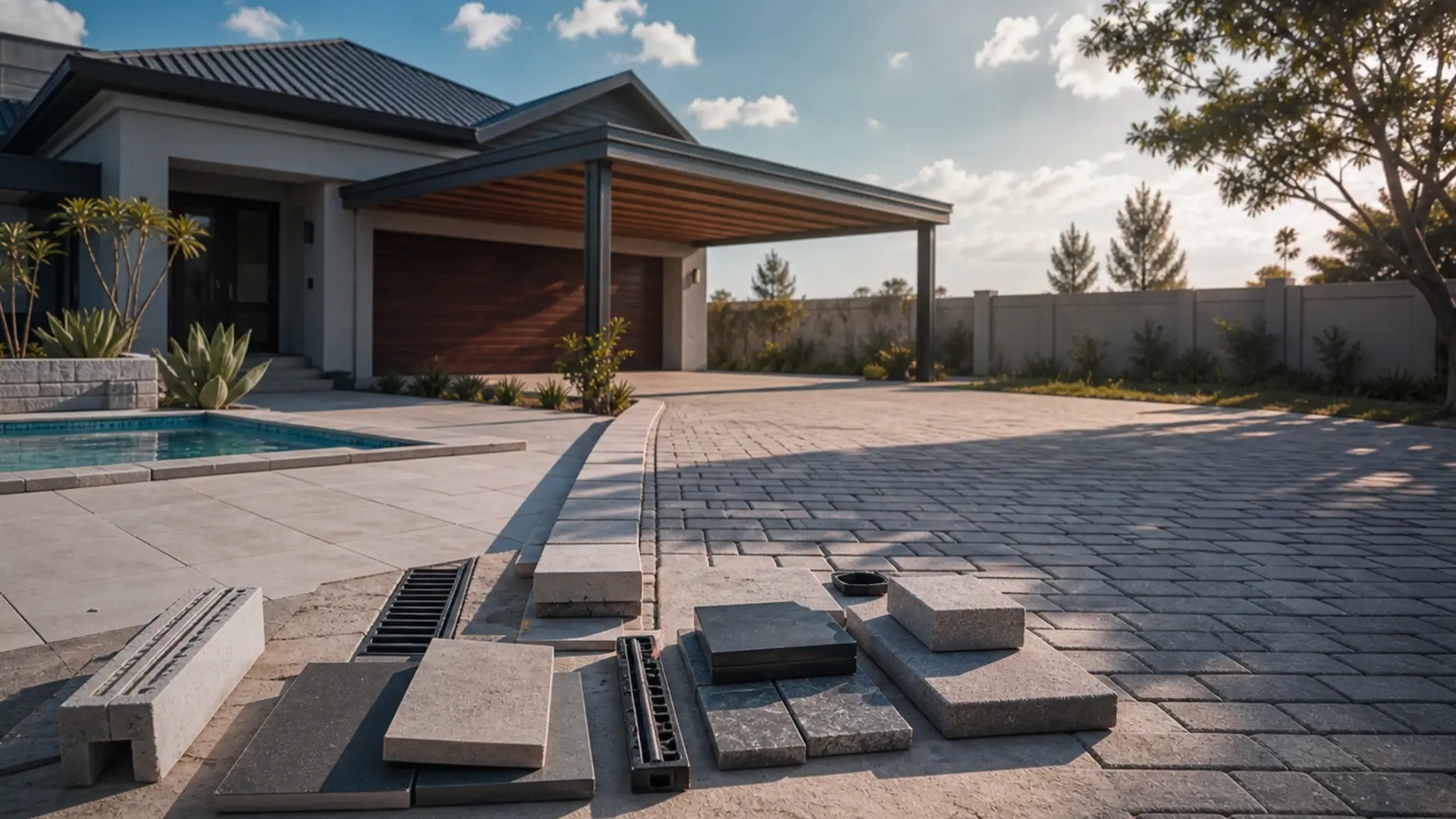
Why Paving Sinks (and How to Fix It Properly)
Failed sub-base, water and missing edge restraints explained – and what a proper repair involves
In short
Why paving sinks – failed sub-base, water and edge restraints explained, plus what a proper repair involves versus relaying.
14 min read
On this page
Have you ever wondered whether your patio could give way after heavy rain? In Benoni, many homeowners spot early signs that their paved areas are settling or uneven over time. A quick check of the area can reveal telling signs before small movement becomes a major safety issue.
So why does paving sink? Pavers may look sound on the surface, yet sunken pavers often point to problems below. Poor compaction of the base, loss of sand or soil and repeated wetting can lead to gradual sinking. Assess whether the base or surface needs repair to decide the right fix.
Water and rain that pool without proper drainage will wash out sand and disturb soil beneath the paving. Experienced installers note that a professional assessment helps identify why work fails and which repairs will last. Use local experts through the platform to get realistic quotes and clear next steps.
Understanding why does paving sink
Soft sand and unstable sub‑soil often show themselves through a small change on the surface. In Benoni, the ground in our soil and ground conditions guide — on slopes or in new developments — can let one spot drop and create an obvious dip.
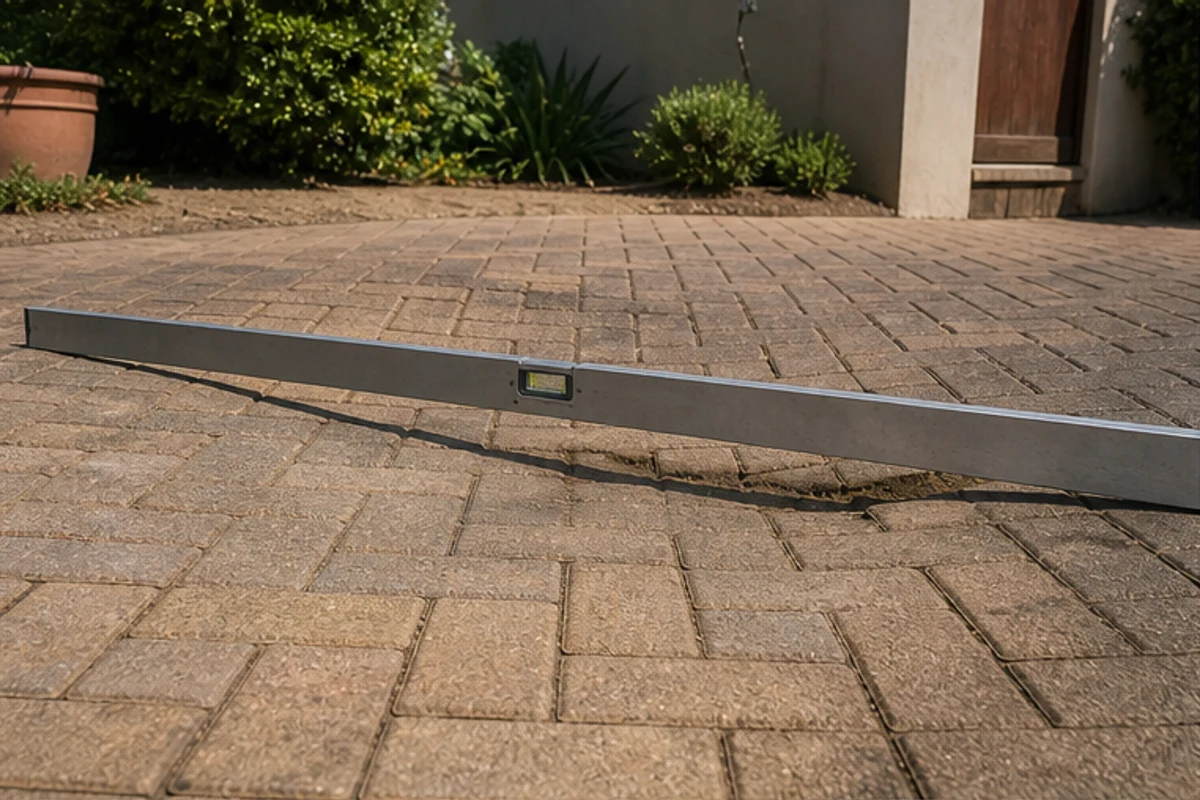
Many homeowners find that their pavers sink because the ground beneath was not compacted properly. Natural ground settlement is common in newly filled areas — something Farrarmere builders and others watch for — and can occur over time.
“Natural ground settlement is a common cause of sinking in newly developed areas.”
— Atlantic Brick and Stone
If the sand bedding shifts, the surface will not remain level. Poor drainage and unstable soil are frequent causes that paving contractors address before recurring issues set in.
- Check for a single sunken spot before it grows.
- Look across the landscaping for movement or a new dip.
- If you spot recurring problems, compare paving prices and evaluate whether professional help is needed.
The physics of structural failure
Undirected water movement under the surface often begins a slow failure of the whole installation. Moisture and pressure force water into joints, washing out joint sand and eroding the bedding layer beneath each paver.
Water pressure dynamics
Water flow under the surface creates pressure that moves fine material from the bedding and base. Loss of joint sand weakens interlock and lets individual pavers shift under load.
Missing edge restraints
Edges hold the layout tight. Without solid edges, the base and bedding layer migrate outward and the surface loses support.
- Excavate 150–200 mm and compact the base to prevent ground movement under heavy loads.
- Check edges regularly; missing restraints are a common cause of sinking in garden paths, driveways and carport bases.
- Tree roots and poor drainage increase pressure and lift sections, creating uneven joints.
- Quality materials and correct compaction stop the small movement that leads to structural failure.
“Water movement under the surface is one of the most common causes of structural failure.”
— Atlantic Brick and Stone
Benoni environmental challenges
Clay-rich ground in Benoni expands when wet and contracts as it dries. That cyclical movement stresses the base beneath your pavers and can show as dips or uneven areas on the surface.
Clay and stormwater impact
Heavy stormwater runoff compounds the problem. Excess water increases moisture in the soil and softens the base, so individual pavers shift more easily.
Managing water flow is essential. Good drainage keeps joint sand and the bedding layer intact and reduces the risk of ongoing movement.
“Account for local soil and stormwater when planning any hard landscaping.”
- The clay in many Benoni suburbs accelerates movement when saturated.
- Permeable materials and firm edge restraints help protect the base and extend the life of your pavers.
- Proper drainage systems prevent water movement from undermining the landscaping and causing costly repairs.
Use contractors on our platform who understand local soil conditions and can design drainage that keeps your surface stable long term.
Identifying signs of sub-base movement
A visible dip or persistent puddle on your outdoor surface is an early sign that ground beneath has moved. Check the area after rain and note where water lingers. A single spot that holds water usually means the base is no longer level.
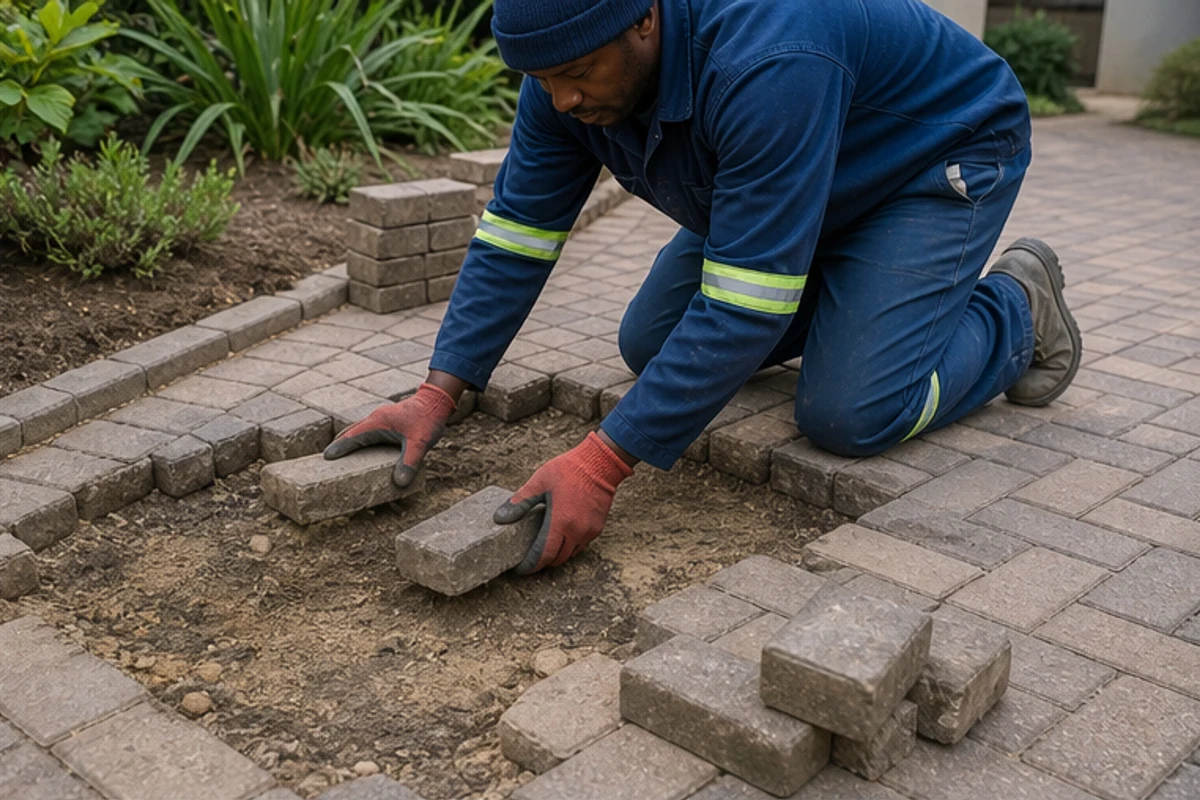
Look for cracking and gaps. Widening joints between pavers and new cracks show the base has lost support. These are simple signs that sub‑base movement is underway and needs attention.
- Early detection stops a minor problem becoming a major repair for your paved areas.
- If a sunken spot appears, it often follows sinking or shifting of the soil under the base.
- Tree roots push upwards, lifting pavers and creating a trip hazard in the yard.
- Monitor for widening joints and missing sand in the gaps — these signal ongoing movement.
- Pooling after rain shows the surface is no longer level and risks damage to the edge and surrounding areas.
“Ignoring these signs will lead to further sinking and shifting, which can damage the surrounding edge.”
— Atlantic Brick and Stone
If you spot any of these signs, use the platform to find local professionals who can assess the base and recommend repair or a full rebuild for the affected areas.
The repair ladder for sunken areas
Start repairs by exposing the affected area so you can see whether the base has lost strength.

Lift and relay techniques
Remove the pavers over the dip and check the bedding layer and base. If the soil and base are sound, re‑compact the base and add fresh sand before relaying each paver.
Lift and relay methods
Work one spot at a time. Use a plate compactor on the new base material to give firm support and restore level in the surface.
Brick swapping methods
If a few units are damaged but the base remains stable, replace broken bricks and top up joint sand. High‑quality joint sand locks joints and reduces future movement.
Full relay requirements
When the entire base has failed, remove the full installation and rebuild the base, bedding and edges. This full relay fixes long‑term pressure and water issues that cause recurring problems.
“Use firm compaction and improved drainage to stop water eroding the base over time.”
- Inspect the base first; the repair starts beneath the paver.
- Plate compaction is essential for lasting support.
- Improve drainage where water erosion is present to avoid repeat repairs.
- Use our platform to find contractors who can assess a simple fix or recommend a full relay.
Prevention through proper property framing
Secure edging keeps the whole installation locked in place and stops lateral movement when loads shift. Robust edge restraints contain base materials and protect the surface from sideways movement.
Manage water flow by grading away from buildings so moisture does not pool at the base. Use landscape fabric to separate soil and base; this reduces erosion and loss of sand under each paver.
Install a high‑quality bedding layer and compact it thoroughly. Correct bedding and firm compaction reduce future movement and prevent a single low spot from becoming a larger problem.
- Avoid laying pavers too close to large tree roots; roots open joints and lift the surface.
- Keep joints topped with fresh joint sand to block water and retain stability.
- Choose durable materials and check edges during installation for long‑term performance.
“Proper framing and drainage stop small movement before it becomes a costly repair.”
— Atlantic Brick and Stone
| Measure | Benefit | Local tip |
|---|---|---|
| Edge restraints | Contain base and prevent lateral shift | Use concrete or steel for heavy driveways |
| Landscape fabric | Separates soil from base, reduces erosion | Lay under compacted base in clay areas |
| Proper grading | Directs water away from surface | Grade at 1:80 away from houses in Benoni |
Essential materials and labour standards
Correctly specified base layers and clean bedding sand give pavers long-term stability.
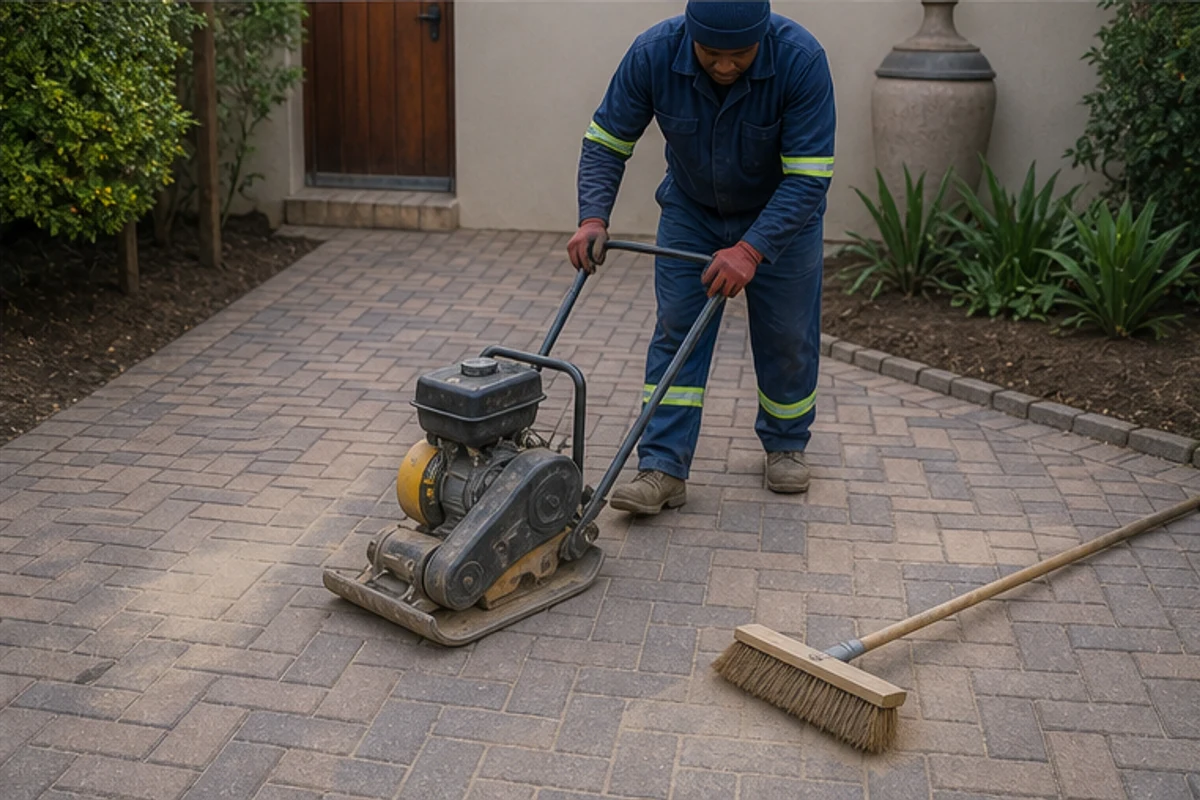
Use a well-graded crushed stone base that compacts uniformly. This base reduces movement under load and supports the surface in Benoni clay conditions.
Confirm your contractor compacts each layer with a plate compactor. Proper compaction removes air pockets and prevents future settling.
- Materials: a graded base, clean bedding sand, durable pavers, and quality edge restraints.
- Labour standards: plate compaction for the base and bedding; tight joints filled with joint sand.
- Drainage: include slope and drainage materials in the quote to keep water away from the base.
Ask for a written quote that lists materials, compaction method and edge details. A professional installation locks joints, limits moisture entry and stops a single low spot becoming a recurring problem.
Use the platform to find contractors who specify materials and show evidence of correct installation methods.
Connecting with professional paving contractors
Local contractors can inspect, advise and quote promptly when your outdoor surface shows signs of movement.
Use buildingcontractorsinbenoni.co.za to request local help. Independent contractors handle site visits, final quotes and project timelines for your paving project in Benoni.
Our platform lets you compare up to five building quotes from trusted professionals in the area. This step saves time and gives you realistic options for a simple repair or a full relay.
“Hiring an experienced contractor is the best way to avoid future problems and costly repairs.”
— Atlantic Brick and Stone
- If you are struggling with sinking pavers, buildingcontractorsinbenoni.co.za connects you with experienced local professionals.
- Discuss scope, site access, materials and warranties with each contractor to get accurate, reliable quotes.
- The platform does not perform construction work; it provides tools so you can manage your issues effectively.
| Service | Benefit | Local tip |
|---|---|---|
| Multiple quotes | Compare price and scope | Request up to 5 options where available |
| Site visit | Accurate assessment | Confirm access and photos before visits |
| Final quote | Clear materials & timelines | Ask for compaction method and edge details |
Take the first step today: use the quote request process on buildingcontractorsinbenoni.co.za to start restoring the appearance and safety of your pavers.
Our quote request process for your project
Start with clear photos and dimensions so contractors can give accurate estimates.
Visit buildingcontractorsinbenoni.co.za and complete the short request form. Include site access notes, rough measurements, and any preferences for materials or finishes.
Attach recent images that show the area from different angles. Mark any tight entries or parking limits that might affect labour or equipment.
- Submit project scope, desired timeline and contact details.
- Request up to five quote options where available; the platform helps match you with local contractors.
- Remember the platform does not perform work — independent contractors do site visits, produce final quotes and carry out the job.
Once contractors review your brief they will contact you to arrange a site assessment. Ask each contractor for a written quote that lists materials, compaction method, edge details and any approvals needed.
Compare scope, timelines and warranties so you choose the best fit for your budget and standards.
Use the platform to connect with experienced local tradespeople and make an informed decision for your Benoni project.
Ensuring long-term stability for your paved surfaces
Regular checks after heavy rain give homeowners clear signs of any early dip or pooling. Inspect paved areas for a single low spot and confirm the drainage keeps water moving away from the surface.
Keep joints topped with joint sand to stop water reaching the bedding and base. If pavers sink or you spot sunken pavers, act early to limit movement, restore level and protect the edge.
Use quality materials, correct compaction and attention to joints and bedding to prevent recurring issues. For trades who specify specified compaction, request up to five quotes where available through the platform. Take action now to protect your landscaping and avoid a larger problem later.
FAQ
Why are my pavers sinking and how can I fix them properly in Benoni?
Sinking pavers usually mean the base or bedding has lost support from water, poor compaction, or root activity. In Benoni the common fix is to expose the affected area, check the sub-base (crusher run or G5), replace washed or soft material, re-level with 25–40mm of compacted bedding sand, re-lay the pavers and compact with a plate compactor. Edge restraints must be checked and reinstated. For larger areas a full relay with new sub-base and geotextile may be needed.
What keeps paved areas stable and what causes structural failure?
Stability depends on a properly compacted sub-base, correct bedding layer depth, good edge restraints and adequate drainage. Structural failure happens from water pressure, poor compaction, missing or damaged edges, heavy concentrated loads, and ongoing movement from tree roots or frost. Addressing each element prevents repeat problems.
How does water pressure affect paved surfaces?
Water undermines the base by washing fines and creating voids. Ponding increases pressure beneath pavers and causes joints to wash out. Surface falls and drainage channels should divert stormwater away from paved areas; where water collects, install channels, soakaways or improve grading to protect the base.
What role do edge restraints play and what happens when they fail?
Edge restraints hold the compacted pavers in lateral compression. If they are missing, loose or broken, pavers spread under load and the joints open, allowing sand loss and movement. Repairing or replacing edges with concrete, steel or heavy-duty plastic edge restraints is essential when relaying.
How do Benoni soil and stormwater conditions affect paving?
Benoni’s clay-rich soils expand and contract with seasonal moisture changes. After heavy storms, clay can soften and lose bearing capacity. Combine that with inadequate drainage and you get subsidence or heave. Using a well-compacted crusher-run sub-base and geotextile, plus good surface falls, reduces those local risks.
What signs show sub-base movement is happening?
Look for single low spots, uneven joints, pavers that rock underfoot, narrow or wide gaps between pavers, and sand loss in joints. Repeated depressions after rain and new cracks at edges indicate sub-base failure and need further inspection.
When should I lift and relay pavers versus doing a full relay?
Lift and relay suits small, isolated depressions where base material is intact and edge restraints are sound. Brick swapping or replacing a strip can fix linear defects. A full relay is necessary when the sub-base is contaminated, extensively washed out, or compaction was poor across the whole area.
What is the brick swapping method?
Brick swapping replaces individual pavers that are damaged or badly settled. You lift affected units, check and repair the bedding sand and sub-base beneath, then re-seat new or matching pavers and compact. It’s cost-effective for small, localised defects but not for base-wide failure.
What materials and labour standards should I expect for a proper repair?
Expect measured excavation, supply of certified G5 crusher-run or equivalent, compacted in 75–100mm layers with a plate compactor, 25–40mm washed building sand for bedding, correct edge restraints, jointing sand and compaction. Contractors should provide a written scope, labour hours, materials list, warranties and local references.
How can I prevent pavers from sinking again?
Prevent by ensuring correct falls for water runoff, installing solid edge restraints, using a well-compacted sub-base with geotextile where needed, controlling tree roots, and sealing or maintaining joint sand. Regular inspection after heavy rain helps catch issues early.
Can tree roots cause sunken pavers and what are the solutions?
Yes. Roots can lift or displace pavers and later cause voids when they decay. Solutions include pruning or installing root barriers, rebuilding the paved area with a deeper base and flexible jointing, or rerouting hardscape away from large trees in consultation with an arborist.
When should I contact a professional paving contractor in Benoni?
Contact a contractor when depressions affect safety, when large areas show movement, or before costly relays. A pro will inspect drainage, soil, edge restraints and sub-base, then recommend lift-and-relay, partial or full relay with a written quote. Use our quote request process to get up to 3 local contractor options.
What should I confirm in writing before work starts?
Confirm the scope of work, materials specification (type of sub-base, bedding depth, edge restraint), labour hours, access requirements, waste removal, start and completion dates, payment terms, and any warranty. Also ensure the contractor has public liability insurance and local references.
How does joint sand affect long-term performance?
Joint sand locks pavers together and prevents lateral movement. If it washes out, joints open and pavers move. Use correct jointing sand, compact after re-sanding, and consider polymeric sand for high-traffic areas. Regular topping up after heavy rain helps maintain stability.
What local suburbs and access issues should contractors consider in Benoni?
Contractors will check street access, parking, load limits for plant, proximity to trees, and whether permits are needed for kerb or stormwater connections. Mention your suburb (Kopanong, Brakpan Road areas, Northmead, Rynfield etc.) when requesting quotes so contractors can plan logistics and accurate pricing.
Related building cost guides
Ready to compare?