

NHBRC Enrolment Explained: Process, Costs, and Why It Exists
Who must enrol, what it costs, how the process runs and what the warranty fund actually covers
In short
NHBRC enrolment explained – who must enrol, what it costs, how the process runs and what the warranty fund actually covers.
11 min read
On this page
Curious why every new house in Benoni must be registered at least 15 days before work starts? That rule comes from the Housing Consumers Protection Measures Act, 1998, and it protects buyers and owners from poor quality and avoidable defects.
Understanding nhbrc enrolment explained is a practical first step for any owner planning a new home, extension or major repair. You need clear proof of registration, the correct technical requirements and the right documents for your site.
Our platform, buildingcontractorsinbenoni.co.za helps you compare quotes and connect with independent home builders. We do not carry out construction; we guide you to get up to three quotes, or up to five where available, so you can check fees, certificate details and contract terms.
Use this guide to learn the registration steps, days prior to notify, enrolment fees and what to confirm with a builder. Knowing these basics improves compliance and raises the chance of a quality home and smoother sale or handover.
Understanding the Legal Necessity of NHBRC Enrolment Explained
Registering a new build is a legal step that protects you and your investment in Benoni. When you engage new home builders, this process gives the housing consumer statutory cover for major structural defects found within the first five years of occupation.

The Housing Consumers Protection Measures Act, 1998 is the measures act that sets the standards. It makes sure every house is built to technical rules set by the National Home Builders Registration Council and provides a safety net when things go wrong.
As an owner, you gain vital protection measures by completing registration before work begins — one step in our complete guide to building a house. This lowers risk from poor building practice and helps manage expectations about quality.
- Legal framework: protection measures act secures consumer rights.
- Five-year warranty: covers major structural defects.
- Verify your builder: weigh registered vs unregistered builders before site work.
| Aspect | What it covers | Who benefits | Action for owner |
|---|---|---|---|
| Statutory cover | Major structural defects (5 years) | Home buyer and housing consumer | Check registration proof before start |
| Technical standards | Construction rules and inspections | Owner and future occupants | Confirm builder follows standards |
| Dispute route | Complaint and remedy process | Consumer seeking repairs or compensation | Keep documents and report defects early |
Our platform encourages every owner to verify a builder’s compliance before any work commences on site. That check is the simplest way to protect your home and the cost to build it.
The Role of the Home Builder in the Enrolment Process
Your chosen turnkey home builder must complete registration at least 15 days prior to construction. This rule protects you and sets a clear start date for site work. Always ask for proof of a registered nhbrc builder before signing a contract.
Timeline for Enrolment
The builder is responsible for submitting the paperwork so your house is registered on time. That means the registration must be lodged at least fifteen days prior to the first on-site activity.
Confirm the date with your builder and keep written proof. Early registration helps the project stay on track and preserves statutory cover against major defects.
Builder Registration vs Home Enrolment
Builder registration and home enrolment are separate but linked. One confirms the person or firm is authorised to operate; the other covers the specific house or development.
- Builders must show valid registration to demonstrate compliance with national rules.
- Your home enrolment gives the house warranty and dispute route if defects appear.
- If a dispute arises, mediation services are available to assist the owner and builder.
Use our platform to verify registration and check the timeline before work begins. Choosing a professional who understands these services helps secure quality homes in Benoni.
Essential Documentation and Technical Requirements
A complete paperwork pack keeps your Benoni build moving and protects the sale value of your house. Gather each item early so your home builder can submit the application without delay.
Administrative Checklist Items
- Builder registration certificate from a registered nhbrc authority — supplied by the builder or home builders firm.
- Approved house plans and site layout — stamped by the local authority or town planner.
- Bank rating letter and signed contract showing the cost breakdown and agreement between owner and builder.
- Proof of services connections (water, sewer, electricity) and any development approvals required for the site.
Technical requirements depend on soil type and design. For weak or dolomitic ground, include geotechnical and foundation reports.
| Document | Provided by | Why it matters |
|---|---|---|
| Registration certificate | Home builder | Confirms builder is authorised and compliant |
| Approved plans | Architect / owner | Shows permitted design and scope of construction |
| Bank letter & contract | Bank / builder | Verifies finances, fees and contractual terms |
Our platform helps you collect the required details and understand enrolment fees so the process is complete. Proper documentation reduces the risk of later defects and keeps your development on track.
Navigating Soil Types and Structural Complexity
Benoni projects on unstable ground need a clear technical plan before any digger arrives. Dolomitic land must have a stability investigation and the Council for Geoscience (CGS) involvement. A competent person must sign the geotechnical report and issue the required certificate.
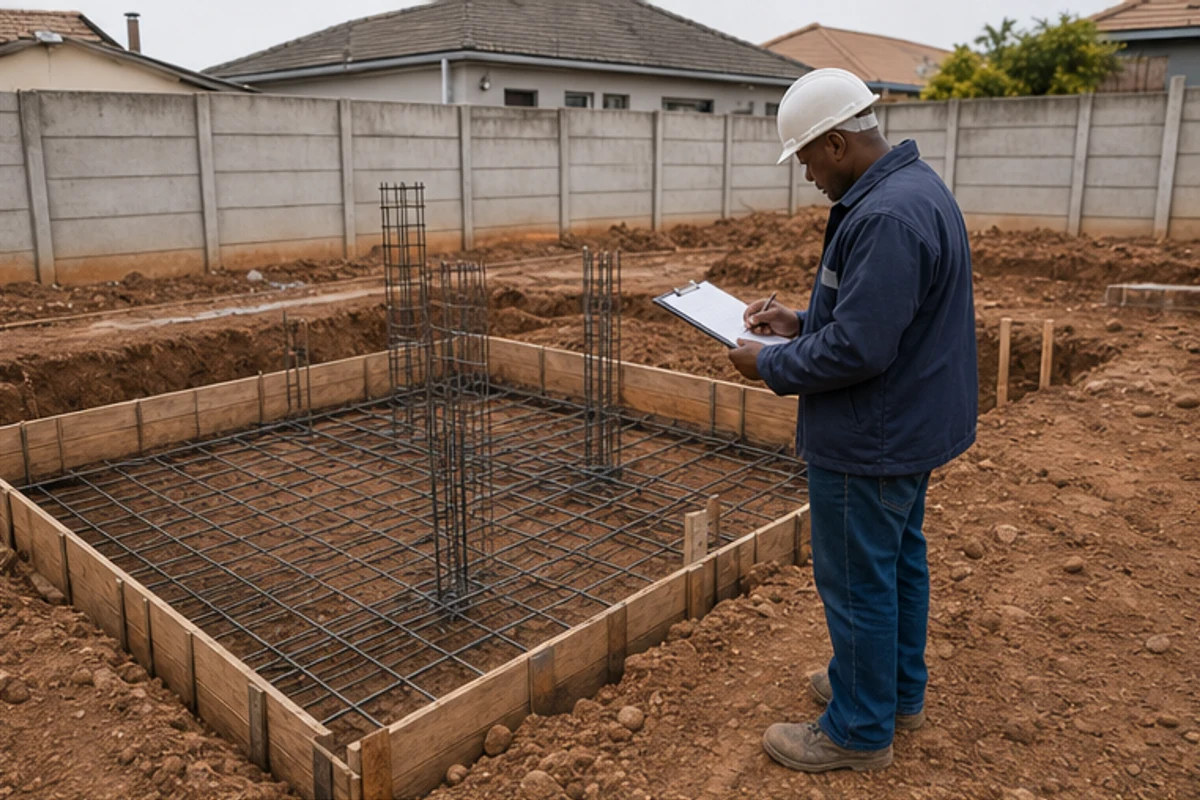
Dolomitic Land Considerations
On dolomite sites, expect extra fees and longer lead times for specialist reports and approvals.
Practical step: ask your home builder for the stability report and CGS correspondence before works start.
Multi-Storey Requirements
For buildings of three storeys and above, supply full structural engineering drawings and a rational design report.
These documents show load transfer, foundation design and overall stability. Confirm the builder and design team include these plans in the contract.
Late Enrolment Procedures
Late registration adds complexity. Authorities usually require a forensic report to confirm the building meets safety rules.
A late process often raises the fee and needs more documentation. Use our platform to find professionals who manage these technical requirements.
“Site-specific reports reduce surprises during construction and protect the value of your house.”
| Issue | Action required | Who provides it |
|---|---|---|
| Dolomitic ground | Stability investigation + CGS input and certificate | Geotechnical engineer / competent person |
| Multi-storey design | Structural drawings and rational design report | Structural engineer |
| Late registration | Forensic report and remedial documentation | Independent assessor / engineer |
Warranty Coverage and Consumer Protection Realities
Your builder must be the first contact for any defect claim, and certain faults have strict reporting windows. Minor defects need written notice within three months. Roof leaks must be reported in writing within one year.

Major structural defects carry cover for up to five years from the date of occupation. That cover gives you statutory protection under the protection measures act but does not remove the builder’s duty to repair.
Keep written proof of every communication, including dates, the defect description, and any photos. This proof supports warranty claims and clarifies the terms and fee discussions with the responsible person.
- Minor defects: report in writing within 3 months.
- Roof leaks: report in writing within 12 months.
- Major structural defects: covered up to 5 years from occupation.
While the housing consumer receives a safety net, the primary obligation to remedy defects rests with the home builder who carried out the building work. Choosing a reputable builder reduces the risk of disputes and improves quality outcomes.
“Keep dates, certificate copies and written proof — they matter when you claim a warranty.”
Managing Property Hand-off and Bank Compliance
Before hand‑over, confirm the bank has received the correct proof of registration and the final certificate. Banks in Benoni commonly hold the last payment until paperwork and inspections satisfy their lending conditions.

Your home builder must provide documented evidence that building work meets the contract and local requirements. Ask for the completion certificate, dates on inspections and any outstanding fees shown in writing.
Final inspection checks that the home matches the agreed plans and that services at site are operational. That step protects you and speeds the sale or transfer process.
- Ensure the builder supplies all documents the bank needs for release of funds.
- Keep a clear contract and signed agreement that lists hand‑off dates and responsibilities.
- Use a platform to coordinate quotes and to confirm the person managing compliance is experienced with bank procedures.
| Requirement | Provided by | Why it matters | Action for owner |
|---|---|---|---|
| Final inspection report | Independent inspector / builder | Confirms work meets specifications | Review and sign when satisfied |
| Completion certificate | Authorised certifying person | Needed for bank release and sale | Obtain original copy for records |
| Proof of registration | Builder / registration body | Shows statutory cover and compliance | Provide to lender before final payment |
“Keep documents, confirm dates and settle any outstanding fees before occupation.”
Securing Qualified Professionals for Your Benoni Project
Secure your Benoni project by shortlisting builders who meet the technical requirements for your site.
Visit buildingcontractorsinbenoni.co.za to request up to three building quotes, or up to five where available. Compare plans, fees, contract terms and the proposed date for work.
Choose a registered nhbrc builder who can supply the correct certificate and who understands national home builders and local housing consumer rules. Confirm services, design details and how defects will be handled after hand‑off.
Tip: keep written proof of builders registration, fee quotes and bank requirements. Multiple quotes help you protect the sale value of your house and select an owner‑focused contractor with a proven record.
FAQ
What is NHBRC enrolment and why is it required for new homes in Benoni?
The NHBRC enrolment is a statutory requirement for most new home-building projects and some major renovations. It exists to enforce the Housing Consumers Protection Measures Act, ensuring builders meet technical requirements and that homeowners receive statutory warranty protection and compliance certification lenders often insist on before bond release.
Who must apply for NHBRC enrolment — the homeowner or the builder?
The responsibility rests with the home builder. Registered builders must enrol each qualifying house or contract with the NHBRC before work begins. Homeowners should confirm the builder is registered and can provide proof of enrolment and the enrolment number prior to start.
How does the enrolment process affect my building contract and timelines?
Enrolment must occur before construction starts. Builders submit contract details, plans and fees to the NHBRC, which then issues an enrolment certificate. Delays in enrolment can hold up municipal approvals, finance drawdowns and start dates, so confirm enrolment days prior to site handover.
What fees are involved and who pays them?
There are enrolment fees based on the value and type of the project; the builder generally pays these and includes the cost in the quote or contract. Always ask for a written breakdown in your tender or contract so you know whether the fee is included in the price or billed separately.
What documents and technical information are needed for a successful enrolment?
Builders submit contract copies, plans, structural designs, site address, owner and contractor details, and proof of registration. Technical requirements include compliance with NHBRC technical guidelines for foundations, roof, waterproofing and structural elements. Keep copies of plans and the enrolment certificate for your records.
Are there special rules for building on dolomitic or unstable land?
Yes. Dolomitic conditions require specialist geotechnical reports, foundation designs and often additional inspection stages. The NHBRC treats these as higher risk, so enrolment may demand more documentation and inspections to ensure long-term stability and compliance.
Can a builder enrol a multi-storey home the same way as a single-storey house?
Multi-storey projects attract stricter technical scrutiny and may require additional plans, structural certificates and more detailed inspection records. Builders must show compliance with multi-storey load-bearing and fire-safety standards as part of the enrolment package.
What if the builder forgot to enrol the house before starting work — is late enrolment possible?
Late enrolment is sometimes permitted but not ideal. It can affect warranty start dates and lender acceptance. Expect higher administrative scrutiny and possible penalties. Discuss options with your builder and lender immediately if you discover enrolment wasn’t completed before works began.
What warranty cover does enrolment provide to the homeowner?
Enrolment links the home to statutory warranty protection under the Housing Consumers Protection Measures Act. Coverage typically addresses major structural defects and other listed faults within specified periods. Review the NHBRC warranty terms and the builder’s contractual guarantees for details.
How does NHBRC enrolment help when handing the property to a bank for bond registration or transfer?
Banks often require an enrolment certificate or proof of registration as part of their compliance checks before releasing funds or registering a bond. The certificate shows the home meets regulated technical and administrative standards, smoothing hand-off and finance processes.
What should I confirm in writing before accepting a builder’s quote in Benoni?
Ask for the builder’s registration number, evidence of NHBRC enrolment or intent to enrol, a clear fee breakdown (materials, labour, approvals), expected start and completion dates, warranty terms, and site access or approval requirements. Getting these in writing protects your position and helps when requesting up to three quotes.
Where can I find qualified builders and professional services for a Benoni project?
Use local building associations, municipal lists, and accredited contractor directories. Check registration with the NHBRC, request past project references, and confirm professional qualifications for architects, engineers and quantity surveyors. Always arrange site visits and written quotes before hiring.
Ready to compare?