
The Electrical CoC, Explained
What the certificate covers, when a new one is needed, and who may legally issue it
In short
The electrical Certificate of Compliance explained – what it covers, when a new one is needed and who may legally issue it.
14 min read
On this page
Curious whether a new certificate is needed after any home installation in Benoni?
Getting the electrical CoC explained helps you keep your property safe and legally sound. This short introduction shows what the certificate covers and when you must get a new one.
Think of the certificate as a written document that confirms the property’s supply and wiring meet current safety standards. When you plan significant installation work, a qualified electrician must assess the system and issue a compliant certificate.
Use buildingcontractorsinbenoni.co.za to compare local electricians and request quotes. Our platform connects you with tradespeople who know Benoni suburbs, materials, approvals and the practical steps in the process.
Protect your family and your investment: check certificate compliance before you sell, rent or start major work. Visit buildingcontractorsinbenoni.co.za to request up to three quotes from independent electricians who understand local requirements.
Understanding the Electrical CoC Explained
This section helps you see what a certificate records and when you must get a new one.
What the Certificate Covers
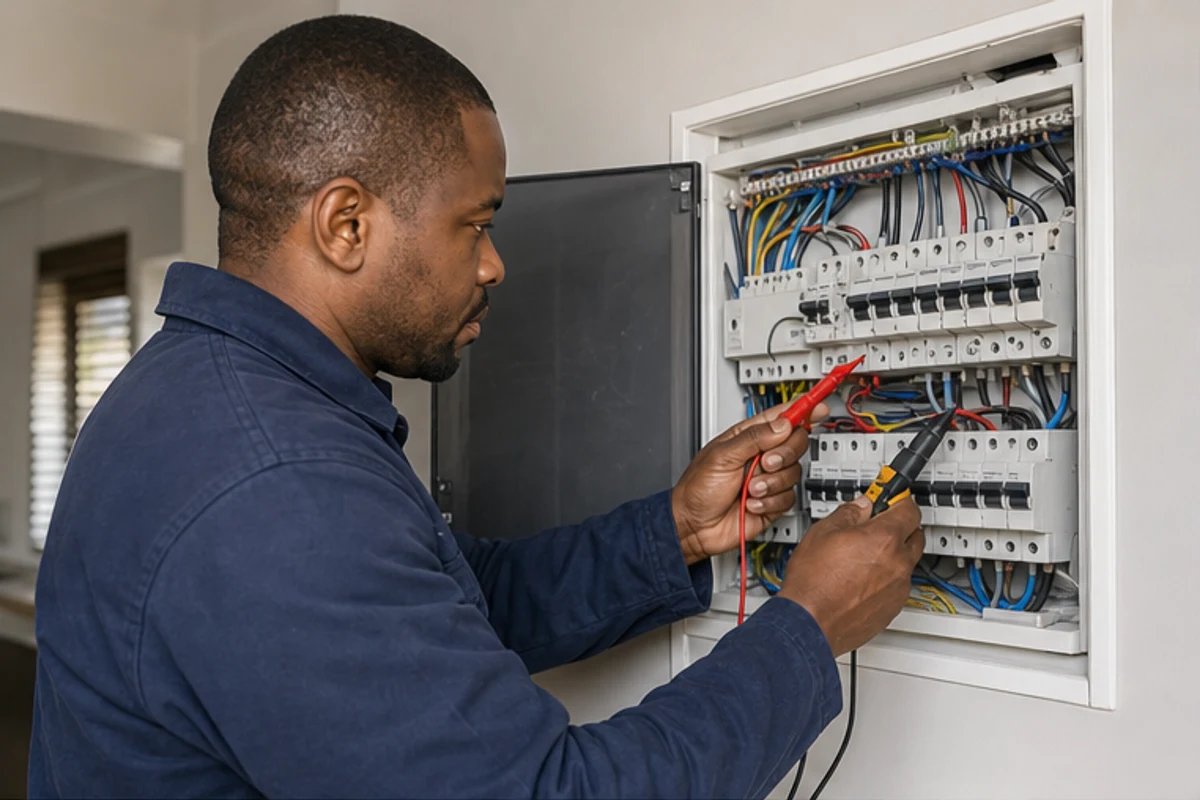
The compliance certificate is a formal record that testing showed the supply, wiring, circuits and fixed appliances meet SANS 10142 safety standards.
Inspectors check the whole system: visual inspection, insulation resistance and circuit tests. A registered electrical contractor signs off that voltage and phase connections fall within legal limits.
When a New Certificate is Required
Minor changes can still affect certificate compliance. Replacing light fittings, socket outlets or a built‑in appliance often means the original certificate is no longer valid.
Any alteration to a room, a new installation or work on a circuit requires a fresh inspection and tests — that is where CoC inspection and repairs help. Industry surveys show nearly 30% of first submissions need rework because tests or paperwork were incomplete.
- Keep documentation up to date to save time and avoid rejected submissions.
- On sale or rental, a current certificate — one of the certificates needed when selling — reassures buyers and insurers.
Legal Obligations for Property Owners
In Benoni, the law makes you responsible for keeping your property’s installation safe and up to code.
Under the Occupational Health and Safety Act and the Electrical Installation Regulations of 2009, every owner must ensure their electrical installation is safe and maintained.
A valid certificate must be kept on the premises to show that the installation meets the safety act requirements. This document proves property compliance during a sale, rental or insurance claim.
Failing to hold a current certificate can cause legal complications. You may face delays when selling, problems with insurers, and penalties if an inspection finds non-compliance.
- Have installations inspected regularly to spot faulty wiring or outdated equipment.
- Keep records of all tests, repairs and the latest certificate for every part of the system.
- Follow the department of labour requirements to reduce risk of shock, fire and overcurrent.
Compliance is more than paperwork; it protects occupants and preserves the value of your Benoni property.
The Role of Registered Professionals
In Benoni, licensed tradespeople carry the legal authority to certify work and confirm safety standards on site.
Verifying Credentials
Before any work starts, check that your chosen electrician holds a valid licence from the Department of Labour. Ask to see their registration certificate and ID. This proves they meet the regulations and requirements to work on your property.
Only registered electricians may sign the certificate. That ensures phase wiring and safety tests are properly checked. Confirm they are registered for the specific category of work you need, including single‑phase or three‑phase installations.
- Request a detailed test report with the certificate to record readings and the work done.
- Verify experience with your specific equipment and installation type.
- Keep the document on site for future inspections, sale or insurance.
| Requirement | Why it matters | What to ask |
|---|---|---|
| Valid licence | Shows legal authority to certify work | View registration and expiry date |
| Registration category | Matches the scope of work and phase type | Confirm single or three‑phase competency |
| Test report | Provides a permanent record of readings | Obtain a signed report with the certificate |
Essential Components of the Inspection Process
Technicians combine hands‑on checks with measured tests so the supply and devices meet safety limits and function reliably.
Visual Inspection Standards
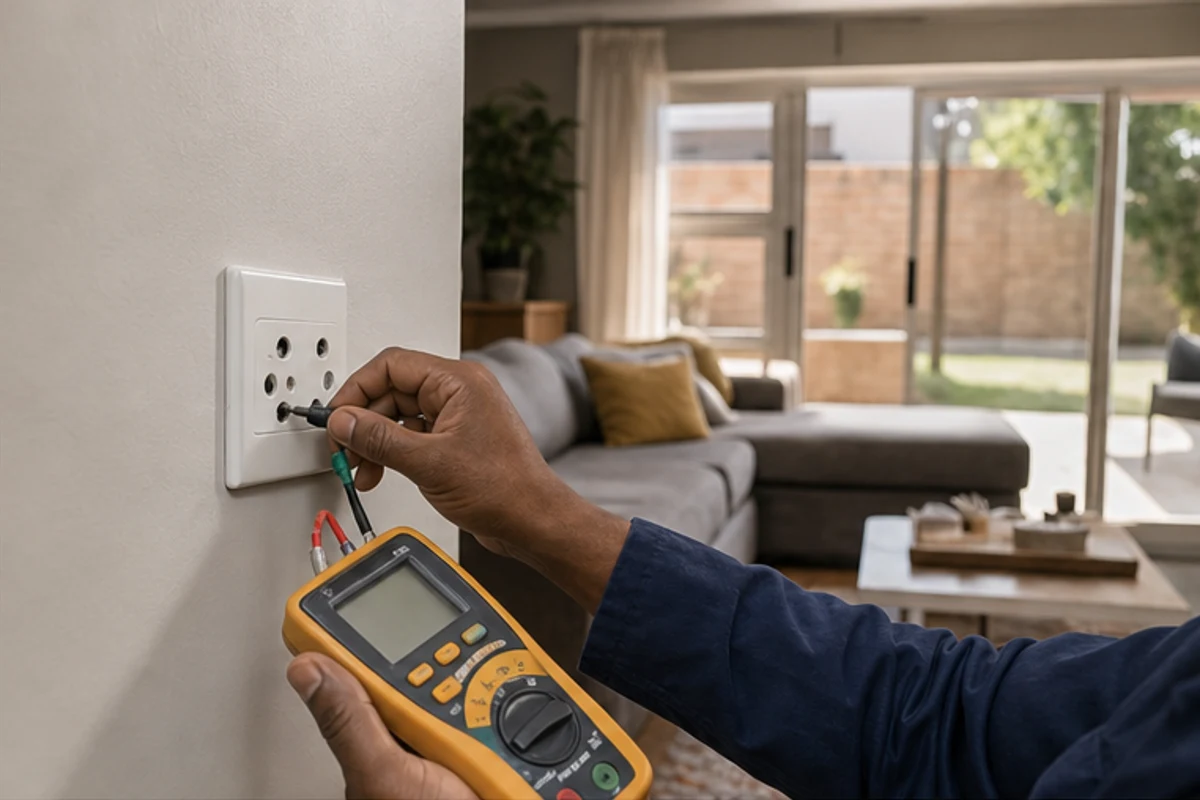
Start with a visual check of the distribution board, wiring routes and visible parts of the installation. This step finds worn cables, loose terminals and incorrect labelling before any instruments are used.
Inspectors look for clear signs of fault, poor earthing and damaged devices. Photographs and notes form part of the test record for compliance and future reference.
Insulation Resistance Testing
Insulation resistance testing confirms circuits are free from short‑circuits and moisture. SANS 10142‑1:2020 requires at least 1,0 MΩ for each circuit.
Technicians record values for each part of the system to show safe operation of appliances and sensitive equipment.
Earth Fault Loop Impedance
Earth fault loop impedance testing verifies the supply will disconnect under a fault. Continuity of bonding conductors is tested with 4–24 V and at least 0,2 A.
Earth leakage devices are also tested to trip within specified times, giving added protection against shock and equipment damage.
“Safety checks protect people and preserve value.”
- Verify supply voltage and phase rotation to prevent damage to sensitive equipment.
- Keep a clear test report with results and signed confirmation for your Benoni property.
Common Electrical Failure Points in Benoni Properties
Benoni homes often show the same weak spots that fail a standard safety inspection.
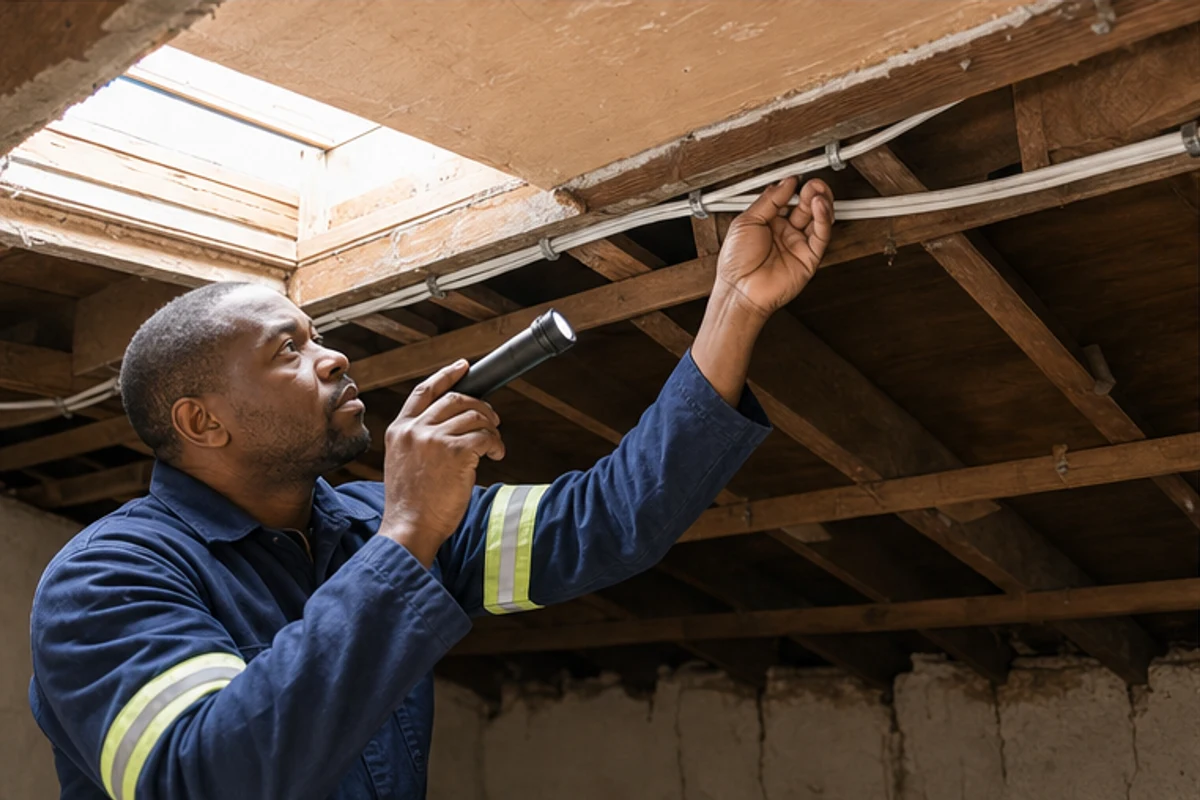
Illegal extensions and unbonded geysers are common. These usually do not meet SANS 10142 and will fail a test for a safe installation.
Old distribution board layouts often lack earth leakage protection. Missing earth devices raise shock and fire risk for modern South African households.
TV aerials and satellite dishes need proper earthing. Poor earthing is often missed during routine work and can create dangerous voltages on metal parts.
DIY repairs commonly cause faulty wiring and polarity faults. An accredited electrician must correct these to restore safe circuits and certificate compliance.
Every room must have correctly wired sockets so appliances do not cause a system fault. During testing we look for loose connections in the distribution board that lead to overheating.
| Common Fault | Likely Cause | Risk | Typical Remedy |
|---|---|---|---|
| Unbonded geyser | Non-compliant extension | Shock, failed certificate | Bonding and re-test |
| Missing earth leakage | Old board design | Increased shock risk | Replace RCDs and update board |
| Poor aerial earthing | Overlooked during work | Voltage on metal parts | Earthing conductor fitted and tested |
| Loose board connections | Age or DIY repairs | Overheat, fire hazard | Tighten, replace terminals, issue report |
Why Accurate Documentation Matters
Keeping full documentation turns a one-off inspection into a lasting safety record for your home.

Accurate records prove your installation meets the Occupational Health and Safety Act and local regulations. Store the certificate and test report where you can find them before a sale or insurance claim.
A detailed test report gives a clear history of wiring, repairs and inspection readings. Insurers and buyers often ask for these documents when assessing risk or value.
The health safety act requires that records of work are maintained to show the installation remains safe for occupants. Missing paperwork can delay transfers and create liability.
- Ask the electrician for a comprehensive report that notes every test, repair and component replaced.
- Keep a signed certificate copy and the associated report together for easy reference.
- Maintain a dated log of inspections so you can show ongoing compliance.
“Good documentation protects you from liability and speeds up property matters.”
In Benoni, clear files demonstrate your commitment to safety and support certificate compliance when you sell, rent or insure.
Navigating the Quote Request Process
Start by giving a clear brief for the job, including the part of the property affected, any phase or circuit details and the equipment involved.
Connecting with Qualified Contractors
Use our quote request process to contact independent electricians across Benoni. Our platform helps you reach tradespeople who can do site visits and offer a written quote.
Request proof of registration and ask what tests will be done. Confirm whether the quote includes the final certificate and a signed test report.
Comparing Up to Three Quotes
Request up to 3 quotes, or up to 5 where available, to compare pricing, scope and timelines. Never assume volume — availability varies by suburb.
- Check that each quote lists testing, parts, labour and the issuance of a certificate upon completion.
- Ask for a breakdown of work on each circuit, plus any replacement parts or board upgrades.
- Have your chosen electrician explain the test report so you understand inspection results and compliance steps.
| What to check | Why it matters | What to ask for |
|---|---|---|
| Written quote | Prevents hidden costs | Itemised labour, parts, site visit fee |
| Testing included | Ensures safe operation and certificate validity | List of planned tests and instruments |
| Certificate & report | Proof of compliance for sale or insurance | Signed certificate and detailed test report |
“A clear brief and three comparable quotes help you make a confident choice.”
Safety Standards and Insurance Implications
Insurance cover can be voided if a property fire or injury links back to an unverified installation. Insurers often refuse claims where a supply fault or poor wiring is tied to work that lacks certificate compliance.
The Health Safety Act and occupational health safety rules require that all equipment is installed and maintained to prevent shock and fire. That duty sits with the owner whether you rent, sell or live in the home.
Make sure your earth leakage protection and distribution board meet SANS 10142 standards. A good earth connection prevents dangerous voltage build-ups during a fault and keeps devices safe.
Every circuit must have the right protective devices to disconnect the supply if a fault or leakage occurs. An authorised electrician will test voltage, phase and bonding and issue the paperwork you need to support any claim.
- Keep current certificates and test reports to protect insurance cover.
- Prioritise upgrades on old boards, earthing and RCD protection.
- Treat compliance as a life‑safety measure for your Benoni home.
“Good protection and clear records save time with insurers and keep occupants safe.”
Managing Alterations and New Installations
Any change to your property that affects circuits or the distribution board usually needs fresh tests and a replacement certificate.
Adding a new installation—such as extra circuits, a new distribution board or hard‑wired appliances—triggers the process of full testing. A registered electrician must do the work and confirm the electrical installation meets South African standards.
When you renovate a room or add appliances, check the system can carry the extra load. Overloading weak supply routes risks tripped protection and heat damage.
- Every new part must be tested for earth continuity and voltage to SANS 10142 limits.
- Professionals label new circuits, fit correct protection and provide a signed report.
- Keep the new certificate and add it to your documentation for future sale, insurance or inspections.
| Change | Required action | Why it matters |
|---|---|---|
| New circuit | Install, test earth and voltage, issue coc | Ensures correct protection and load sharing |
| Distribution board swap | Full re-test, RCD checks, updated report | Prevents nuisance trips and meets compliance |
| Appliances or equipment added | Load assessment, wiring check, certificate | Protects supply, prevents overheating |
“Correct testing and records keep your home safe and compliant.”
Securing Your Property Compliance Today
Start compliance today by booking a registered electrician to assess the board, circuits and earth.
Securing your property compliance is straightforward when you use buildingcontractorsinbenoni.co.za to find a qualified local electrician for inspection and testing.
A valid certificate and signed test report are the best proof that your installation meets health safety requirements and insurer expectations. Regular checks of earth leakage devices, the distribution board and circuit protection keep voltage risks low.
Visit buildingcontractorsinbenoni.co.za to request quotes, compare electricians and arrange the work that keeps your home sale‑ready and safe.
FAQ
What does the Electrical CoC cover?
The Certificate of Compliance confirms that a fixed wiring installation meets SANS 10142 requirements for safety and protection. It covers distribution boards, circuit protection devices, earthing and bonding, insulation resistance, RCD/RCBO performance, wiring methods, and the condition of switches, sockets and light fittings. The document records tests, results, and any defects found during inspection.
When do I need a new Certificate of Compliance?
You need a new certificate after any new installation, substantial alteration, or when an existing installation is verified as unsafe. Also obtain one when transferring a property, connecting a new supply, or if an insurer or local authority requests proof of compliance. Certificates usually follow a full inspection and testing by a registered installer.
Who is legally responsible for compliance?
As the property owner, you are responsible for ensuring the installation is safe and compliant under the Occupational Health and Safety Act and related regulations. Landlords must keep their rental properties safe and present valid documentation when required. Failure to comply can affect insurance and result in penalties.
What qualifications should the professional issuing the certificate have?
The person issuing the certificate must be a registered installer or registered person with credentials recognised in South Africa. Verify their registration number, membership with a recognised trade body, and proof of public liability insurance. Ask for identification and previous client references before commissioning work.
How can I verify an electrician’s credentials?
Ask for the installer’s registration number and ID, then contact the relevant local authority or industry body to confirm status. Check for COC templates, company contact details, and signed test sheets. Legitimate contractors supply a detailed report, test values, and an authorised signature on the certificate.
What happens during the visual inspection?
The inspector checks accessibility, condition of switches and sockets, apparent signs of overheating, correct labelling at the distribution board, presence of an earth electrode, and compliance with wiring methods. Visual findings guide which electrical tests are necessary and identify obvious safety hazards requiring immediate attention.
What is insulation resistance testing and why is it done?
Insulation resistance testing checks that conductors are properly insulated from each other and earth. It identifies deteriorated insulation that can cause leakage, short circuits or electrocution. Test results are recorded on the certificate and compared to SANS 10142 minimum values for each circuit.
What is earth fault loop impedance and why is it tested?
Earth fault loop impedance measures the resistance through the earth path and return conductor under fault conditions. Low impedance ensures protective devices trip quickly to clear faults. Proper impedance keeps fault-clearing times within safe limits and is essential for RCD and MCB protection to operate correctly.
What are common failure points in Benoni properties?
Common issues include ageing wiring and insulation, overloaded circuits, missing or incorrect earthing, corroded distribution boards, DIY alterations without permits, and RCDs that don’t meet current standards. Coastal and older suburban homes often show wear from moisture and rodents, so expect targeted repairs.
Why is accurate documentation important?
Accurate records protect you legally and financially. A full inspection report and a correct certificate support insurance claims, property transfers and future maintenance. Clear documentation lists defects, remedial work and the tested values you can rely on for safe operation and future upgrades.
How do I request quotes and find qualified contractors in Benoni?
Start by confirming the scope: inspection, testing and remedial repairs. Request up to three quotes from registered installers, include access times, existing drawings if available, and specify compliance to SANS 10142. Ask each contractor for their registration details, written scope, labour and materials costs, and expected completion time.
How should I compare up to three quotes?
Compare like for like: scope of testing, list of repairs, warranties, materials brands, labour rates, and whether the quote includes issuing the certificate. Check how each contractor plans to handle distribution board upgrades, earthing improvements and RCD replacements. Confirm payment milestones and any permits required.
How do compliance and safety standards affect insurance?
Insurers often require a valid certificate for cover on electrical-related claims. Non-compliant or undocumented installations can lead to claim refusal. Keep records of ongoing maintenance, certificates, and any upgrades to demonstrate proactive safety management to insurers.
What must I do when making alterations or new installations?
Notify a registered installer before starting work and arrange inspections as prescribed. Use compliant materials and follow SANS 10142 wiring rules. After completion, have the installer perform tests and issue a certificate confirming the new or altered circuits meet safety requirements.
How quickly can I secure compliance for my property?
Timing depends on inspection findings. A standard inspection and testing can take a few hours, while remedial work or board upgrades may take days. Once remedial work finishes, the installer re-tests and issues the certificate. Plan for scheduling, parts lead times and any required permits when arranging quotes.
Related building cost guides
Ready to compare?