

Living at Home During Renovations: A Survival Guide
Dust zones, water and power cut-offs, kids and pets – and the builder agreements that keep it liveable
In short
Living at home through a renovation – dust zones, water and power cut-offs, kids and pets, and the builder agreements that help.
12 min read
On this page
Are you ready to keep your daily routine while turning a tired Benoni house into a modern space?
Living at home during renovations is the first part of any practical plan. This guide collects 15 clear tips to help you manage a busy building site and keep your property functional.
You will get contractor-focused advice on access, materials, approvals and what to confirm in writing. Expect realistic timelines, common disruptions and simple ways to protect rooms you use most.
Think of this as a short checklist to reduce stress and protect your family, possessions and budget. Use these strategies to keep the project on track and make the time while work proceeds more manageable.
Read on for local, no-nonsense guidance so you can plan quotes, compare contractors and stay sane while your dream home takes shape.
Assessing the Feasibility of Living at Home During Renovations
A quick feasibility check helps you work out if your family can cope with on-site home renovations. Start by listing which rooms must stay usable and how much disruption you can accept.
Stay or Go Decision Aid
Save on rent: Staying can free funds for kitchen renovations or a better bathroom finish. But if the project closes the whole house for new flooring or structural work, moving out is usually safer.
- Compare temporary accommodation costs with projected savings against typical home renovation costs.
- Check if a functioning kitchen and bathroom remain accessible.
- Factor in months of noise, dust and possible delays when you budget time.
Benefits of Staying On-Site
Close oversight: You can monitor builders, approve progress and spot mistakes early. That control often reduces rework and extra costs.
Consider children and pets: Noise, dust and the site’s health and safety rules change daily life. Secure proper storage for belongings to keep living spaces clear and calm.
| Scenario | Recommended Action | Key Benefit |
|---|---|---|
| Partial refit with usable kitchen | Stay on-site | Save rent; monitor progress |
| Full-floor or full-house works | Move out temporarily | Reduce disruption; safety |
| Long multi-month project | Use mixed approach (stay some phases) | Balance costs and comfort |
Strategic Preparation for a Smoother Project
Agreeing scope, access and a contact point before work begins saves time and arguments. Start with a written scope and the right order to renovate in, listing finishes, approvals and realistic timeframes. This helps keep costs and expectations clear.
Set a daily schedule with your builders and agree on start times — many arrive by 07:00 — so noise and access are predictable. A single point of contact and a snag book keep communication tidy and reduce delays.
Trust grows from detail: confirm site access, materials, labour and inspections in writing. That gives you leverage if progress drifts from the plan.
- Plan storage for belongings and secure fragile items before work begins.
- Run the project plan in weekly blocks to spot delays early.
- Keep budget notes for expected costs and contingency for extra weeks or months.
| Preparation Item | Action | Benefit |
|---|---|---|
| Scope & finishes | Document in writing and attach samples | Reduces change orders and extra costs |
| Single contact | Nominate one person for daily queries | Faster decisions; fewer misunderstandings |
| Storage | Book off-site or on-site secure units | Protects belongings and keeps space usable |
Maintaining Your Household Routine Amidst Construction
You can protect routine and sanity through a renovation by agreeing clear access, meals and quiet zones first. Plan who uses each room and when, and keep notes for kids, pets and visitors.

Managing Kitchen Access
Set up a temporary kitchen in a dust-free room. A Tefal Everyday Portable Electric Induction Hob or an air fryer plus microwave helps you prepare proper meals when the main kitchen is closed.
- Keep frequently used utensils in one box for quick access.
- Use sealed containers for storage to reduce dust on food and crockery.
- Agree cooking times with builders to limit noise and congestion on site.
Bathroom Access and Hygiene
Bathroom planning is one of the biggest challenges in a long project. Consider short gym membership deals to use showers and keep your day routine steady.
Backup plans matter: schedule access windows, post a simple timetable on the door and check these with your contractor.
Household rules help manage chaos: swap shoes at entry, keep pets away from work areas and create a ‘survival zone’ where children can play safely. Take short breaks in a quiet room to rest and reduce stress.
Essential Dust and Noise Control Measures
Small, reliable steps to seal rooms and quieten tools protect air quality and calm the house.

Implementing Dust Zones
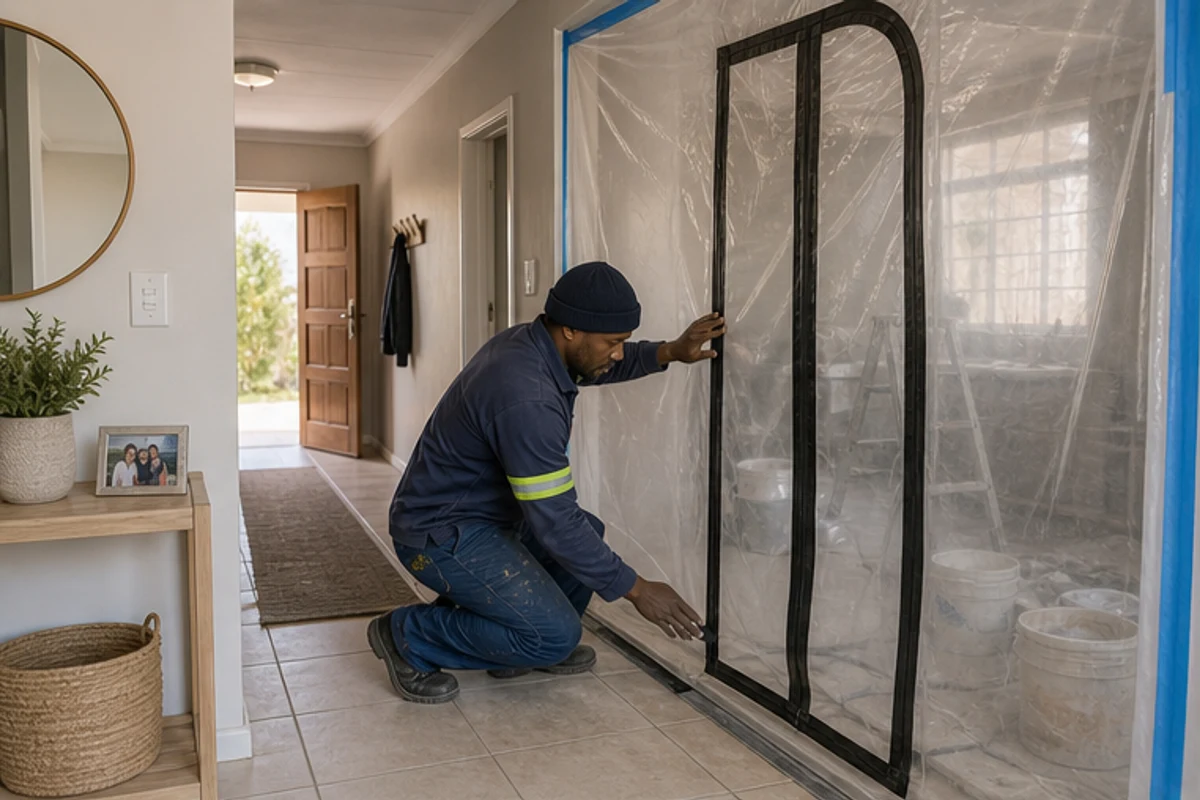
Create strict dust barriers with ProDec Zipped Door Seals to stop debris spreading from the site into living spaces. Use thick plastic, taped seams and a one-way entry for builders.
“Air quality is a priority; use air purifiers in every room during construction,” — Kishani Perera
Place a purifier in the main family room and any room you use most. Schedule daily clean-downs to reduce settled dust and keep the house usable.
Protecting Floors and Surfaces
Cover routes with Q1 Floor Pro Board so every path used by builders is shielded. Protect worktops, kitchen cupboards and storage areas with taped cardboard or polythene.
Keep frequently used items in sealed boxes and mark them clearly. If you lack a bathroom for a phase, a short gym membership for showers keeps your routine intact.
Managing Noise Levels
Agree a site timetable with your contractor and set quiet hours for children and work that needs concentration. Use noise-cancelling headphones to work or rest when tools are loud.
Combine cut-off windows, sealed doors and scheduled clean-downs as a simple survival system. This approach reduces chaos, protects family health and keeps the renovation on track.
Creating Islands of Calm Within Your Living Space
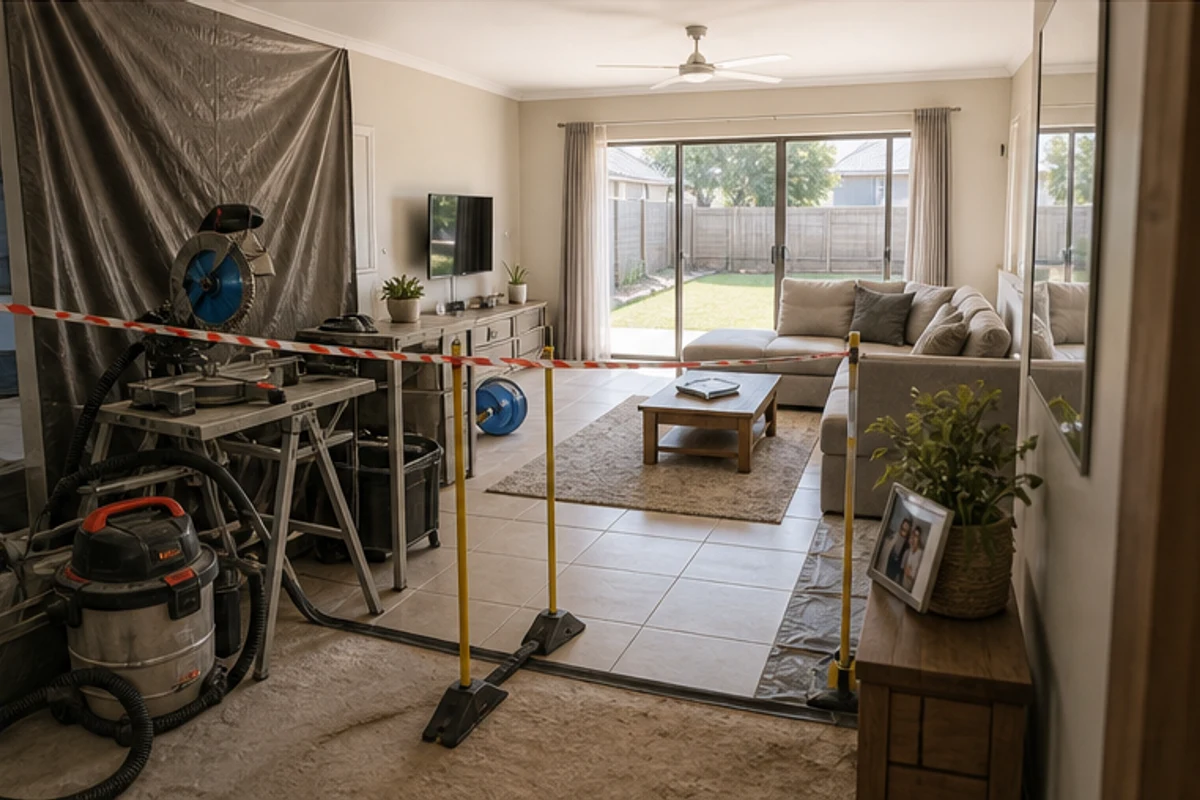
Create a dedicated sanctuary so your family can step away from the dust and keep routine. Pick one room and keep it free of tools, materials and builders’ traffic.
Keep it simple on a tight budget: use scented candles, a few fresh flowers and cosy throws to lift mood. These small touches make a big difference when the rest of the house is a construction site.
Agree that this place is off-limits for work. Post a clear sign on the door and store any needed items in labelled boxes to avoid clutter.
- Noise control: add heavy curtains and a small fan or purifier to reduce dust and sound.
- Storage: use stackable crates so the calm room stays tidy and useful.
- Routine: make short rituals—tea, reading time, or quiet play—to mark rest periods.
Remember: the disruption is temporary. These islands of calm help you maintain mental health and patience until the project reaches the end.
| Tip | Action | Benefit |
|---|---|---|
| One dedicated room | Keep tools out; post an access rule | Reliable retreat for rest |
| Budget comforts | Use candles, flowers, throws | Improves mood cheaply |
| Organised storage | Label boxes; use crates | Reduces clutter and stress |
Connecting with Professionals via buildingcontractorsinbenoni.co.za
Connecting with vetted contractors nearby can cut delays and make your project more predictable. Use our platform to find local professionals who understand Benoni site logistics and municipal approvals.
Our quote request process helps you compare realistic options and spot potential problems early. Submit clear scope details and site access notes so contractors can prepare accurate quotes.
How the process works
- Go to buildingcontractorsinbenoni.co.za and complete the online form.
- Include plans, materials, labour needs, finishes and approval dates for a precise assessment.
- Request up to three building quotes, or up to five options where available, to compare prices and schedules.
Important: our platform connects you with independent contractors only. We do not employ builders or carry out construction work.
| Step | What to provide | Why it matters |
|---|---|---|
| Initial brief | Scope, drawings, photos | Improves quote accuracy; reduces later delays |
| Site access | Parking, entry points, working hours | Helps contractors plan labour and deliveries |
| Compare quotes | Price, timeline, warranties | Choose contractors who match your project needs |
By using buildingcontractorsinbenoni.co.za you simplify the search for reliable contractors and gain confidence to manage progress on your house project. Local knowledge often reduces unforeseen delays and keeps expectations realistic.
Embracing the Journey Toward Your Finished Home
As your site work winds down, focus on the new comforts that await in each finished room.
Take a moment to note progress and how the renovation has reshaped your space. Small celebrations help the family see the end in sight.
Remember: the dust, noise and extra time were part of the process that delivers a better kitchen, living area and overall house.
Share practical feedback with your builders and take before-and-after photos to capture the experience. If you plan more work in an occupied home, make a clear plan for the coming weeks.
Need contractor advice? Contact buildingcontractorsinbenoni.co.za to request quotes from local professionals who understand occupied-site work.
FAQ
Can I stay in my Benoni house while a major kitchen or bathroom project is underway?
It depends on the scale. Small upgrades or phased works often let you remain on-site with sensible planning. Full kitchen gut-outs, major plumbing or structural changes usually create safety, dust and access issues that make temporary relocation the safer choice. Ask contractors about site access, expected dust, water and power shut-offs, and how long disruptive phases will last before you decide.
What should I check before deciding to remain on site during renovation?
Confirm the project schedule, working hours, contractor insurance and safety measures. Check whether permits or approvals will limit access, if trades need continuous access to rooms, and whether contractors provide dust barriers and floor protection. Also factor in household members — children, elderly or pets may require alternative arrangements during noisy or dusty phases.
How can I minimise dust spreading to the rest of the house?
Create sealed dust zones using builder-grade plastic, zip doors and adhesive floor protection. Keep internal doors closed, run extractor fans and change HVAC filters more frequently. Ask your contractor to use negative-pressure units where possible and to isolate the work area from common spaces. Regular wet-dusting and hoovering with a HEPA-filter vacuum helps too.
What practical kitchen arrangements work when the kitchen is out of action?
Set up a temporary kitchenette in a spare room or garage with a microwave, kettle, slow cooker and a small fridge. Use disposable or ceramic plates to avoid washing up in the construction zone. Plan meals that require minimal prep and clean-up. Confirm with your contractor about water access and safe routes so you don’t cross the active site unnecessarily.
How do I handle bathroom access if the family bathroom is being replaced?
Keep at least one bathroom fully functional where possible. If not, install a temporary portable toilet or hire a site bathroom unit. Schedule trades to work on bathroom plumbing in stages so you retain access for essential use. Discuss timelines with the contractor and agree on contingency plans for extended downtime.
What measures protect floors and surfaces from damage during works?
Use rigid floor protection boards in high-traffic routes, heavy-duty adhesive films on finished floors, and felt or rubber protectors under equipment. Cover fixed surfaces with breathable coverings and ask trades to remove shoes or use disposable overshoes. Insist that contractors repair accidental damage and note these protections in the written agreement.
How can I reduce noise impact on my family and neighbours?
Agree working hours that comply with local bylaws and suit your household routine. Ask contractors to use quieter tools where possible, schedule the noisiest tasks for daytime, and plan rest periods. Inform neighbours in advance and provide contact details for the site manager to handle complaints promptly.
What should I include in written agreements with contractors to protect my interests?
Confirm the scope of work, realistic timelines, milestone payments, materials, waste removal, insurance and warranties. Specify dust-control, site-access rules, working hours, who is responsible for cleaning and how change orders will be handled. Keep copies of all permits, progress photos and receipts.
How do I store furniture and valuables safely while work is in progress?
Move valuables to a secure room away from the site, or use off-site storage for large items. Cover furniture with breathable covers and raise items off the floor where possible. Label boxes clearly and keep an inventory. Contractors should have a designated storage area for building materials to avoid cluttering living spaces.
What should families with young children or elderly residents consider when staying on-site?
Prioritise safety: secure tools and chemicals, block stairwells and cordon off hazardous zones. Consider temporary relocation during the most disruptive phases. Maintain routines where possible and establish calm zones for rest. Discuss child-protection and access with your contractor before work begins.
How do unexpected delays and cost increases affect whether I should stay in the property?
Delays and variations can prolong disruption. If a project’s critical path is uncertain or there’s a high risk of change orders, relocating short-term may reduce stress and daily disruption. Discuss contingency buffers in the quote and agree how contractors will communicate delays and cost changes in writing.
Can buildingcontractorsinbenoni.co.za help me find contractors who allow me to remain on-site?
Yes — use the platform to request quotes from local Benoni contractors and specify that remaining on-site is a priority. Contractors will outline their approach to dust control, phasing and site rules. The platform connects you to independent contractors; final agreements, site visits and warranties are arranged directly with the chosen tradesperson.
How many quotes can I request through the platform?
You may request up to three quotes, or up to five quote options where available. Each contractor will provide their own site visit, final quote, timeline and warranty terms. Compare scope, materials, labour rates and access arrangements before making a decision.
What local factors in Benoni should I tell contractors when requesting a quote?
Mention your suburb, access constraints such as narrow gates or parking, any homeowner association rules, planned working hours and permit status. Detail material preferences, budget constraints and any deadlines. Clear local information helps contractors give realistic quotes and plan logistics.
How can I create a quiet space or ‘island of calm’ inside an active building site?
Choose a room away from the work zone, seal doors and add sound-absorbing curtains or rugs. Use white-noise machines and keep personal items in that space. Schedule contractor activities so the calm zone is respected during rest times. Make it a no-go area for trades to preserve peace.
What are reasonable expectations for progress updates from contractors?
Expect regular updates at agreed milestones, a weekly site summary, and prompt alerts for changes to schedule or costs. Contractors should provide a single point of contact for queries. Get progress reporting and payment milestones in writing before work starts.
Ready to compare?