
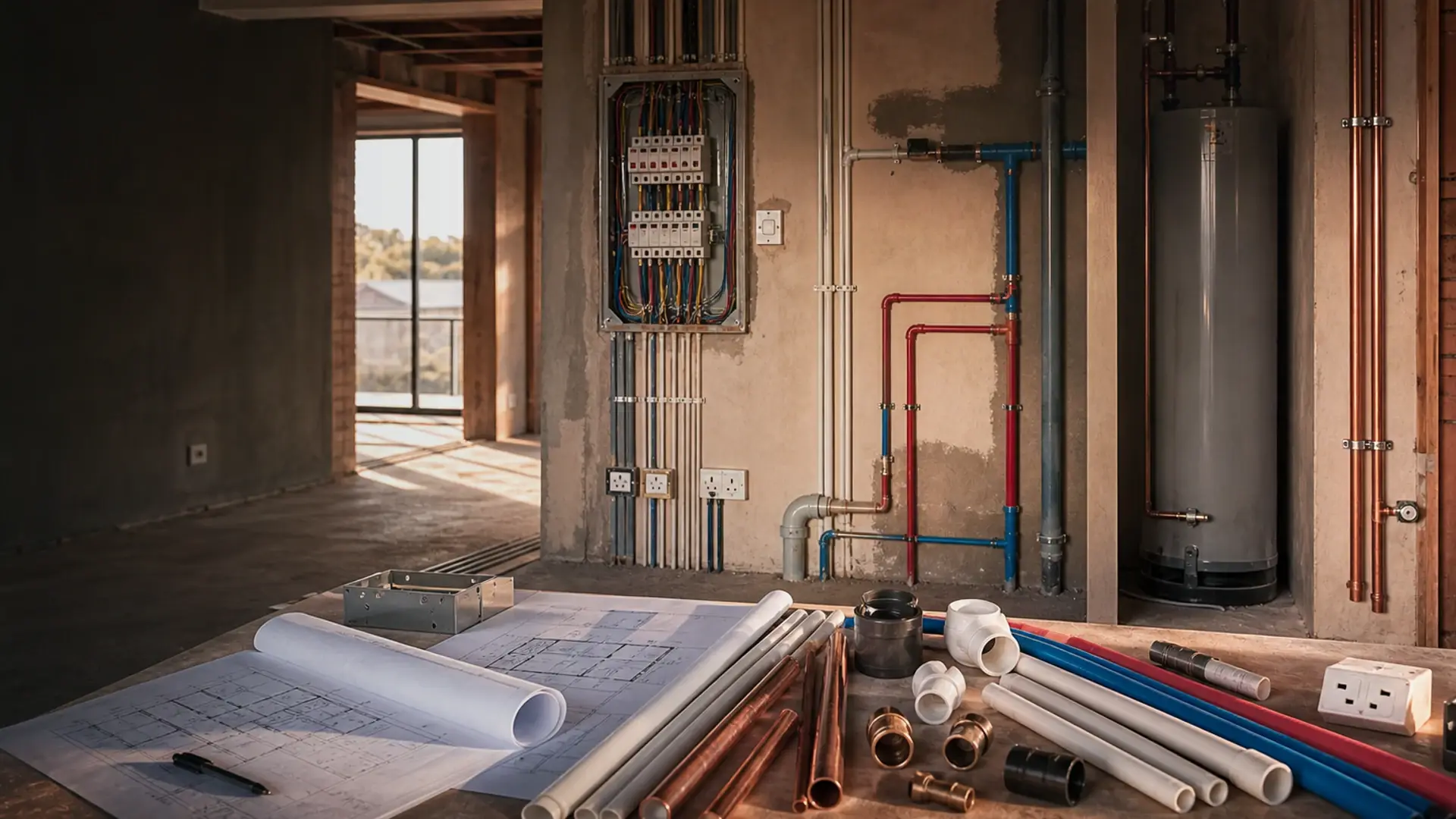
Geyser Installation Rules, Explained
Drip trays, vacuum breakers, pressure valves and the certificate – what a compliant install includes
In short
Geyser installation rules in SA – drip trays, vacuum breakers, pressure valves and the CoC, explained for homeowners.
13 min read
On this page
Curious: can a single loose fitting cost you a ceiling flood and an insurance refusal?
Understanding geyser installation rules is vital for every homeowner in Benoni. SANS 10254 sets the national standard for hot water storage vessels, and compliance keeps your property safe.
At buildingcontractorsinbenoni.co.za we guide you through local plumbing checks and what to confirm in writing. A proper installation avoids common water hazards, electrical faults and ceiling damage.
Always ask for a valid compliance certificate or COC after work is done. This proof of compliance protects your claim with insurers and shows that the work met national safety standards.
Visit buildingcontractorsinbenoni.co.za to connect with registered experts who can quote, inspect and sign off on your project. Simple steps now save costly fixes later.
Understanding Geyser Installation Rules and SANS Standards
If you own a property in Benoni, SANS 10254 dictates key safety steps for fixed storage water heaters.
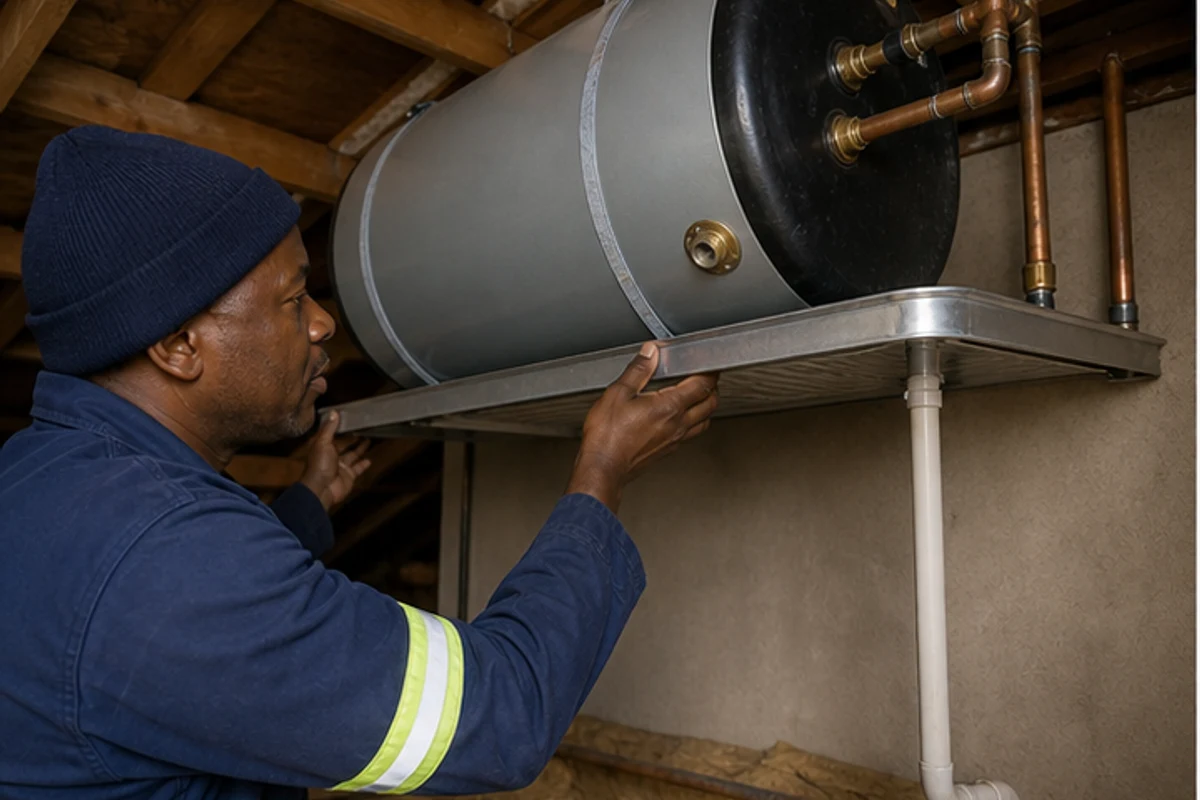
The standard became law through Government Regulation No. 7079 on 8 June 2001. It governs every fixed electric storage water heater, so an electrical CoC usually covers the connection too.
These regulations ensure your hot water system copes with pressure and thermal expansion. Professional plumbing contractors must meet the technical requirements so the system stays safe and efficient.
- SANS 10254 formalised the national standards in 2001 for storage water heater work.
- Mounting, pipework and pressure control are controlled to prevent failures.
- Compliance keeps warranties valid, lowers insurance risk and is one of the certificates needed when selling.
“A compliant setup is not a technicality — it is a safety measure that protects your home.”
When you plan a replacement, ask your contractor to confirm the full system meets current SANS standards — CoC inspection and repairs put failures right. Correct maintenance stops small faults turning into major water damage.
Essential Components for a Compliant System
Correct components protect your hot water tank from leaks, pressure surges and premature failure — gas geysers add their own rules for gas installers. Each element must meet SANS guidance and be accessible for maintenance or repair.
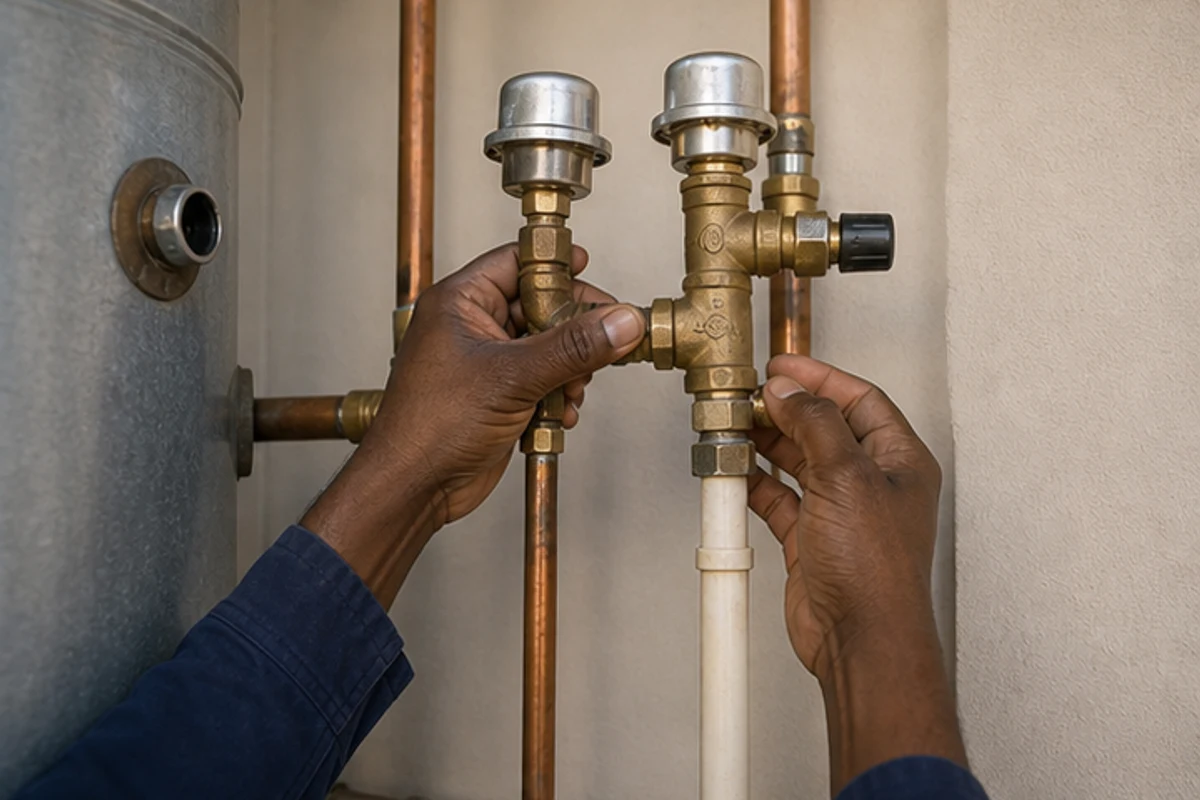
Drip trays and drainage
Drip trays and drainage
A compliant drip tray must cover the full footprint of the storage unit and its control appurtenances. Fit a discharge pipe that exits the building and is sloped to avoid traps or blockages.
Pressure control valves
Every pressure control valve must be sized to manage incoming water pressure. A correct valve protects the tank from surges and allows natural expansion during the heating cycle.
Vacuum breakers
Vacuum breakers belong on both hot and cold supply lines to stop siphonage. These simple parts maintain safe flow and prevent back‑pressure that can damage pipework and the element.
“Install quality materials and make every connection secure to reduce repair risks and keep warranty terms valid.”
| Component | Primary function | Key requirement |
|---|---|---|
| Drip tray | Catch leaks and direct discharge | Full coverage, external outlet, correct slope |
| Pressure control valve | Regulate incoming pressure | Correct size, rated for hot water, accessible |
| Vacuum breaker | Prevent siphonage | Fit on hot and cold lines, vented correctly |
| Materials & connections | Long‑term durability | Corrosion‑resistant parts, secure joints, SANS compliant |
Why Professional Installation is Mandatory
Professional fitment protects your home from the costly consequences of faulty hot water work. DIY attempts often leave systems non‑compliant and can void a manufacturer’s warranty and your insurance cover.
The risks are real: these units run on high‑amperage circuits. Incorrect wiring raises the chance of electrocution or fire. Poor plumbing or weak mounts may lead to ceiling floods and major repair bills.
The risks of DIY work
- Pressure vessel hazard: a storage unit under pressure can burst if fittings fail.
- Warranty loss: only a qualified plumber will meet manufacturer and safety requirements.
- Electrical danger: a registered tradesperson will safely manage the wiring to reduce shock risk.
“Engage a registered plumber so your hot water system is safe, compliant and easier to maintain.”
Regular maintenance and timely repairs are simpler when a professional has set up the system correctly. This one step reduces long‑term cost and keeps your family safe in Benoni homes.
The Role of the Certificate of Compliance
A valid compliance certificate saves you disputes with insurers and proves the work meets national safety standards.
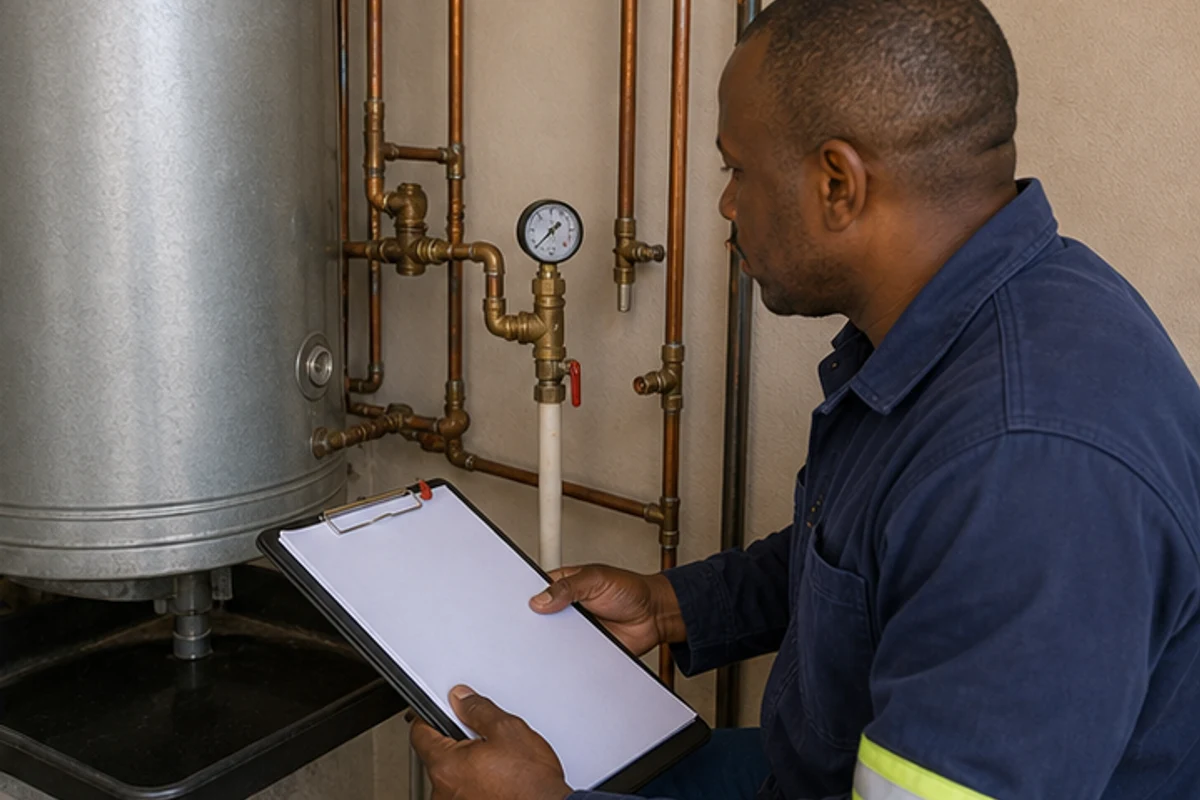
The plumbing certificate of compliance (COC) issued by a PIRB‑registered plumber is required for any work on the hot water reticulation system. It confirms that the pipe connections, pressure control valve and vacuum devices were fitted according to SANS and other regulations.
An electrical COC is also mandatory for the electrical connection, issued in accordance with SANS 10142-1. Both documents together show the full system was checked — plumbing and wiring — before use.
- The COC is a legal record that the replacement or repair met safety and materials requirements.
- Insurers commonly refuse water damage claims without a valid certificate, leaving owners to pay for repairs.
- Keep your certificate safe; it supports resale, maintenance schedules and future compliance checks.
“Only a qualified plumber may issue the PIRB COC — that provides peace of mind and clear proof the system is safe.”
When you plan a replacement or service, ask the plumber to supply both plumbing and electrical COCs and check that the components, size and position of outlets meet the standards on the certificate.
Common Non-Compliance Issues in Benoni Homes
Mid‑century properties in Benoni often need upgrades to bring older water heater systems in line with current SANS standards.

Mid-Century Property Challenges
Many older houses lack a proper drip tray under the tank. A missing tray lets small leaks become severe ceiling and structural damage.
Original pipe runs and materials may not meet modern pressure and control requirements. That raises repair costs when a fault shows.
Incorrect Mounting Techniques
Manufacturers forbid wall brackets for tanks above a certain size. Units over 200L must sit on support beams rated for the load.
Poor mounting and weak supports risk collapse. This is a common non‑compliance point found during a site assessment by a qualified plumber.
- Check that the valve and pressure devices are accessible and sized correctly.
- Follow manufacturer requirements or you could void warranties and affect insurance cover.
- Proactive maintenance and certified work reduce emergency repair and compliance headaches.
Practical step: get a site inspection and the correct certificate (COC) before major work proceeds.
Insurance Implications of Faulty Installations
When a burst water heater floods a ceiling, the insurer’s initial question is always: was the work compliant?
Assessors check SANS 10254 compliance and a valid COC before accepting any claim for water damage. If key components are missing, an insurer may refuse the claim.
Common fail points include a missing pressure control valve, no drip tray or incorrect position of the storage unit. These are the first items an assessor will inspect after a leak.
- Insurance companies frequently reject claims for burst geysers if the work does not follow mandatory SANS 10254 requirements.
- Proper maintenance and documented replacement keep your policy valid and reduce dispute risk.
- The cost of a compliant installation is small compared with repairing damage after a refused claim.
“Documented, compliant work protects your payout and avoids costly out‑of‑pocket repairs.”
Keep receipts, COCs and component details (valve type, pipe size, outlet position) with your house records. That evidence often decides a claim and protects your finances in Benoni.
How Our Platform Simplifies Your Project
Benoni homeowners can use our platform to compare trusted tradespeople for water system work quickly.
Simple quote requests: start by describing the required replacement, access, and suburb. We then match your brief with PIRB‑registered plumbers who understand local compliance and the materials commonly specified for safe work.
Our Quote Request Process
Fast, transparent, and local. You may receive up to three independent quotes to compare scope, labour and proposed materials. Contractors handle site visits and final costing. We do not carry out the work ourselves.
- Provide project details and preferred times for a site visit.
- Receive quotes that list proposed components, maintenance needs and any approvals required.
- Compare costs, timelines and the certificate (COC) offer from each plumber before you decide.
No sales pressure. Our aim is to equip you with clear information so you can choose a contractor who will prioritise safety and long‑term compliance.
“Compare multiple quotes to check the scope of work and materials — it helps you avoid surprises and ensures proper documentation.”
Comparing Quotes for Your Geyser Replacement
Know what to look for in each quote so you can compare like‑for‑like proposals. In Benoni, a transparent quote saves time and reduces the risk of later disputes.
Must‑check items:
- Confirm the final price includes the cost of a COC and any local approvals.
- Ask the contractor to name the type of pressure control valve and other key components, so you can check SANS compliance.
- Ensure the quote covers removal of the old unit and fitting of a new drip tray and external discharge pipe.
- Check the quoted size of the unit; capacity affects water output, running costs and warranty terms.
- Compare materials, labour and proposed maintenance to see the full life‑cycle cost, not just the initial price.
Look beyond the cheapest figure. Consider the plumber’s experience, local references and how clearly the quote lists parts and labour. That often matters more than a small saving up front.
“A detailed, itemised quote helps you pick a contractor who delivers safety and value.”
Use our quote comparison tools to request multiple competitive offers from PIRB‑registered plumbers in Benoni. This gives you the market view needed to choose a compliant, cost‑effective replacement.
Ensuring Long-Term Safety and Efficiency
A safe and efficient hot water supply depends on consistent service and certified components. Regular checks of the drip tray, pressure control valve and vacuum devices cut the risk of leaks and costly damage.
Keep your certificate (COC) safe and ask a registered plumber to sign off any replacement or major work. Follow SANS guidance and manufacturer requirements for materials, size and outlet position to protect warranties and insurance cover.
Visit buildingcontractorsinbenoni.co.za to find verified tradespeople who can help maintain your geyser and keep your home compliant. If you notice leaks, noises or irregular hot cold water supply, contact a registered plumber promptly.
Take one small step today — request compliant quotes and keep your building safe for years to come.
FAQ
What are the basic SANS standards I should know for a safe hot-water system in Benoni?
You must follow SANS requirements for storage water heaters, including correct positioning, secure mounting to support the tank weight, pressure control valve fitting, and proper hot and cold water connections. Installers should fit a vacuum breaker where required, provide a drip tray with a dedicated drain or safe discharge route, and use approved materials and pipe sizes to avoid leaks and pressure issues.
Do I need a pressure control valve and a temperature-pressure relief valve?
Yes. A pressure control valve or pressure-reducing valve protects the system from high supply pressure. A temperature-pressure relief (TPR) valve is mandatory on storage heaters to prevent overpressure and overheating. Both must discharge into a safe outlet or drip tray and be accessible for testing and replacement.
When is a drip tray required and how must it be installed?
A drip tray is required when the hot-water unit is inside or above habitable areas or where a leak could cause damage. The tray must be sized to catch full tank drain flow and fitted with a drain-run to a safe outlet or external gully. Use corrosion-resistant trays and ensure the drain pipe has correct fall and adequate diameter to prevent overflow.
What is the role of a vacuum breaker in the hot and cold supply lines?
A vacuum breaker prevents back-siphonage that could contaminate the mains supply. Install it where cross-connection risk exists, such as near outlets or mixing valves. It must be accessible for inspection and compliant with local plumbing standards.
Can I replace a storage water heater myself to save costs?
No. Replacement must be done by a competent plumber who understands SANS standards and local regulations. DIY work risks incorrect valve settings, poor connections, inadequate support, and voiding warranties or insurance. A registered plumber issues the Certificate of Compliance (CoC) required for legal and insurance purposes.
What is a Certificate of Compliance (CoC) and why is it important?
The CoC is a formal document issued by an accredited plumber confirming that the water-heating installation complies with SANS and municipal bylaws. It’s needed for insurance cover, property sales, and to show that safety devices like TPR valves, pressure control and correct materials are in place.
Which common non-compliance issues do Benoni homes show during inspections?
Frequent problems include missing or undersized drip trays, incorrect mounting or insufficient support for tanks, absence of pressure-control devices, improper pipework materials, and poorly routed discharge outlets. Older mid-century properties may have outdated piping layouts and inadequate structural supports that need upgrading.
How do mid-century properties present unique challenges for replacements?
Older homes often have limited access, weak mounting substrates, and non-compliant copper or galvanised pipework. You may need structural reinforcement, rerouting of supply and outlet pipes, and replacement of old control valves to meet current standards.
What are the insurance implications of a faulty hot-water system?
Insurers may decline claims if damage results from an uncertified or poorly installed system. Lack of CoC, no proper relief valve discharge, or alterations without a licensed plumber can void cover. Always confirm that installation and repairs are documented and certificated.
How does the platform help me get a compliant replacement or repair in Benoni?
You can request up to three independent quotes from accredited plumbers on our platform. Each contractor provides a site visit, a written quote detailing materials, labour, approvals, and expected timelines. Confirm in writing who supplies the unit, the control valves, warranty terms, and whether a CoC will be issued on completion.
What should I compare when reviewing quotes for a replacement?
Compare scope (supply vs supply-and-fit), material brands (elements, tanks, valves), pipe and fitting types, labour hours, access and site preparation costs, and whether the quote includes a CoC and removal/disposal of the old unit. Ask about pressure testing, warranty conditions, and maintenance plans.
How can I ensure long-term safety and efficiency after replacement?
Schedule annual maintenance with a registered plumber, check relief valve operation periodically, purge and flush the tank if recommended by the manufacturer, and inspect the drip tray and drain runs for blockages. Use pressure control devices if municipal supply fluctuations are common, and replace worn components promptly.
Which materials and components should I insist on for a robust job?
Insist on SANS-compliant tanks and reputable brands for TPR valves, pressure-reducing valves, isolation valves, and approved pipework (copper or suitable polymer). Use secure mounting brackets, proper insulation on hot-water outlet pipes, and corrosion-resistant drip trays and fittings.
Who issues the CoC and what does the inspection cover?
An accredited plumbing contractor or registered plumber issues the CoC after inspection and testing. The check covers valve settings, correct fitting of relief and pressure devices, secure mounting, correct hot and cold connections, appropriate drainage, and use of approved materials in accordance with SANS.
What immediate steps should I take if my pressure relief valve is discharging frequently?
Turn off the heater and isolate the cold-water supply, then call a registered plumber. Frequent discharge indicates overpressure, a faulty TPR valve, or a stuck thermostat. Do not isolate the relief valve permanently — that is dangerous and illegal.
Ready to compare?