
Granite vs Caesarstone Countertops
Durability, staining, heat, maintenance and cost logic compared for SA kitchens
Quick verdict
Granite or Caesarstone for your counters? Durability, staining, heat, maintenance and cost logic compared for SA kitchens.
13 min read
On this page
Which countertop will stand up to a busy Benoni kitchen for decades: a natural slab or an engineered surface?
Choosing between granite vs caesarstone means weighing long‑term performance and real costs. Caesarstone began in 1987 and makes slabs in Israel and Richmond Hill, Georgia. Natural stone is quarried worldwide, with large supplies from Brazil and India.
Think about daily use, heat, stains and maintenance over the years. Both quartz and natural stone offer strong durability, but they behave differently when it comes to sealing, repairs and visible wear.
Visit buildingcontractorsinbenoni.co.za to compare local experts and request up to 3 quotes or up to 5 where available. Our platform helps you match contractors to your brief so you can compare cost, installation time and warranties.
This guide outlines the pros cons of each option so you can make a clear choice for your kitchen surfaces and home renovation.
Understanding the Granite vs Caesarstone Debate
Choosing a surface for your kitchen renovation means weighing visible patterns against repeatable colour and texture. The aesthetic differences are central: one option shows organic, one‑of‑a‑kind veining while the other delivers consistent tones that suit modern schemes.
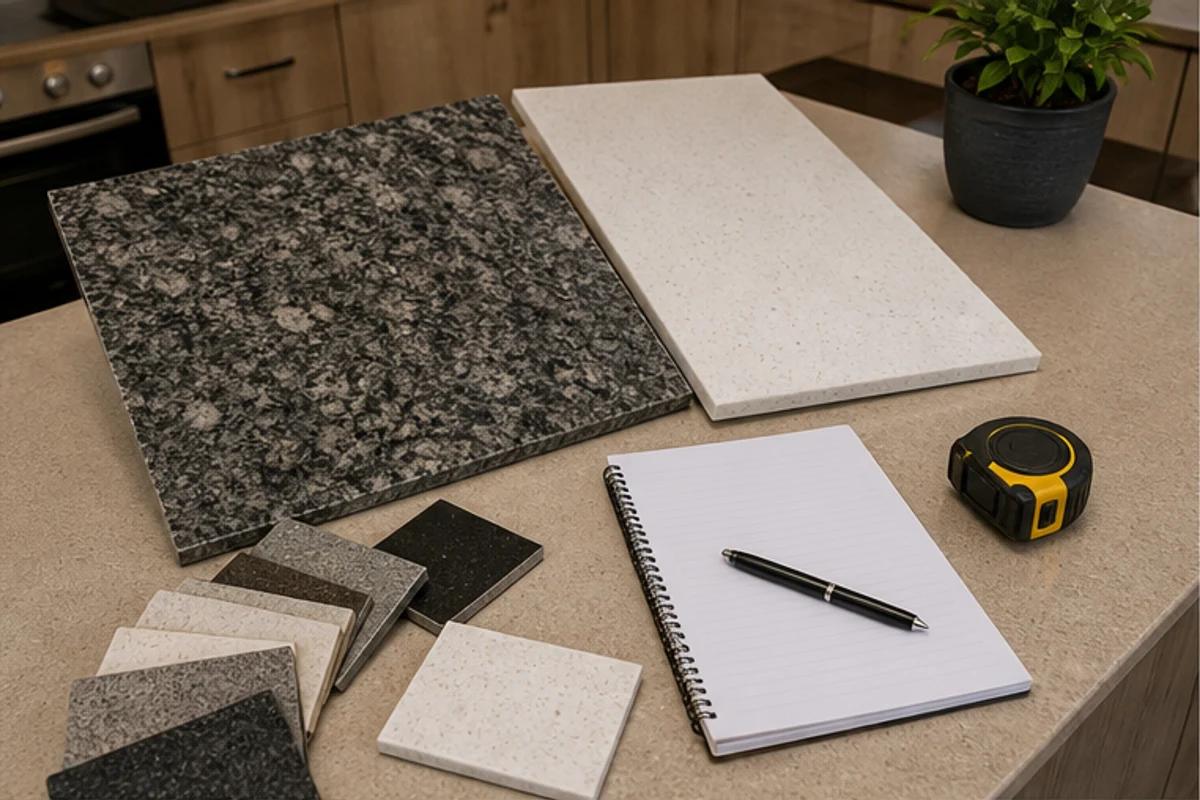
Think about function and appearance. If you want dramatic swirls and natural variation, granite countertops give that unique look. If you prefer a stable, predictable finish, quartz surfaces are easier to match across the cupboard runs you choose — flatpack or custom — and islands.
Use these points to guide your decision:
- Natural stone brings individuality to each slab.
- Engineered surfaces offer uniformity and predictable performance.
- Consider lifestyle, upkeep, the final look and kitchen renovation costs for your home.
Our platform helps homeowners — from Lakefield to the wider East Rand — compare the caesarstone granite debate with clear facts and local quotes. Make a decision that suits your property, budget and long‑term maintenance expectations before you book a template or site visit.
Composition and Aesthetic Characteristics
Look closely at how each surface is made — the ingredients and the process shape appearance and behaviour.
Natural stone variations
An igneous rock forms when molten material cools deep in the earth. This creates unique mineral patterns in every slab. Each piece is one‑of‑a‑kind and often sourced from regions across the world, including Brazil and India.
Engineered uniformity
Engineered stone uses a controlled manufacturing process. A typical caesarstone slab contains roughly 90 percent quartz and 10 percent polyresin. That mix produces a non‑porous, consistent finish and a wide range of colour options.
- Natural look: one-off patterns and organic veining.
- Engineered look: repeatable tones and predictable design.
- Choose by use: pick a slab that suits your kitchen traffic and maintenance preference.
View physical samples in Benoni to judge texture and true colour before you finalise your choice.
Performance Metrics for Kitchen Surfaces
Start with clear performance numbers so you can match a surface to how you cook and live in Benoni. The table below summarises the key metrics you should weigh in your selection.
Criteria Table for Surface Selection
| Criteria | Granite | Caesarstone |
|---|---|---|
| Scratch | High | High |
| Stain | Moderate | Low |
| Heat | High | Moderate |
| Seams | Visible | Minimal |
| Colour | Natural | Uniform |
| Cost Index | Moderate | High |
Using the Metrics for Selection
Use these figures to balance daily use and long‑term care. For example, granite is a natural stone with strong heat tolerance but needs sealing to reduce stain risk.
Installation matters. Both materials require skilled installation for correct joints and a neat countertop fit. Our platform links you to contractors who provide installation quotes, site checks and colour samples.
Comparing Durability and Heat Resistance
How a surface handles hot pans and spilled wine often decides its suitability for busy kitchens.
Granite countertops are a durable natural stone with excellent heat and scratch resistance. Because the rock formed deep in the earth, it tolerates hot pots better than many manufactured slabs.
Engineered stone such as quartz is non‑porous and does not absorb liquids. That makes it more resistant to common stains and bacteria without sealing.
Porosity matters. If a slab is not sealed, it can absorb liquids and stain. Regular sealing keeps porous surfaces protected.
Discuss your cooking style with a contractor. High‑heat cookers favour natural slabs; heavy spill and family use often lean toward non‑porous options.
| Property | Natural stone | Engineered stone |
|---|---|---|
| Heat tolerance | High | Moderate |
| Absorb liquids | Can absorb if unsealed | Does not absorb |
| Stain resistance | Needs sealing | Inherently resistant |
| Maintenance | Periodic sealing | Low maintenance |
Pros and cons depend on use. For Benoni homes, match surface choice to cooking habits, cleaning routines and long‑term care. Ask contractors for site‑specific advice and samples before you sign off on any countertop.
Financial Considerations and Market Value
Budget and resale impact often decide the surface you pick for a Benoni kitchen.
Installed price ranges give a clear starting point: typical engineered quartz runs from about R3,000–R6,000 per square metre, while natural granite slabs usually sit between R2,500–R5,000 per square metre, installed.
Cost drivers include material grade, colour rarity, edge profile, transport and skilled labour for templating and fitting.
Both materials count as premium options that can raise your home’s market appeal. Specific colours or patterns may push the price up, so check samples before you commit.
| Factor | Effect on cost | Notes for Benoni homeowners |
|---|---|---|
| Material choice | Major | Engineered quartz often costs more due to manufacturing process |
| Colour / pattern | Moderate | Rare tones increase material premium |
| Installation | Major | Skilled templating and seams affect labour cost |
| Resale value | Moderate | Premium surfaces generally improve saleability |
Use our platform to compare independent contractor quotes. This helps you balance immediate cost against long‑term value and choose the best option for your home design and budget.
The Reality of Templating and Installation Programmes
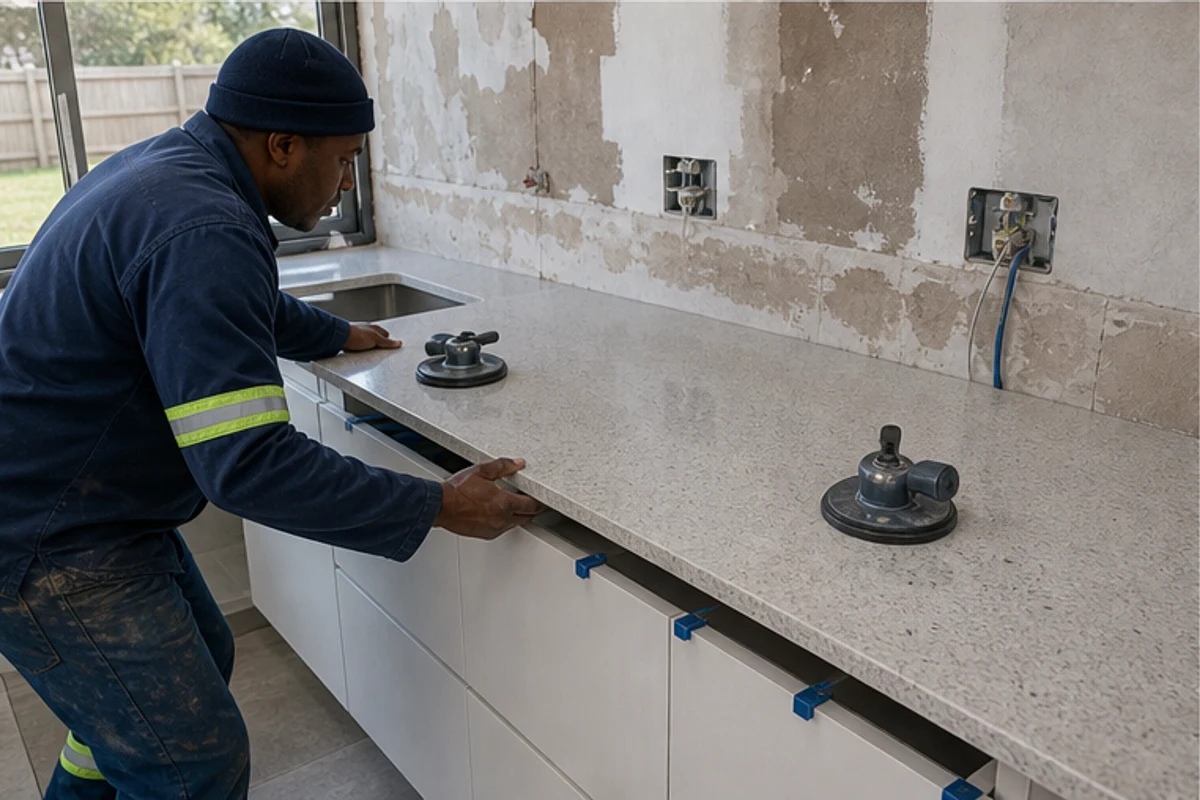
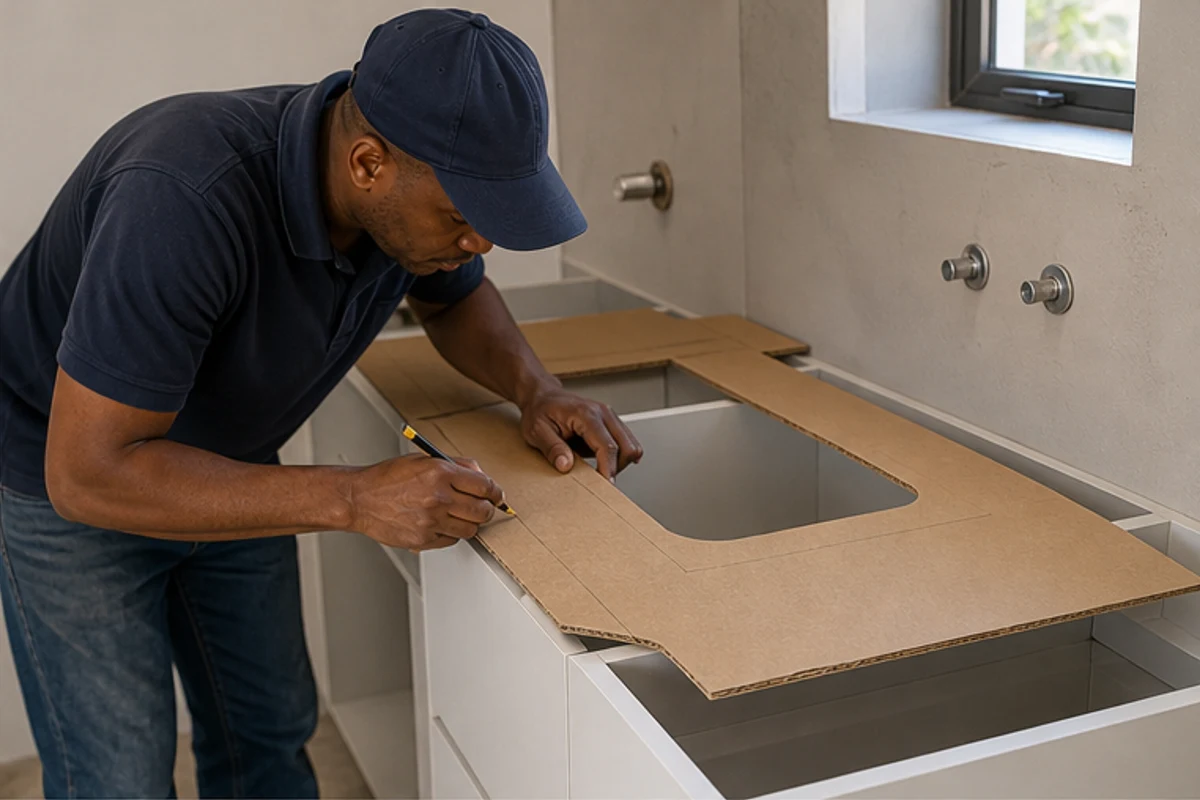
Accurate templating is the step that most commonly extends a renovation schedule by several days. Professional templating ensures the slab is cut to exact dimensions and fitted to cabinetry. Allow extra time in your programme for this crucial stage.
Project Guidance and Site Access
Clear scope and site access matter. Confirm delivery routes, parking, and safe handling points for heavy stone and fabricated surfaces.
- The installation process for granite and quartz requires professional templating, which can add several days to your overall kitchen renovation programme.
- Trust in your contractor grows from clear communication about scope, materials, labour and finish choices.
- Get approvals and finish specifications in writing to avoid later disputes.
Managing Installation Timelines
Coordinate the fabricator and on‑site team so the slab arrives ready for a precise fit. Poor timing causes waits and extra costs.
- Confirm manufacturing and delivery time with the supplier early.
- Plan for contingencies: weather, access issues, or missing permits can add time.
- Discuss the full programme with your contractor and record milestones in writing.
Use our platform to compare local contractors in Benoni and set realistic expectations for the installation market. Proper planning avoids common pitfalls and protects your renovation schedule.
Maintenance Honesty for Long-Term Surface Care
Benoni homeowners should plan maintenance honestly, not optimistically. Both natural stone and engineered quartz offer durability, but their care routines differ and will affect your long‑term costs and time.

Key maintenance facts
- Natural slabs need sealing every 2 to 5 years to keep them from starting to absorb liquids and developing stains.
- Quartz countertops are non‑porous and do not require sealing, so they suit busy households that want low maintenance.
- Consistent cleaning with mild soap and water protects any surface and prevents dirt building up around seams and edges.
Take a five‑year view when you decide. Think about who will perform care, how often sealing fits your schedule, and whether periodic maintenance is acceptable for resale or rental use in Benoni.
| Care task | Natural slab | Engineered quartz |
|---|---|---|
| Sealing frequency | Every 2–5 years | Not required |
| Daily cleaning | Mild soap and water | Mild soap and water |
| Stain risk if neglected | Moderate to high | Low |
| Recommended for busy homes | Depends on willingness to seal | Yes — low upkeep |
Honest advice: match the material to your lifestyle. Ask your contractor for written care instructions and schedule a 5‑year check to protect your countertop investment.
Assessing Your Property Needs for the Perfect Fit
Match the surface to how people actually use your Benoni home, not how it looks in a showroom. A clear brief saves time and avoids costly changes after installation.
Verdict by property type — Rentals and High‑use Homes
High‑traffic rental properties benefit from low‑maintenance quartz options. Durable surfaces resist stains and require minimal sealing, which suits quick turnovers and fewer maintenance visits.
Link this to a local kitchen-renovation service to get quotes that factor in access, labour and warranty terms for landlords.
Verdict by property type — Family and Luxury Homes
Busy family kitchens often need a surface with strong durability and heat resistance. For a unique style or natural stone character, a natural slab can create a design statement.
For luxury homes, the extra cost often adds resale appeal. Request site visits and samples to confirm colour and edge profiles before you commit.
“Choose the option that fits daily use, long‑term cost and your home’s style — that balance keeps both function and design in harmony.”
- Assess activity level, staining risk and heat use before you decide.
- Consider long‑term cost and maintenance when comparing options.
- Use our platform to request quotes from Benoni contractors for a tailored selection.
Finalising Your Kitchen Renovation with Professional Quotes
Secure accurate quotes so your choice of quartz or granite is fitted to your brief and schedule. Get itemised prices for materials, edge profiles and the exact finish you want.
Use a clear brief when you request quotations. Note site access, expected installation time, transport and any permits so the market quotes reflect true cost and labour.
Visit buildingcontractorsinbenoni.co.za to request up to 3 quotes or up to 5 where available from trusted local contractors. Compare each quote for materials, process and installation details before you decide.
Take time to review warranties and written scope. A well‑specced countertop quote protects your home and helps you move from design to a tidy, on‑time install with confidence.
FAQ
What are the main differences between granite and Caesarstone countertops?
In Benoni kitchens the key difference is natural versus engineered. One is a quarried natural stone with unique veining and variations; the other is an engineered quartz surface made in a factory for consistent colour and pattern. Natural stone gives one‑of‑a‑kind slabs and can be sealed; engineered quartz is non‑porous, needs less routine sealing and offers more uniformity for matching runs.
Which surface is better for heat resistance when cooking?
Both handle daily kitchen heat, but natural stone tolerates direct hot pans slightly better. Engineered quartz can withstand moderate heat but may discolour or crack from sudden high temperatures. Use trivets or hot pads to protect any worktop and avoid placing flaming pots directly on the surface.
How do they compare for staining and liquid absorption?
Engineered quartz is non‑porous and resists staining from cooking liquids, wine and oils. Natural stone will absorb unless properly sealed; even sealed stone can require occasional resealing depending on use and the type of stone. For busy households or rental properties, the lower absorption of engineered stone is a practical advantage.
What about durability and scratch resistance?
Both are hard wearing. Natural stone can chip or crack at edges under strong impact and needs care during handling. Engineered quartz contains resin which can be slightly more prone to heat damage but offers consistent hardness and fewer natural fissures. For heavy domestic use, ensuring correct installation and edge profiles reduces damage risk.
How does maintenance differ for each material?
Engineered quartz needs simple cleaning with mild detergent and a soft cloth; it typically never needs sealing. Natural stone requires routine cleaning with pH‑neutral cleaners and periodic sealing to maintain stain resistance. Follow manufacturer or supplier maintenance guides and get written advice from your contractor.
Will either option affect my property value in Benoni?
High‑quality surfaces installed correctly can add appeal. Natural stone is often perceived as premium because of its uniqueness; engineered quartz appeals for practical durability and colour matching. Choose a finish that suits your target buyer or rental market and confirm installation warranties in writing.
How do supply and selection work locally in Benoni?
Local suppliers stock both quarried slabs and manufactured slabs. Natural stone selection requires viewing full slabs to check veins and fissures. Engineered options let you match multiple pieces for runs. Arrange site visits with contractors and confirm slab availability before finalising layouts.
What should I confirm in writing before installation?
Get a written quote covering materials, labour, edge profile, sink cut‑outs, join locations, templating dates, lead times and guarantees. Confirm who is responsible for site access, protection of the home, and removal of old tops. Independent contractors provide final measurements and site visits — request up to three written quotes where available.
How long does templating and installation usually take?
Templating is typically a single site visit lasting a few hours. Fabrication and polishing depend on slab availability and workshop schedules — commonly one to three weeks. Installation itself often takes a day or two for a standard kitchen, longer for complex islands or on‑site joins. Ask your contractor for a realistic timeline.
Are there cost differences I should expect?
Price varies by slab quality, colour, edge work and installation complexity. Natural stone can be costly for rare patterns or large slabs. Engineered quartz costs depend on brand and finish. Factor in labour, transport, sink and hob cut‑outs, and any structural work. Obtain detailed, local quotes to compare total costs.
Can either material be repaired if damaged?
Small chips and scratches on natural stone can often be repaired and polished by a specialist. Engineered quartz repairs are possible using resin fills and colour matching but may be visible. Always use accredited fabricators and ask about repair policies before installation.
Which surface is better for landlords and rental properties?
Engineered quartz suits rental properties for its low maintenance and stain resistance. Natural stone works for higher‑end rentals but requires regular sealing and careful tenant guidelines. Consider long‑term durability, replacement costs and tenant turnover when choosing.
Do finishes and edge profiles affect performance?
Yes. Polished and honed finishes change resistance to staining and appearance. Certain edge profiles hide chips better and change thickness perception. Discuss finish and edge choices with your contractor and see samples under local lighting before deciding.
What local suburbs or contractors should I contact in Benoni for quotes?
Contact independent countertop fabricators and kitchen renovators serving Benoni and surrounding suburbs like Brakpan, Boksburg and Edenvale. Request up to three written quotes where available, confirm site visits, slab viewing options and lead times, and check contractor references and warranties.
How do I choose between a unique natural slab and consistent engineered colour?
Choose a unique slab if you value natural variation and a one‑off look. Pick engineered quartz if you need repeatable colour, easier matching across runs, or lower maintenance. Match the choice to your lifestyle, budget and the property’s intended use.
Ready to compare?